


Advertisement - Members don't see this ad
A 65 yr old woman comes to the physician for a follow-up examination after a DEXA scan showed a decrease in bone density. Physical examination shows no abnormalities. Which one of the following sets of findings in bone is most likely in this patient?
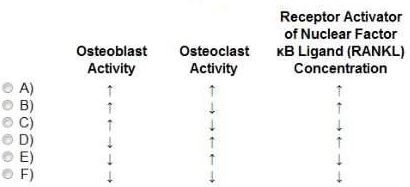
So she is most likely in menopause so should have low osteoblast and high osteoclast right? So I am debating between D and E, right? Can anyone explain how to approach for the third column? Many thanks in advance.
So she is most likely in menopause so should have low osteoblast and high osteoclast right? So I am debating between D and E, right? Can anyone explain how to approach for the third column? Many thanks in advance.

