
- Joined
- Sep 14, 2009
- Messages
- 5,998
- Reaction score
- 8,329
- Points
- 8,071
- Location
- the river lethe
- Attending Physician
WTF. The way we treat athletes is horrendous.


4 levels at the same time, though? I was thinking endplate fracture. Non-surgical sure but he should probably rest…based on his performance today…Where are the fractures?
Edit-L1-4…..probably spinous or transverse process fractures….no biggie


Excellent talking point for every ICNB that I do. And I did one this AM.In other news, maybe its not a great idea for an orthopedic surgeon to do an ICNB in the training room before a game. Just think out loud here:
Ex-Chargers quarterback Tyrod Taylor suing team doctor over punctured lung
Tyrod Taylor, now a backup with the Giants, is seeking damages for an injection that kept him from playing in 2020 and led to Justin Herbert taking over.www.usatoday.com
Pneumothorax is a very well known complication so I guess he didn’t sign a consent? I know it’s fairly obvious to NFL fans but he was going to lose his job anyway. This lawsuit is pretty rich….. for lawyers. I hope he loses.In other news, maybe its not a great idea for an orthopedic surgeon to do an ICNB in the training room before a game. Just think out loud here:
Ex-Chargers quarterback Tyrod Taylor suing team doctor over punctured lung
Tyrod Taylor, now a backup with the Giants, is seeking damages for an injection that kept him from playing in 2020 and led to Justin Herbert taking over.www.usatoday.com
all about the documentation. if the doc says there is a risk of a PTX in consent, that should give him some protection. also, "dr. XYZ, how many ICNBs have you done?" " were you trained to do these?" "shouldnt these blocks have been done by a pain specialist?" "why wasnt flouroscopy used?" its unclear if this was done blind or under ultrasound. my guess is that it was actually blind b/c it was AT the stadium, but i could be wrong.Pneumothorax is a very well known complication so I guess he didn’t sign a consent? I know it’s fairly obvious to NFL fans but he was going to lose his job anyway. This lawsuit is pretty rich….. for lawyers. I hope he loses.

Omoigui technique. Come down on the center of the rib, inject a larger volume to get spread superior/inferior over the intercostal spaces, let it soak down. Much lower risk of pneumothorax.Coming from D1 team doc background:
There is tremendous pressure to get these athletes back on the field ... from trainers, coaches, admin/owners, AND the players. A lot of times players are the ones trying to hide symptoms or pushing treatment beyond what is safe and MDs have to be the bad guy to protect them. It can be hard to do that for some people, or your ego makes you think that nothing bad will happen to the player.
That being said any time we had a rib injury like this we would consent the player heavily, use US guidance, stay as sterile/clean as possible in a training room, and on my injections ere on the side of being too shallow. Anecdotally, many times we would just do trigger points if the player balked at the pneumo risks with heavy amounts of Bupivicaine and players would do just as well.
I've seen this but how does it work anatomically? Nerve is between fascial layersOmoigui technique. Come down on the center of the rib, inject a larger volume to get spread superior/inferior over the intercostal spaces, let it soak down. Much lower risk of pneumothorax.
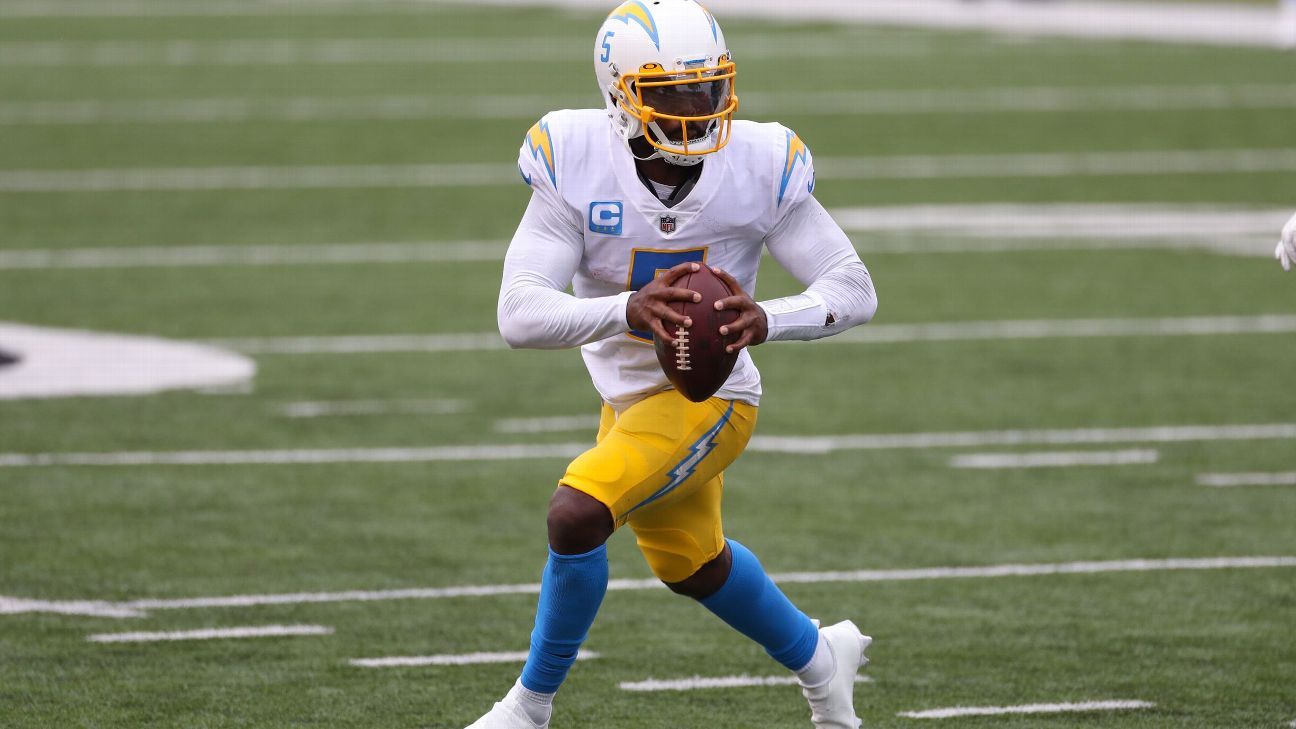
sounds like he was very qualified(Harvard, Steadman-Hawkins, etc).....could happen to anyone.
"Dr. Gazzaniga specializes in sports medicine, including sports related injuries of the shoulder, elbow, knee, and hip. In addition, he performs procedures such as hip arthroscopy and osteoarticular transplantation for cartilage defects of the knee. After growing up in Orange County, Dr. Gazzaniga left to play football at Dartmouth College and remained to attend medical school. He then went on to complete his residency at Harvard University. Dr. Gazzaniga has completed the following separate fellowships: Trauma Fellowship and a Sports Medicine Fellowship at the Steadman-Hawkins Clinic in Vail, Colorado.
Dr. Gazzaniga had been in practice in the state of New York before relocating back to Orange County. While in New York, he served as one of the team doctors for the New York Jets as well as the head Orthopedic Surgeon for the New York Islanders and Hofstra University. He also worked as the attending Orthopedic Surgeon at the US Open in Flushing, New York. Currently, Dr. Gazzaniga is the Head Team Physician for the Los Angeles Chargers & the Hoag Orthopedic Institute Division Chief of Sports. In his leisure time, he enjoys spending time with his wife and children."
It’s close enough to the nerve that it reaches and blocks it before it’s carried away. it can penetrate the cell wall - it can penetrate fascial layers too.I've seen this but how does it work anatomically? Nerve is between fascial layers
Hope it pans out as an equivalent or superior technique but I'm skeptical. Lumbar sympathetic block for example--if you aren't deep enough and you see psoas/fascial pattern, it doesn't work. Same with a lot of regional blocks. "In the area" just doesn't seem to diffuse that well.It’s close enough to the nerve that it reaches and blocks it before it’s carried away. it can penetrate the cell wall - it can penetrate fascial layers too.
Hope it pans out as an equivalent or superior technique but I'm skeptical. Lumbar sympathetic block for example--if you aren't deep enough and you see psoas/fascial pattern, it doesn't work. Same with a lot of regional blocks. "In the area" just doesn't seem to diffuse that well.
long and short, an injection with a volume of 10 ml spreads extensively throughout - injection 1 rib spread to at least 2 ribs, possibly 4 ribs.According to one anatomic study of intercostal nerve block technique, iothalamatemeglumine 60% (Conray) was injected bilaterallyinto the intercostal grooves of the ninth or tenth ribs in 30 surgicalpatients. Roentgenograms showed extensive spread of the contrast centrally and peripherallyfrom the site of injection within 30 seconds, with almost completeabsorption within 10 minutes 30 seconds [1]. These findings help to explain how the injected anesthetic is spread during an intercostal nerve block regardless of the site of injection. In another study of twenty patients undergoing thoracotomy, twelve patients received intercostal nerve injection with 10 ml of 0.5% bupivacaine with methylene blue, and eight patients received 5 mlof 0.5% bupivacaine with methylene blue. The area of spread of the methylene blue was measured after the pleural cavity was incised. The 10 ml group had a mean area of spread of 51.1 cm2 as opposed to 17.6 cm2 for the 5 ml group. In the 10 ml group, eight patients had bupivacaine-methylene blue spread to two intercostal spaces, three patients to three intercostal spaces, and one patient to four intercostal spaces. In the 5 ml-group, seven patients had bupivacaine methylene blue spread confined to one intercostal space and one patient to two intercostal spaces [2]. This demonstrates that there is extensive spread of local anesthetic after intercostal nerve block injection.
In our diffusion technique of Intercostal Nerve Block, we inject local anesthetic solution directly over the ribs. The anesthetic solution diffuses within the subcutaneous tissue, muscles, intercostal membranes and intercostal space. The anesthetic solution then blocks peripheral nociceptors and peripheral nerve endings including both medial and lateral branches of the Anterior Cutaneous Branches, which are the terminal endings of each intercostal nerve. The anesthetic solution may also be transported by retrograde axoplasmic flow from the peripheral branches into the intercostal nerve. The anesthetic solution also interrupts nociceptive afferent impulses from peripheral nerve endings at the site of injury and inhibits the release of neuropeptides by the proximal nerves and the propagation of the inflammatory response from the site of injury [6]. Our diffusion technique utilizes the spread and diffusion characteristics of the injected local anesthetic fluid solution.

Maybe it’s just a peanut to the right bronchus. Someone handed him a snickers bar because he was hungry?Did some schlub just drop another lung?
Steelers' Watt at hospital having lung evaluated
Steelers star pass rusher T.J. Watt is in a local hospital for further lung evaluation after "experiencing discomfort" at the practice facility Wednesday, and his status for Monday's game against the Miami Dolphins is "in question."www.espn.com
Well playedMaybe it’s just a peanut to the right bronchus. Someone handed him a snickers bar because he was hungry?


