APMA Salary Survey

This forum made possible through the generous support of SDN members, donors, and sponsors. Thank you.
One of the benefits of this is the transparency it promotes. Those entering practice can see the averages and it's broken down by years in practice. The data can create a starting point for more podiatrists to negotiate their salaries.
Hi, I put a longer introduction reply in this thread, but I am the new Director of Strategic Analytics at APMA and I am the main person who will be using this data.

Thank you for this plug! The years-in-practice aspect is one of the pieces that is most important to me. I am working on a number of analytics, including survival analyses for podiatrists, to understand what compensation looks like over the course of a podiatric career under differing circumstances.
Warmly,
Sam
 
The problem is that the only people filling these surveys out are going to be the private practice owners and DPMs who sold out to private equity supergroups. A lot of young podiatrists are disenchanted right now and maybe a little embarrassed they are working as an associate making 100K with a bonus structure which is unattainable. If everyone in the profession did this survey there would be a significant salary disparity. But people won't and the numbers will continue to be skewed and not reflect the current state of private practice podiatry which the majority of the profession works in.
Hi, I put a longer introduction reply in this thread, but I am the new Director of Strategic Analytics at APMA and I am the main person who will be using this data.

Please help us fix that. I need to know where those individuals are and what their working circumstances and compensation structure look like. PLEASE help convince those lower paid associates with unattainable bonus structures which you cite to take the survey so that we can support their segment of the profession.
Warmly,
Sam
 
If they stratify out how much are the dpms earning who are <5 years out vs those 10-20 years in practice, and associate vs owner, hours worked, other variables, this can be extremely useful for estimating what our wage curve looks like.

If on the other hand, they spin these results to paint an unrealistic picture of the profession for prehealth students, this is going to be just more sound and fury.
Hi, I put a longer introduction reply in this thread, but I am the new Director of Strategic Analytics at APMA and I am the main person who will be using this data.

You're reading my mind. This is absolutely what we are trying to do. Compensation is complicated and uneven. We need representative data that covers all facets of the profession in order to figure this out.
Warmly,
Sam
 
It can’t be truly anonymous for certain states. Even if you put a metro. some states have like 30 podiatrists bro. Especially people who are putting cities and then “government” like yeah you work for a VA in that city and there’s three employed podiatrists there so…

I filled it out for what it’s worth. But yeah I almost didn’t want to because it isn’t as anonymous as you’d think. Everyone knows everyone in podiatry
I could literally burn every bridge with every podiatrist and still get a job over 200k a year. I simply don’t think about podiatrist or podiatry schools. I don’t know why people are ashamed.

Put the largest city on west coast, mid west,
South or NE. Comment on the submission “location rural MW or NE or South changed for anonymity”
 
I think the problem we see is basically all hospital employed pods are there or over, especially with years of experience. We almost need to split it into hospital employed average versus group/private average. Although, you'd have PP owners bringing up that median there too. I don't think 265k is far off for non-associates employed in larger groups and/or hospital. And again, I'm not saying there's an abundance of these jobs open at any given time... that's a different issue entirely.
Hi, I put a longer introduction reply in this thread, but I am the new Director of Strategic Analytics at APMA and I am the main person who will be using this data.

"We almost need to split it into hospital employed average versus group/private average."

Yes! Yes we do. Compensation is complicated and the lived working experience of podiatrists varies based on so, so many factors. We need this data in order to move the profession from some crude statement like "podiatrists make $265,000 on average" to a real understanding of WHO does, who makes more, and who makes less. All of those populations will have different needs and APMA needs to know these things in order to serve all facets of the profession.

Warmly,
Sam
 
I’m fairly certain that the average podiatrist makes somewhere between $50,000-$1,000,000 a year.
 
Thank you for your suggestion! Dr. Dupre to be precise, but not a big deal at all, Sam is fine too. This is a great suggestion. I'll make sure that doing so is on the comms team's radar.
Warmly,
Sam
Dr Sendin_toes_2market to be double precise. I don’t make my PAs call me doctor and I’m not used to doctors on this forum. I think what you are doing is good for the specialty and wish you best of luck. If you need help, I have google sheets and a Mac book. I dabble on the phone calculator time to time.
 
Clearly APMA has an axe to grind, but @Hoos2004 appears to be making some legitimate inquiries, or at least as legit as for the other physician specialties they're reporting on.

There are other salient factors to job satisfaction that the survey is not designed to capture: are you in your desired practice location? are you doing meaningful work or are you just lobstering?
Love the suggestions. I'll add those to my list of questions for future follow-on survey work on adjacent questions that we have. Please feel free to DM me with any similar metrics that you or others may find useful?
Warmly,
Sam
 
Dr Sendin_toes_2market to be double precise. I don’t make my PAs call me doctor and I’m not used to doctors on this forum. I think what you are doing is good for the specialty and wish you best of luck. If you need help, I have google sheets and a Mac book. I dabble on the phone calculator time to time.
Haha, thank you Dr. Sendin_toes_2market of the Boston Sendin_toes_2markets family (if you're actually in Boston, I promise that was made up on the spot and a complete bit of luck. I have no idea who you are in the real world).

Thank you, I appreciate the good wishes. I really hope that this survey starts to get to the granularity of data that we need to address some of these past artificial homogenizations of statistics for the profession.

People have been critical of the existing estimates, that's clear and more than fair. All we can do is try and get the data to make sure that people and the diversity of roles are not getting missed.
 
At least I can still talk shop as the apparently 2nd widest pay variance specialty on the list. The podeyetry job market alliance continues.

Interesting data breakouts. Some others I would suggest would be time at current job and even number of jobs total. Maybe some kind of “how long did it take you to get a job you don’t anticipate leaving?” I’ve got a decent number of friends who were on associate job #3 by year 4-5 out, and starting over usually costs money.
Hi, I put a longer introduction reply in this thread, but I am the new Director of Strategic Analytics at APMA and I am the main person who will be using this data.

Thank you for the suggestions! I've added these to my list of possible metrics for future follow-on surveys. Please feel free to reach out to me directly if you have further metrics that you feel would be useful?
Warmly
Sam
 
As long as we are tracking metrics here ....how about we find out how many fellowship grads go into crappy private practice? How many grads use their training? How many BS surgical numbers residents are getting? What is the real graduation rate of school? Who killed JFK? How is this BS with CPME and the SMU 69ers allowed to happen?
 
As long as we are tracking metrics here ....how about we find out how many fellowship grads go into crappy private practice? How many grads use their training? How many BS surgical numbers residents are getting? What is the real graduation rate of school? Who killed JFK? How is this BS with CPME and the SMU 69ers allowed to happen?
OK, sure, let's dig into that a touch. Love these questions. In order to keep this thread focused, maybe send me a DM with your responses if you don't mind?

1) Define "crappy private practice" for me as you see it? Are we talking any form of private practice or are we talking low pay positions within an existent practice without equity stake or some such? Or something else entirely?

2) On "How many grads use their training?"... If you mean "stayed within the profession" or "allowed to perform to the full scope of their training", working on it. If something else, would you mind expanding on that slightly?

3) Interesting. That's not one I've heard yet, but I'm 3 months in, so that's not surprising. Tell me more about your concerns with those grad rate statistics?

4) Blippi. 100%.

5) Again, not sure what this one is referencing for CPME and SMU 69ers. Can you tell me a bit more about that question?

Cheers,
Sam
 
My question. Will raw data be shared? Obviously, some pods own surgical companies like the bunionplasty guy. Those numbers should be omitted. Realistically, if we wanted a “true” model it would need to be more specific. Maybe more of a more defined section

-Gross Collection or personal clinical production.
-Gross collection or business/company/practice.
Or at least have the ability to omit those who own businesses or are part time to not alter data.

Obviously saying you earn 1 million as a podiatrist but don’t see patients is a bit incorrect; they are a business owner. It’s like adding my only fans salary from selling bath water into my total comp.
 
I’d rather have the apma look at saturation in general. We should have you or someone like you determine how many pods we should be graduating yearly.

I guess this would be the first start to that? But I’m skeptical of the data. If you’re analyzing bad data then your conclusions would be useless.

I would think something like randomly picking 25 residency programs and contacting their graduating residents who are 1, 5, 10, 15, 20 years out and asking them would be better. But I’m not a data scientist so I will kindly defer to you.
 
Last edited:
Hi, I put a longer introduction reply in this thread, but I am the new Director of Strategic Analytics at APMA and I am the main person who will be using this data.

Fair enough. Not what APMA would prefer of course, but completely respect your decision and stance. As a non-member, APMA isn't necessarily able to reach you in these sorts of data collection. I don't want this survey to only reflect members. To be truly useful in helping APMA support the profession as a whole, please encourage your non-member colleagues to respond as well?
Warmly,
Sam

Nah, I’ve got much better things to do with my time. Maybe if the APMA put out a press release encouraging cutting student enrollment (you know, something that would actually help the profession), I would provide data without compensation to an organization that has done nothing to help my career. Hell, my state organization tried to make it harder for podiatrists to treat pathology within our scope…and the APMA supported them. Good luck in your data collection.
 
Sam,

Thanks for your engagement. You seem like a nice guy, and much of what we've brought up are things that are beyond the aim of your current project. But there are certain "open secrets" that the profession of podiatry will not address:

1) Many students matriculate into the P1 class and many flunk out.
2) APMLE step 1 first time pass rates are abysmal. Samuel Merrit University (in San Francisco) had a 69% pass rate one year, for which we have named them the SMU 69ers
3) Many residencies are overreporting surgical numbers. To say that you graduated from a PMSR/RRA residency could mean a lot of things, you could be one of our elites or you could be better off sitting in the corner playing with crayons. There is a vast disparity in training but everyone is incentivized to do nothing about it.
4) You'll be able to tell us how accurate I'm being now, but podiatry is still by my observation a private practice dominated profession. I don't think the implications of this are adequately explained to prehealth students. Your reimbursements are worse, your benefits are worse, your time off is worse, you spend much of your day doing non-podiatry things. Hence the allusion to "crappy private-practice jobs."
5) The attraction of #4 is if you can hire other doctors to work under you and generate income for you. Hence creating the unsavory predatory owner-associate relationships we decry on this forum. Many podiatrists use their practice as their retirement plan: work at it, build it, sell it, then retire, with the expectation that the next generation of DPMs will do the same. As with all ponzi schemes, this will eventually collapse leaving a generation of bag-holders.
6) The lack of mobility. If your circumstances change, or if you're unhappy with your current job, any move puts you squarely at the bottom of the totem pole again.
7) On the subject of "using our training," this alludes to the differential between what we're trained for vs what the market actually demands. We're told there is an onslaught of elderly diabetics on the horizon who will have foot problems. "Foot problems," it turns out means "overgrown toenails." You simply do not need to undertake a 7 year course of postgraduate education and training to clip toenails, and it is only a matter of time before society figures this out. We market to pre-health students that podiatry is a fast track into surgery, and I find this gravely unethical. I'm not anti podiatry, I'm just anti lying to 20 year olds.

For further edification, please consult the 92 page thread "Memes of Podiatry"
 
Nah, I’ve got much better things to do with my time, Maybe if the APMA put out a press release encouraging cutting student enrollment (you know, something that would actually help the profession), I would provide data without compensation to an organization that has done nothing to help my career. Hell, my state organization tried to make it harder for podiatrists to treat pathology within our scope…and the APMA supported them. Good luck in your data collection.
I’ve seen your post history. You don’t. Fill out the 5 minute survey.
 
Sam,

Thanks for your engagement. You seem like a nice guy, and much of what we've brought up are things that are beyond the aim of your current project. But there are certain "open secrets" that the profession of podiatry will not address:

1) Many students matriculate into the P1 class and many flunk out.
2) APMLE step 1 first time pass rates are abysmal. Samuel Merrit University (in San Francisco) had a 69% pass rate one year, for which we have named them the SMU 69ers
3) Many residencies are overreporting surgical numbers. To say that you graduated from a PMSR/RRA residency could mean a lot of things, you could be one of our elites or you could be better off sitting in the corner playing with crayons. There is a vast disparity in training but everyone is incentivized to do nothing about it.
4) You'll be able to tell us how accurate I'm being now, but podiatry is still by my observation a private practice dominated profession. I don't think the implications of this are adequately explained to prehealth students. Your reimbursements are worse, your benefits are worse, your time off is worse, you spend much of your day doing non-podiatry things. Hence the allusion to "crappy private-practice jobs."
5) The attraction of #4 is if you can hire other doctors to work under you and generate income for you. Hence creating the unsavory predatory owner-associate relationships we decry on this forum. Many podiatrists use their practice as their retirement plan: work at it, build it, sell it, then retire, with the expectation that the next generation of DPMs will do the same. As with all ponzi schemes, this will eventually collapse leaving a generation of bag-holders.
6) The lack of mobility. If your circumstances change, or if you're unhappy with your current job, any move puts you squarely at the bottom of the totem pole again.
7) On the subject of "using our training," this alludes to the differential between what we're trained for vs what the market actually demands. We're told there is an onslaught of elderly diabetics on the horizon who will have foot problems. "Foot problems," it turns out means "overgrown toenails." You simply do not need to undertake a 7 year course of postgraduate education and training to clip toenails, and it is only a matter of time before society figures this out. We market to pre-health students that podiatry is a fast track into surgery, and I find this gravely unethical. I'm not anti podiatry, I'm just anti lying to 20 year olds.

For further edification, please consult the 92 page thread "Memes of Podiatry"
I think you meant pages 1-92
 
I’ve seen your post history. You don’t. Fill out the 5 minute survey.

My compensation data is reported to MGMA and it helps to raise the median compensation within the profession for others negotiating hospital contracts. I’m doing more for my peers (financially) than the APMA is. And I don’t fill out surveys unless I’m being compensated for them, so send me a check and I’ll fill it out.
 
My compensation data is reported to MGMA and it helps to raise the median compensation within the profession for others negotiating hospital contracts. I’m doing more for my peers (financially) than the APMA is. And I don’t fill out surveys unless I’m being compensated for them, so send me a check and I’ll fill it out.
Keep telling us how amazing you are and that you have no time on a Friday night to fill out a five minute survey.
 
lol. You’re a joke. My bad. You stated you had “better things to do with your time” I’m so stupid. I need to go back to reading class.
 
My question. Will raw data be shared? Obviously, some pods own surgical companies like the bunionplasty guy. Those numbers should be omitted. Realistically, if we wanted a “true” model it would need to be more specific. Maybe more of a more defined section

-Gross Collection or personal clinical production.
-Gross collection or business/company/practice.
Or at least have the ability to omit those who own businesses or are part time to not alter data.

Obviously saying you earn 1 million as a podiatrist but don’t see patients is a bit incorrect; they are a business owner. It’s like adding my only fans salary from selling bath water into my total comp.
Good questions/points. So,
1) "Will raw data be shared?"
In short: unfortunately no.

In more detail: APMA will not even have access to the raw data. It's being anonymized before we even see it and a de-identified dataset is being provided to us. Sharing of even that will be restricted due to the data use agreement and assurances to respondents. Potentially at some future time, if we can create a subset of the data (a la a public-use microdata file), I'd like to do so. That would be entirely contingent on some acceptable version of a PUMS file being created which would not violate the terms and conditions for the survey and would not violate our contract with Marit. Altogether, that means no for the foreseeable future.

However, we are sharing a pair of reports, an especially detailed one that APMA (and Marit) is putting together for members as part of membership benefits and a second report with useful results that Marit will make available for everyone. Results will also be available on Marit's main dashboard.

2) Outliers
These are being addressed. The survey collects data on myriad forms of compensation, allowing us to break out compensation that comes from various forms of income-generating activities. It also collects data that will let us determine FTE-equivalent compensation to normalize for patient volume and similar tricky points. We will also be applying significant outlier controls to vet and adjust-for the influence of those exact forms of outlier cases that you are pointing to. To phrase it differently, we will be able to adjust the income figures for those cases that you outline so that we can retain the data from those individuals, but contextualize and eliminate the signals from the non-applicable forms of business activities.

Unfortunately, your bathtub water selling OF account will not be reflected in your income here. Sorry to bring that bad news.

Warmly,
Sam
 
Last edited:
I’d rather have the apma look at saturation in general. We should have you or someone like you determine how many pods we should be graduating yearly.

I guess this would be the first start to that? But I’m skeptical of the data. If you’re analyzing bad data then your conclusions would be useless.

I would think something like randomly picking 25 residency programs and contacting their graduating residents who are 1, 5, 10, 15, 20 years out and asking them would be better. But I’m not a data scientist so I will kindly defer to you.
So, funny that you say that. I'm working on 3 foundational pieces to build to a far better understanding of the podiatric workforce.
1) Podiatric workforce estimation and geographic distribution. Where are the podiatrists? How many practicing podiatrists are there actually out there? There are tons of useful sources that get at aspects of this, but they are highly scattered, with individual biases, and not directly comparable without significant and careful analysis and de-duplication. There are absolutely sources out there that have this data, but are unwilling to share or unable to share due to their own data use agreement restrictions. This is one of the most significant and important foundational steps that we need to hammer out.
2) Demand. I hear the arguments about feeling market saturation. We need to figure out where that is, why, and how that is likely to change in the future. In short, working on it. At this point I'm approaching it both from the stance of disease distribution among the conditions that lead to podiatric need along with comparison to other forms of existing signals. Again, huge thing we need to improve on to serve our podiatrist population.
3) What does podiatrist "survival" look like. Who leaves the profession? When? Under what conditions? Who "survives" until retirement. If, for example, we're graduating X number of new DPMs each year, but we're burning out Y of them every year before they reach some tipping point in their profession, we NEED to know that to address those barriers and to be able to model future decline or growth in the profession. Again, huge thing for us to need to know. Item 1 and this compensation survey are two of the most impactful aspects of this particular analysis that I need in order to build my survival models, hence part of my enthusiasm to get good representative responses to this survey.
Warmly,
Sam
 
Sam,

Thanks for your engagement. You seem like a nice guy, and much of what we've brought up are things that are beyond the aim of your current project. But there are certain "open secrets" that the profession of podiatry will not address:

1) Many students matriculate into the P1 class and many flunk out.
2) APMLE step 1 first time pass rates are abysmal. Samuel Merrit University (in San Francisco) had a 69% pass rate one year, for which we have named them the SMU 69ers
3) Many residencies are overreporting surgical numbers. To say that you graduated from a PMSR/RRA residency could mean a lot of things, you could be one of our elites or you could be better off sitting in the corner playing with crayons. There is a vast disparity in training but everyone is incentivized to do nothing about it.
4) You'll be able to tell us how accurate I'm being now, but podiatry is still by my observation a private practice dominated profession. I don't think the implications of this are adequately explained to prehealth students. Your reimbursements are worse, your benefits are worse, your time off is worse, you spend much of your day doing non-podiatry things. Hence the allusion to "crappy private-practice jobs."
5) The attraction of #4 is if you can hire other doctors to work under you and generate income for you. Hence creating the unsavory predatory owner-associate relationships we decry on this forum. Many podiatrists use their practice as their retirement plan: work at it, build it, sell it, then retire, with the expectation that the next generation of DPMs will do the same. As with all ponzi schemes, this will eventually collapse leaving a generation of bag-holders.
6) The lack of mobility. If your circumstances change, or if you're unhappy with your current job, any move puts you squarely at the bottom of the totem pole again.
7) On the subject of "using our training," this alludes to the differential between what we're trained for vs what the market actually demands. We're told there is an onslaught of elderly diabetics on the horizon who will have foot problems. "Foot problems," it turns out means "overgrown toenails." You simply do not need to undertake a 7 year course of postgraduate education and training to clip toenails, and it is only a matter of time before society figures this out. We market to pre-health students that podiatry is a fast track into surgery, and I find this gravely unethical. I'm not anti podiatry, I'm just anti lying to 20 year olds.

For further edification, please consult the 92 page thread "Memes of Podiatry"
Thanks! I'm trying to get through all responses in the order they've been posted, but I need to get to my kid's bday party to setup in a few minutes. I'll respond to this post next!
 
So, funny that you say that. I'm working on 3 foundational pieces to build to a far better understanding of the podiatric workforce.
1) Podiatric workforce estimation and geographic distribution. Where are the podiatrists? How many practicing podiatrists are there actually out there? There are tons of useful sources that get at aspects of this, but they are highly scattered, with individual biases, and not directly comparable without significant and careful analysis and de-duplication. There are absolutely sources out there that have this data, but are unwilling to share or unable to share due to their own data use agreement restrictions. This is one of the most significant and important foundational steps that we need to hammer out.
2) Demand. I hear the arguments about feeling market saturation. We need to figure out where that is, why, and how that is likely to change in the future. In short, working on it. At this point I'm approaching it both from the stance of disease distribution among the conditions that lead to podiatric need along with comparison to other forms of existing signals. Again, huge thing we need to improve on to serve our podiatrist population.
3) What does podiatrist "survival" look like. Who leaves the profession? When? Under what conditions? Who "survives" until retirement. If, for example, we're graduating X number of new DPMs each year, but we're burning out Y of them every year before they reach some tipping point in their profession, we NEED to know that to address those barriers and to be able to model future decline or growth in the profession. Again, huge thing for us to need to know. Item 1 and this compensation survey are two of the most impactful aspects of this particular analysis that I need in order to build my survival models, hence part of my enthusiasm to get good representative responses to this survey.
Warmly,
Sam
Before I even read this and respond let me just say thank you so much for engaging this community. What you are doing is completely unnecessary and above and beyond and I am thankful for your service.
 
Last edited:

So, funny that you say that. I'm working on 3 foundational pieces to build to a far better understanding of the podiatric workforce.
1) Podiatric workforce estimation and geographic distribution. Where are the podiatrists? How many practicing podiatrists are there actually out there? There are tons of useful sources that get at aspects of this, but they are highly scattered, with individual biases, and not directly comparable without significant and careful analysis and de-duplication. There are absolutely sources out there that have this data, but are unwilling to share or unable to share due to their own data use agreement restrictions. This is one of the most significant and important foundational steps that we need to hammer out.
2) Demand. I hear the arguments about feeling market saturation. We need to figure out where that is, why, and how that is likely to change in the future. In short, working on it. At this point I'm approaching it both from the stance of disease distribution among the conditions that lead to podiatric need along with comparison to other forms of existing signals. Again, huge thing we need to improve on to serve our podiatrist population.
3) What does podiatrist "survival" look like. Who leaves the profession? When? Under what conditions? Who "survives" until retirement. If, for example, we're graduating X number of new DPMs each year, but we're burning out Y of them every year before they reach some tipping point in their profession, we NEED to know that to address those barriers and to be able to model future decline or growth in the profession. Again, huge thing for us to need to know. Item 1 and this compensation survey are two of the most impactful aspects of this particular analysis that I need in order to build my survival models, hence part of my enthusiasm to get good representative responses to this survey.
Warmly,
Sam
You seriously may be what saves this profession. I hope you are able to get the data you need.

My wife is a data nerd as well. What would it take (cost wise) to get you the data to answer the question of how many podiatrists we should we be graduating each year?
 
So the main problem that this all comes back to is oversaturation. Numbers and data works for other doctors. Numbers mean something. There is not enough orthopedic surgeons. There is not enough neurosurgeons. So there is standardization in terms of salary/compensation because less than the norm would not be accepted. Thus the minimum variability in the intra-specialty data.

This doesn't work for podiatry. It doesn't matter what numbers you come up with. Who cares. That is not going to change what podiatrists get offered in private practice. The oversaturation means the crappy low offers will be accepted because people are desperate.

If anything, you guys are stirring up a hornets nest and going to open up hospitals eyes to what a podiatrist is willing to work for.

Until schools are shut down/enrollees are capped...new grads are screwed and the organizations/schools get what they deserve
 
So the main problem that this all comes back to is oversaturation. Numbers and data works for other doctors. Numbers mean something. There is not enough orthopedic surgeons. There is not enough neurosurgeons. So there is standardization in terms of salary/compensation because less than the norm would not be accepted. Thus the minimum variability in the intra-specialty data.

This doesn't work for podiatry. It doesn't matter what numbers you come up with. Who cares. That is not going to change what podiatrists get offered in private practice. The oversaturation means the crappy low offers will be accepted because people are desperate.

If anything, you guys are stirring up a hornets nest and going to open up hospitals eyes to what a podiatrist is willing to work for.

Until schools are shut down/enrollees are capped...new grads are screwed and the organizations/schools get what they deserve
Playing devils advocate here…this board has been talking about over saturation for a decade….what is the first step in analyzing this?

For me, you would need to prove this to cpme/apma l. How do you do that?
 
Playing devils advocate here…this board has been talking about over saturation for a decade….what is the first step in analyzing this?

For me, you would need to prove this to cpme/apma l. How do you do that?
I think it's already proven... applications are down. Apma membership is down. They voted with their feet (pre-health and DPMs alike).
The podiatry schools know they're in trouble (mainly not enough apps, also now the BBB limits on student lending).
Apma is in trouble due to decreasing membership, increasing dissatisfaction... soon increasing podiatry debt defaults.
That is why they are trying this "survey" (to hope for high numbers, use mean/median/whatever income in marketing).

Any pre-pod who reads around knows they have (maybe) a 10-20% chance [obviously non-random] at landing a $300k+ hospital job out of training... so, that's roughly a 1:1 ROI on podiatry tuition debts (not to even mention the additional lost time + debt for increasingly fellowship years now).
For the rest, it's maybe a 2:1 or even 3:1 debt-to-income ratio if they go to typical podiatry PP and supergroup jobs... and most do exactly that every single year. Even mediocre VA podiatrist jobs consistently get hundreds of applications. Our market is not good at all.

People are voting with their feet... just like pharmacy schools and jobs/wages and debt defaults.
Podiatry, just like pharma, will get worse before it gets better.
The pharma schools eventually had to close some schools, stop any in process of opening, and freeze opening new ones.
 
I’m so confused on why APMA is wasting time doing this but bless your heart for trying to. In the end I promise you it will not change anything for our profession. Maybe it will swindle more pre med students with skewed numbers that do not match reality.
 
Hi, I put a longer introduction reply in this thread, but I am the new Director of Strategic Analytics at APMA and I am the main person who will be using this data.

Thank you for the suggestions! I've added these to my list of possible metrics for future follow-on surveys. Please feel free to reach out to me directly if you have further metrics that you feel would be useful?
Warmly
Sam
I’m sure there’s other fun stuff like income by group size, by hospital call or no, and a trend line by time (although it would be hard to get cool peaks and valleys as people move around). Satisfaction with compensation ratings for each scenario. Hey APMA, can I get a gift card for my contributions?

It’s all kind of moot since your response levels will be so low and hit by human motivations. I don’t have a doctorate in statistics, but I assume you’ve got some n= where you’re confident that it catches enough. I’m also assuming you’re using some other baseline data like BLS too.

In my similarly chaotic specialty, I look at Marit and think there’s a few groups who are willing to submit data. Unhappy low earners, happy high earners patting their backs, and a good number of docs on either side of a job search trying to see what the market is. While I applaud you for asking for the real numbers, who knows what the motivations are with your bosses. I’m guessing they want to show things are peachy (hopefully the case - I like when people are doing well), but if AAO sent me a survey it’s probably with the implicit message that we don’t make as much as people think (reasonable) so please, CMS, don’t cut cataract reimbursement another 11% this year.
 
Play nice guys.
I have zero relation to new poster and am not compensated by APMA, ACFAS, ABPM, or ACFAS or (insert alphabet soup here).

It's the first time someone's at least replying to people so lets not be too harsh in case they aren't used to our banter on here.
 
Sam,

Thanks for your engagement. You seem like a nice guy, and much of what we've brought up are things that are beyond the aim of your current project. But there are certain "open secrets" that the profession of podiatry will not address:

1) Many students matriculate into the P1 class and many flunk out.
2) APMLE step 1 first time pass rates are abysmal. Samuel Merrit University (in San Francisco) had a 69% pass rate one year, for which we have named them the SMU 69ers
3) Many residencies are overreporting surgical numbers. To say that you graduated from a PMSR/RRA residency could mean a lot of things, you could be one of our elites or you could be better off sitting in the corner playing with crayons. There is a vast disparity in training but everyone is incentivized to do nothing about it.
4) You'll be able to tell us how accurate I'm being now, but podiatry is still by my observation a private practice dominated profession. I don't think the implications of this are adequately explained to prehealth students. Your reimbursements are worse, your benefits are worse, your time off is worse, you spend much of your day doing non-podiatry things. Hence the allusion to "crappy private-practice jobs."
5) The attraction of #4 is if you can hire other doctors to work under you and generate income for you. Hence creating the unsavory predatory owner-associate relationships we decry on this forum. Many podiatrists use their practice as their retirement plan: work at it, build it, sell it, then retire, with the expectation that the next generation of DPMs will do the same. As with all ponzi schemes, this will eventually collapse leaving a generation of bag-holders.
6) The lack of mobility. If your circumstances change, or if you're unhappy with your current job, any move puts you squarely at the bottom of the totem pole again.
7) On the subject of "using our training," this alludes to the differential between what we're trained for vs what the market actually demands. We're told there is an onslaught of elderly diabetics on the horizon who will have foot problems. "Foot problems," it turns out means "overgrown toenails." You simply do not need to undertake a 7 year course of postgraduate education and training to clip toenails, and it is only a matter of time before society figures this out. We market to pre-health students that podiatry is a fast track into surgery, and I find this gravely unethical. I'm not anti podiatry, I'm just anti lying to 20 year olds.

For further edification, please consult the 92 page thread "Memes of Podiatry"
Hi, no problem! I'm a firm believer in actually talking to the people who think you and your organization are wrong. It's just as important as communicating with the people who think you're right.

I appreciate the good thoughts. I like to think I'm an OK guy, but more importantly, I feel strongly about having people have access to accurate information to make informed and free choices about their lives.

I appreciate the explanation and candor.
1-3) Very good to know. Some of this is new to me (SMU 69ers) but other aspects I've heard discussion about. I'll be doing some digging into these points this week for my own knowledge.
4) Working on it. I've seen a mix of data on this, but I'm looking to get some good detail to fact check some other sources from this compensation survey. I've played around with a few data sources to get a sense of this, but the data is fragmented and will need careful triangulation for me to really trust it.
5) Yes, this one isn't new to me. I can't speak to this myself yet of course, but the extent and potential outcomes of this are something worth looking into. Why stick with anecdotal narratives when you can get (far more convincing) hard quantitative evidence.
6) Makes sense.
7) Right. This is a good point and something different from the whole "are we allowed to practice to the full extent of our training in State X v. State Y". I take your point and I'm going to think carefully about this while I continue developing the podiatric demand analyses that I mentioned in a different response.

Warmly,
Sam
 
Nah, I’ve got much better things to do with my time. Maybe if the APMA put out a press release encouraging cutting student enrollment (you know, something that would actually help the profession), I would provide data without compensation to an organization that has done nothing to help my career. Hell, my state organization tried to make it harder for podiatrists to treat pathology within our scope…and the APMA supported them. Good luck in your data collection.
OK, thanks for the response. Fair enough. Data is a commodity and everyone's time is valuable. If you change your mind, we would appreciate it, but I respect your decision and stance. I would request that you don't discourage others from responding at least, but... I'm not the boss of you!
Warmly,
Sam
 
Before I even read this and respond let me just say thank you so much for engaging this community. What you are doing is completely unnecessary and above and beyond and I am thankful for your service.
Thanks! Happy to help.

I mentioned this in a different message, but only engaging with supporters never leads to improvement. I'm a firm believer that it's critical to talk to your detractors to figure out where you're getting things wrong.

Realistically, we'll never convince everyone and however the results shake out, we'll absolutely get people calling it a sham. Of course I'd prefer otherwise, but really, that's absolutely fine and there's little we can do about that in the short term. Long term, if we don't try and build from any past flawed data collection, we'll never improve and that would be a real shame.
Warmly,
Sam
 
You seriously may be what saves this profession. I hope you are able to get the data you need.

My wife is a data nerd as well. What would it take (cost wise) to get you the data to answer the question of how many podiatrists we should we be graduating each year?
Ha, I don't know about that, but I'll trot that out to my wife every time I feel like being insufferable to her.

Glad to hear your wife is like-minded! Unclear. Honestly, I think it's more likely to be a question of time and careful analysis than it is a question of cost. There are a few things we need to hammer out first.

This is going to sound silly, but what does "demand" and "saturation" even mean in a practical way? As Adam Smasher mentioned, there may be demand for cutting toenails, but is that the demand that podiatrists want and lead to high pay? and is that a demand that will stay consistent as mid-level scope and healthcare admin drives to cut cost (to name just a few tricky elements) evolve? Is there demand for full-scope podiatric services, but it's in a rural area where someone might not want to move? Is there demand for some aspect of concierge sole-proprietorship practice for those who don't want to join a supergroup somewhere? Those are key questions. So yeah, some aspects for this type of modeling (e.g., looking at forecasts for local-scale development in diabetes prevalence) will be fairly easy data lifts. Other more subjective pieces (like demand for specific forms of practice) or looking at hiring trends for those whose goal is to work for a health system somewhere may require more creative data triangulation.

In short, cost isn't as much of an issue as focused, careful consideration of the question.
 
Last edited:
So the main problem that this all comes back to is oversaturation. Numbers and data works for other doctors. Numbers mean something. There is not enough orthopedic surgeons. There is not enough neurosurgeons. So there is standardization in terms of salary/compensation because less than the norm would not be accepted. Thus the minimum variability in the intra-specialty data.

This doesn't work for podiatry. It doesn't matter what numbers you come up with. Who cares. That is not going to change what podiatrists get offered in private practice. The oversaturation means the crappy low offers will be accepted because people are desperate.

If anything, you guys are stirring up a hornets nest and going to open up hospitals eyes to what a podiatrist is willing to work for.

Until schools are shut down/enrollees are capped...new grads are screwed and the organizations/schools get what they deserve
Fair enough. Labor market development and maturation differ across specialties and require different approaches.

There is a ton of good scientific literature out there that could support either end of debate on the short-/long-term effects of pay transparency. I'm not going to even try and theorize on that one, but I will make a comment about your note on school shutdown and enrollee caps. I can't speak to that aspect of things in practical terms, far out of my purview, but I will say that these sorts of foundational data collection about the profession are the critical pieces of information that one would need in order to objectively defend-against or justify that sort of argument.

Warmly,
Sam
 
Last edited:
I think it's already proven... applications are down. Apma membership is down. They voted with their feet (pre-health and DPMs alike).
The podiatry schools know they're in trouble (mainly not enough apps, also now the BBB limits on student lending).
Apma is in trouble due to decreasing membership, increasing dissatisfaction... soon increasing podiatry debt defaults.
That is why they are trying this "survey" (to hope for high numbers, use mean/median/whatever income in marketing).

Any pre-pod who reads around knows they have (maybe) a 10-20% chance [obviously non-random] at landing a $300k+ hospital job out of training... so, that's roughly a 1:1 ROI on podiatry tuition debts (not to even mention the additional lost time + debt for increasingly fellowship years now).
For the rest, it's maybe a 2:1 or even 3:1 debt-to-income ratio if they go to typical podiatry PP and supergroup jobs... and most do exactly that every single year. Even mediocre VA podiatrist jobs consistently get hundreds of applications. Our market is not good at all.

People are voting with their feet... just like pharmacy schools and jobs/wages and debt defaults.
Podiatry, just like pharma, will get worse before it gets better.
The pharma schools eventually had to close some schools, stop any in process of opening, and freeze opening new ones.
Thanks for your thoughts and perspective here. I know you have zero reason to believe me, but I can at least promise that I have literally ZERO interest in using this data for marketing and I haven't heard a single person discuss using it for that in my presence. There are potential data points here that could be used for legislative advocacy, but that's absolutely not for marketing to potential future podiatrists.

Realistically, if we were to assume that you're right that existing estimates are inflated and ignore significant disadvantaged portions of the podiatric population (not saying that's correct, can't speak to that yet, but just for the sake of argument), wouldn't it be better for APMA to just use the existing figures and not do this survey? A counterpoint might be "Well Sam, I think APMA is just going to lie about the results and say that they were right all along". Again realistically, there's no way to argue against that aside from pointing out that it would be a lot of wasted time and effort when APMA could just... not.

Legitimately, your concerns are heard. From my stance, anecdotal reports about these trends aren't good enough. We need hard data on where any deficiencies in the professional structure exist.

With respect,
Sam
 
I’m so confused on why APMA is wasting time doing this but bless your heart for trying to. In the end I promise you it will not change anything for our profession. Maybe it will swindle more pre med students with skewed numbers that do not match reality.
Thanks, off to tilt at some windmills. Good times!
 
I’m sure there’s other fun stuff like income by group size, by hospital call or no, and a trend line by time (although it would be hard to get cool peaks and valleys as people move around). Satisfaction with compensation ratings for each scenario. Hey APMA, can I get a gift card for my contributions?

It’s all kind of moot since your response levels will be so low and hit by human motivations. I don’t have a doctorate in statistics, but I assume you’ve got some n= where you’re confident that it catches enough. I’m also assuming you’re using some other baseline data like BLS too.

In my similarly chaotic specialty, I look at Marit and think there’s a few groups who are willing to submit data. Unhappy low earners, happy high earners patting their backs, and a good number of docs on either side of a job search trying to see what the market is. While I applaud you for asking for the real numbers, who knows what the motivations are with your bosses. I’m guessing they want to show things are peachy (hopefully the case - I like when people are doing well), but if AAO sent me a survey it’s probably with the implicit message that we don’t make as much as people think (reasonable) so please, CMS, don’t cut cataract reimbursement another 11% this year.
Sure, those are definitely disaggregation/covariates that we are looking to break down. I appreciate the thoughts.

Hopefully the response levels will be solid for what we are looking to get. I have definitely run initial calculations on minimum sample size based on variability present in the submitted data for podiatrists to Marit prior to this data collection effort in order to power the overall estimate to a figure within $10,000 nationwide with a high degree of confidence. I'm not going to go into too many specifics at this point, but I think we should be in good shape to hit that minimum at the least. The biggest thing for me right now is less on the overall sample size (though that's still hugely important of course), but on the representativeness of that sample. Non-response follow-up, frame bias estimation, and other similar standard census/survey adjustments will be applied to assess and adjust for any gaps. Also, yes, definitely using sources like BLS where we have alternative estimates of what various proportions of the profession should look like - and thus where gaps may exist in our responses.

Thanks!
Warmly,
Sam
 
Play nice guys.
I have zero relation to new poster and am not compensated by APMA, ACFAS, ABPM, or ACFAS or (insert alphabet soup here).

It's the first time someone's at least replying to people so lets not be too harsh in case they aren't used to our banter on here.
Thanks Weirdy. I can't promise that I'll be able to keep replying as aggressively as I have been trying to over the past few days, but I'm going to try and stay active here and engaged where I can.

I'm excited to be able to work with this data and dig into some of the concerns that people here have raised. There are so many different important questions about the profession that I've received already in the past few months, and this survey is a huge step towards being able to provide those answers.
Warmly,
Sam
 
@sdupre_apma


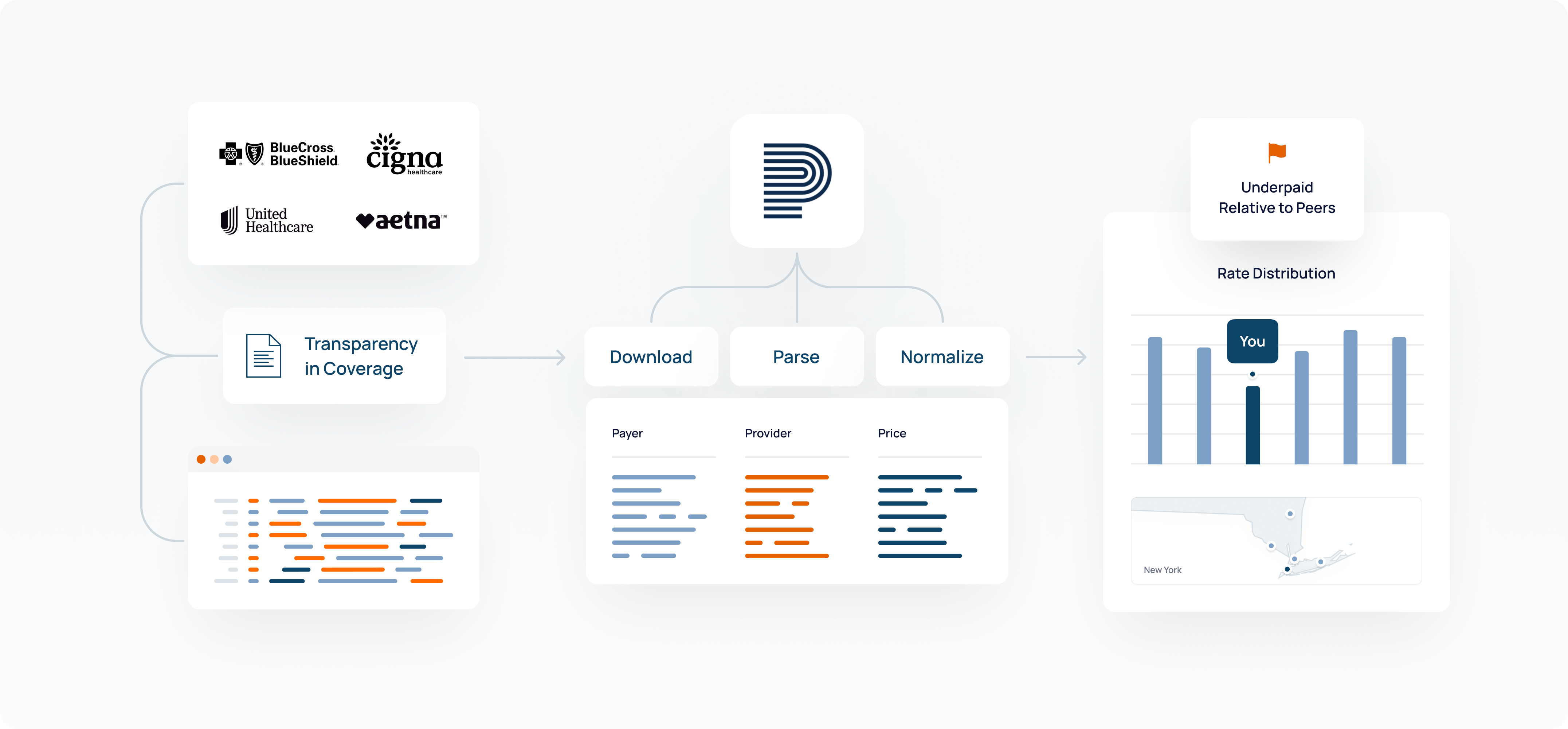
If APMA wants something fun to look at - the people at this website claim they've used the mandated transparency contracting/payment rates to create data you can use to evaluate insurance contracts. This same data could theoretically be used to evaluate whether insurance companies discriminate against podiatrists.
 
@sdupre_apma I am doing your survey and it says I can't select anything over 70 hours per week. I work like 80 hours a week easy. Again misleading data.
Thanks for pointing this out. I'll get this response to Marit and get back to you. Much appreciated!

UPDATE: @Retrograde_Nail OK! Marit got back to me quickly. They have that field capped to prevent users from entering bad data. It's based on the fact that 70 hours was at the 99.5th percentile among responses across specialties. HOWEVER, please do the following so we can adjust it to reflect that actual hours worked in the 80+ range.

1757345932976.png
 
Last edited:
Top Bottom