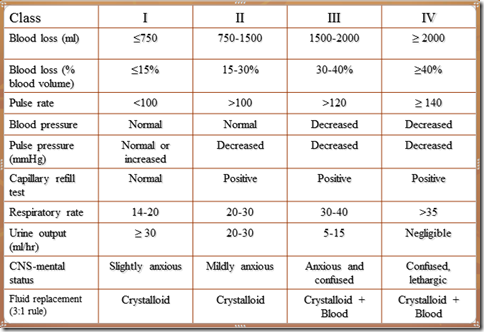
Not all patients who are hypotensive are in shock. Not all patients who are in shock are hypotensive. I think the easiest way to wrap your head around this initially is to look at the different stages of shock associated with acute hemorrhage:
Notice that hypotension isn't a prominent feature of shock until stage III. Stage I shock looks completely normal. Stage II is noticeable, but not alarming. Stage III is when even the med student notices that something is up. This is confounded even more with younger patients who have such high vasomotor tone that hypotension isn't readily apparent until well over 2 L of blood loss.
Septic shock can be even more subtle in the early stages.