No, you're right JackShephard, they are definitely different. I'm quite familiar with how they are determined. Because they are often used interchangeably, people miss the difference.
Here's an excerpt from Williams Hematology 8 ed. Ch2 ( on access med if you want to read it) on how these are determined in today's labs. I'm over simplifying it, but most hematology analyzers use a combination of methods like flow cytometry, light scatter, electrical impedance to determine CBC parameters.
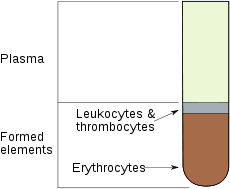
"In electronic instruments, the hematocrit (Hct; proportional volume of blood occupied by erythrocytes) is calculated from the product of direct measurements of the erythrocyte count and the MCV (Hct [L/100 L] = RBC [x 10–6/L] x MCV [fl]/10)" MCV is usually determined by light scatter.
Hgb doesn't factor into hct determination at all in automated instruments.
From same source:
"Hemoglobin is intensely colored, and this property has been used in methods for estimating its concentration in blood. Erythrocytes contain a mixture of hemoglobin, oxyhemoglobin, carboxyhemoglobin, methemoglobin, and minor amounts of other forms of hemoglobin. To determine hemoglobin concentration in the blood, red cells are lysed and hemoglobin variants are converted to the stable compound cyanmethemoglobin for quantification by absorption at 540 nm.12 All forms of hemoglobin are readily converted to cyanmethemoglobin except sulfhemoglobin, which is rarely present in significant amounts. In automated blood cell counters, hemoglobin is usually measured by a modified cyanmethemoglobin or an alternate lauryl sulphate method."
Hgb and Hct don't represent the same thing. Usually they are pretty consistent with each other.
When the ratio of Hgb/Hct isn't roughly 1:3, like the OP asked about, the indices can be used to give some insight as to what the problem is, though there are better ways. It can indicate lab error or actual pathology. They tell you how the cells should look in a blood smear.
Mcv = Hct (%) / RBC (x10^12/L) * 10 = x fL and is the average volume of each individual red cell and is used to classify cells as either normocytic, microcytic, marcrocytic.
MCH = Hgb (g/dL) / RBC (x10^12/L) * 10 = x pg and is the average mass of Hgb in each red cell
MCHC = Hgb (g/dL) / Hct (%) * 100 = x g/dL this indicates the average concentration of hgb/volume and indicates the overall pallor of the cell as normochromic, hypochromic, or hyperchromic (hyperchromic should rarely be used)
examples microcytic/hypochromic - iron deficiency anemia, lead poisoning, thalassemias
normocytic/normochromic - anemia of chronic disease
macrocytic/ normochromic- chemo, folate or b12 deficiency, liver diease