


Advertisement - Members don't see this ad
So I just finished taking Kaplan's Full Length #2 (504 -- 126/126/126/126) and am super confused on this question.
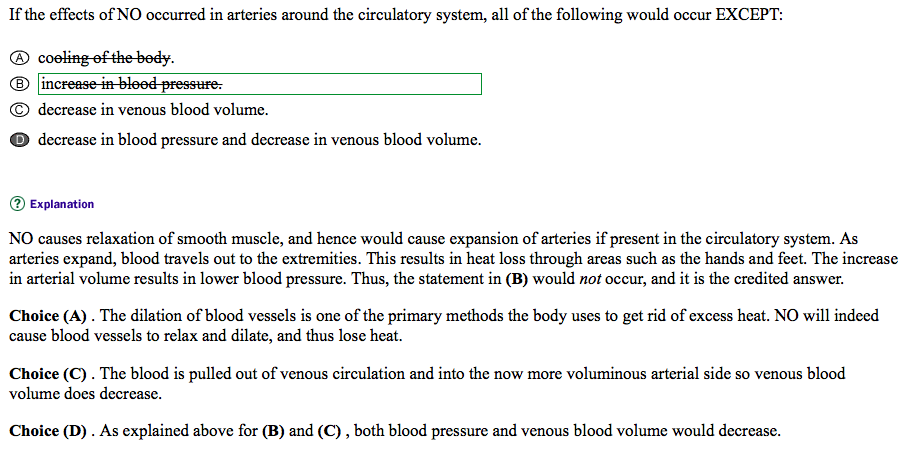
Wouldn't an increase in blood volume cause an increase in blood pressure? My confusion is because ADH (anti-diuretic hormone) causes an increase in blood pressure by retaining fluid thus increasing blood pressure -- while the opposite of this would be the release of ANP (atrial naturietic peptide) causing a decrease in blood pressure by excreting fluids.
Wouldn't an increase in blood volume cause an increase in blood pressure? My confusion is because ADH (anti-diuretic hormone) causes an increase in blood pressure by retaining fluid thus increasing blood pressure -- while the opposite of this would be the release of ANP (atrial naturietic peptide) causing a decrease in blood pressure by excreting fluids.


