
-
CycleTrack and SDN are teaming up to make medical school admissions more transparent and accessible! Read the announcement to learn how we’re supporting the future of CycleTrack’s free application-tracking tools .
You are using an out of date browser. It may not display this or other websites correctly.
You should upgrade or use an alternative browser.
You should upgrade or use an alternative browser.
kV intraoperative radiotherapy
Started by Palex80

Get help with your application
Use all the free resources available to you from SDN: articles, guides, expert advising, forums discussions, and school research.

Eh, well, would not call "excellent." I have concerns about the editorial; it failed to mention a key finding, and the most statistically significant one, which (even though I like both the authors very much) is kind of dirty pool-ish. This is a treatment that Zietman about 7 years ago called "a threat" to rad onc careers and pay! It's a loaded topic that few seem able to discuss dispassionately.This is an excellent read.
Congratulations to Chirag Shah and David Wazer for putting the evidence into context.
👍👍👍
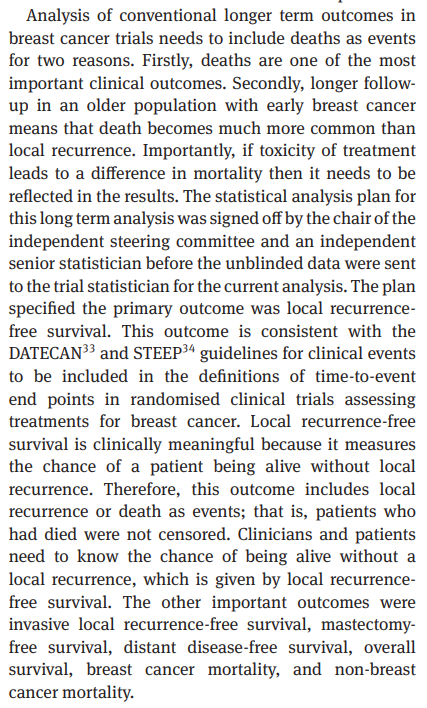
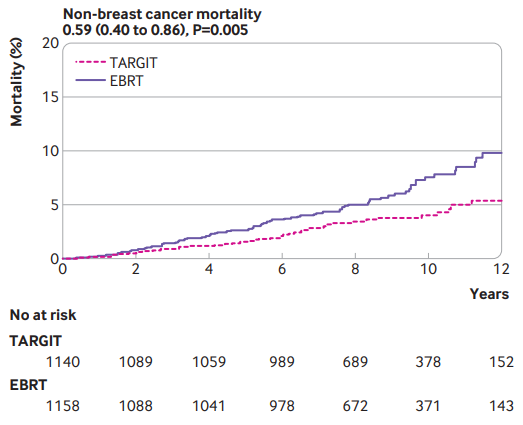
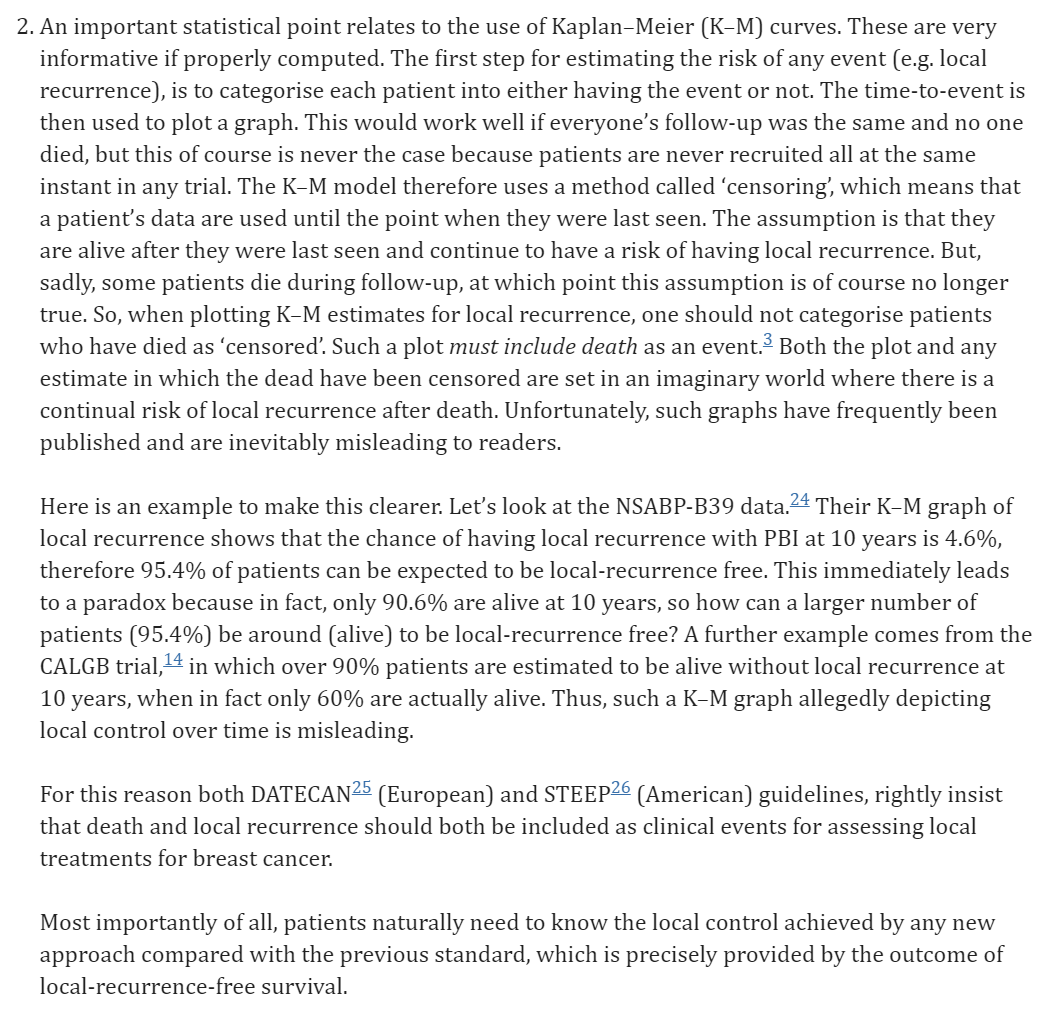
Re: LRFS vs LR, as I understand it... In a KM plot of LR, if a patient dies, they are censored and LR can never become a recordable event. With LRFS, death or local recurrence are events. It does not seem like the "right way" to me to censor patients tempus infinitum from local recurrence; the TARGITists make a compelling argument IMHO.
Disclaimer: I have never done a TARGIT treatment. I am also not Jayant Vaidya!
Last edited:
I don’t treat much breast. In th targit trial was their less death in the kv arm?Eh, well, would not call "excellent." I have concerns about the editorial; it failed to mention a key finding, and the most statistically significant one, which (even though I like both the authors very much) is kind of dirty pool-ish. This is a treatment that Zietman abou 7 years ago called "a threat" to rad onc careers and pay! It's a loaded topic that few seem able to discuss dispassionately.
Re: LRFS vs LR, as I understand it... In a KM plot of LR, if a patient dies, they are censored and LR can never become a recordable event. With LRFS, death or local recurrence are events. It does not seem like the "right way" to me to censor patients tempus infinitum from local recurrence; the TARGITists make a compelling argument IMHO.
Disclaimer: I have never done a TARGIT treatment. I am also not Jayant Vaidya!
Advertisement - Members don't see this ad
I don’t treat much breast. In th targit trial was their less death in the kv arm?
We don't see this phenomenon in any of the Yes/No radiation trials for breast though, correct?
So why believe this in this trial?
I get what you're saying though for the sake of statistical analysis.

I am a bit confused.Eh, well, would not call "excellent." I have concerns about the editorial; it failed to mention a key finding, and the most statistically significant one, which (even though I like both the authors very much) is kind of dirty pool-ish. This is a treatment that Zietman about 7 years ago called "a threat" to rad onc careers and pay! It's a loaded topic that few seem able to discuss dispassionately.
1. What editorial? Do you mean the article by Shah & Wazer?
2. What key finding are you referring to?
3. Concerning LR vs. LRFS: one should first report the outcomes as they were defined in the protocol.
TOPIC DISCUSSION sorryI am a bit confused.
1. What editorial? Do you mean the article by Shah & Wazer?

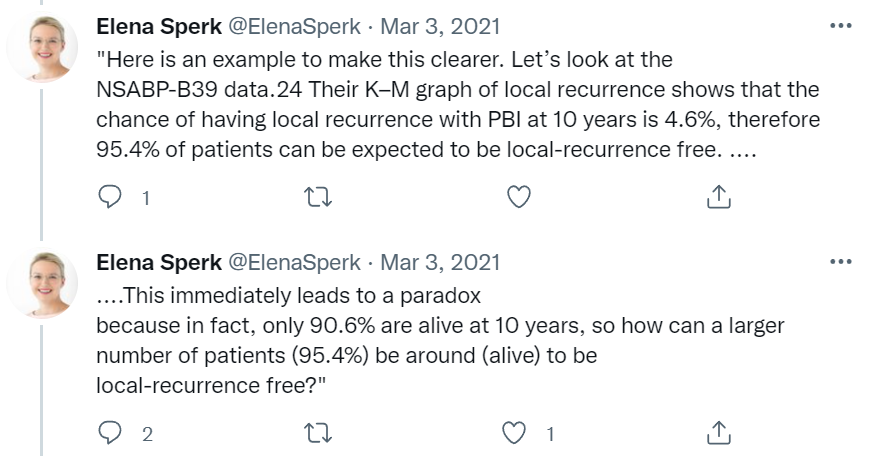
Non breast ca mortality2. What key finding are you referring to?
I don't know if the TARGIT guys had a come-to-Jesus with a statistician or what... but3. Concerning LR vs. LRFS: one should first report the outcomes as they were defined in the protocol.
We don't see this phenomenon in any of the Yes/No radiation trials for breast though, correct?
So why believe this in this trial?
I get what you're saying though for the sake of statistical analysis.
I don't believe or do believe, per se, but p=0.005 suggests high probability of reproducibility.
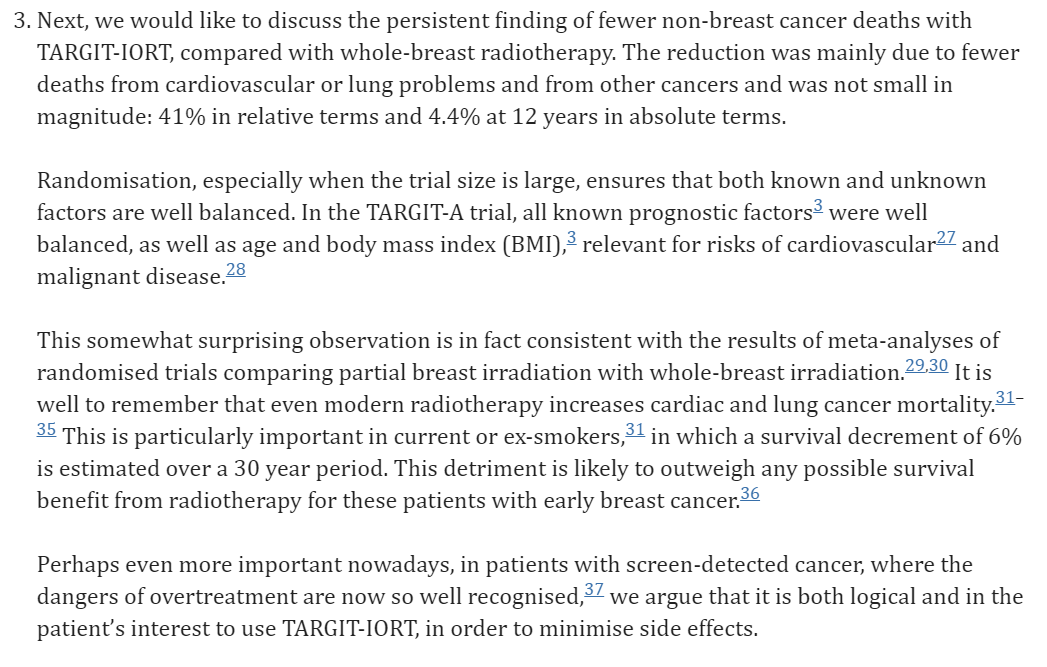
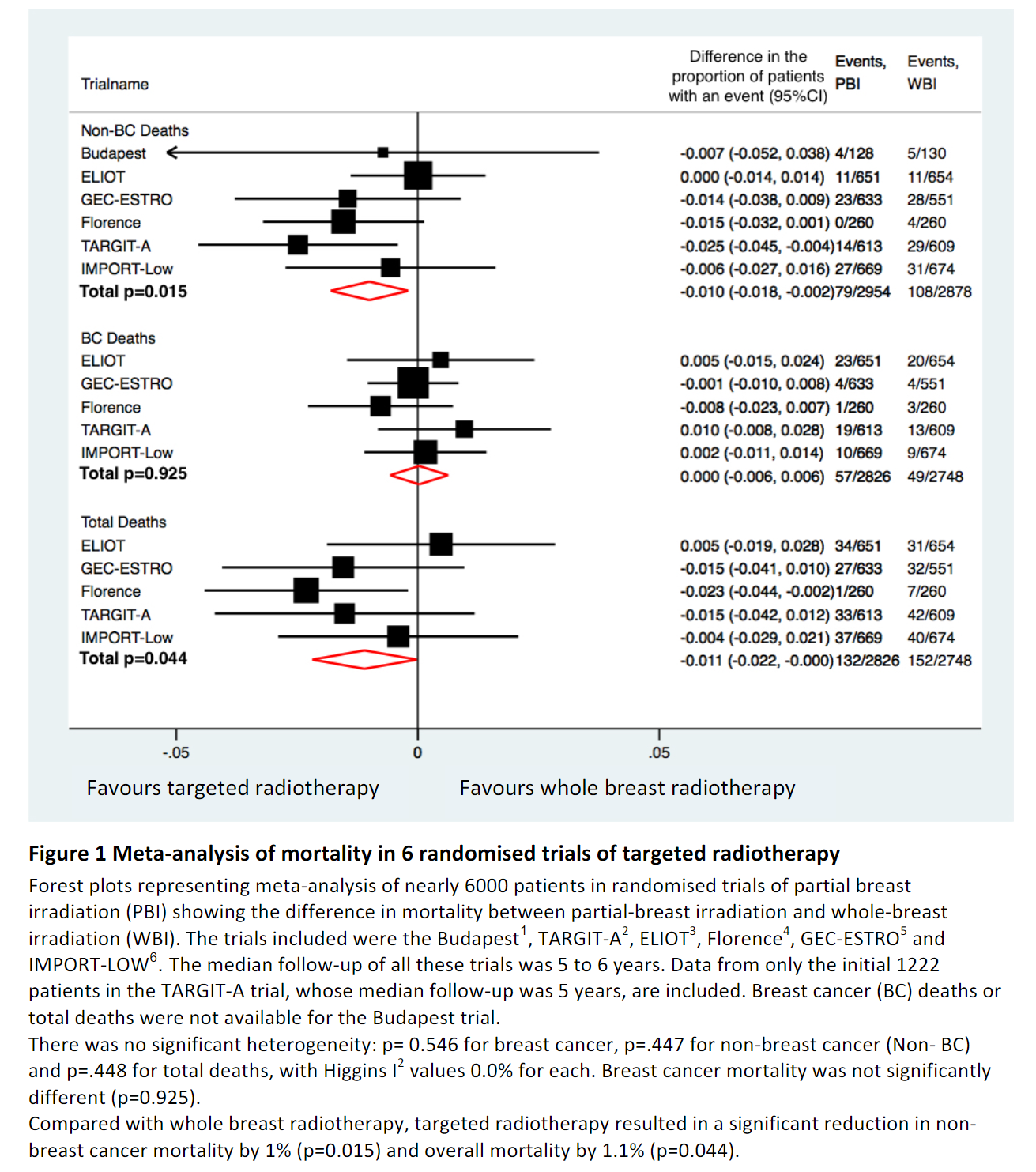
Last edited:
If a linear no threshold model were adopted (like eg the one Ralph W et al used to guess the increased CV risk from 1 Gy whole lung for COVID), it would still be more likely regardless of sidedness but 1) smaller for right sided, and thus 2) take a lot of patients to show if results were limited to right sided patients.Stupid question:
Did the TARGIT group analyse those additional cardiovascular deaths in the WBI group based on the side the primary tumor was?
An increased cardiovascular risk due to WBI for a right-sided breast cancer seems quite unlikely.
But it's not no-threshold for the heart, right?If a linear no threshold model were adopted (like eg the one Ralph W et al used to guess the increased CV risk from 1 Gy whole lung for COVID), it would still be more likely regardless of sidedness but 1) smaller for right sided, and thus 2) take a lot of patients to show if results were limited to right sided patients.
Radiotherapy side effects to the heart should be deterministic, not stochastic.
So (assuming a 1:1 distribution on side), wouldn't you need double the amount of patients to show it?
From the PDF you posted:
So, that means 12 more deaths in the EBRT group vs. TARGIT-IORT. That is almost half of the excessive, non-breast cancer associated mortality of the EBRT-group.
Let us assume that with cardiovascular deaths being the leading cause of death worldwide, about half of the deaths stated as "other causes/exact cause not given" were actually cardiovascular deaths. This is something one ccould assume, I believe. We have all done our share of clinical research and know how sloppy these CRFs are sometimes filled out.
That would mean 17 cardiovascular deaths with TARGIT-IORT and 32 with EBRT.
I would really like to know how many cardiovascular deaths happened in left vs. right irradiated patients in both the TARGIT-IORT and the EBRT group. Numbers are low, but still (perhaps) relevant.
But it's not no-threshold for the heart, right?
Radiotherapy side effects to the heart should be deterministic, not stochastic.
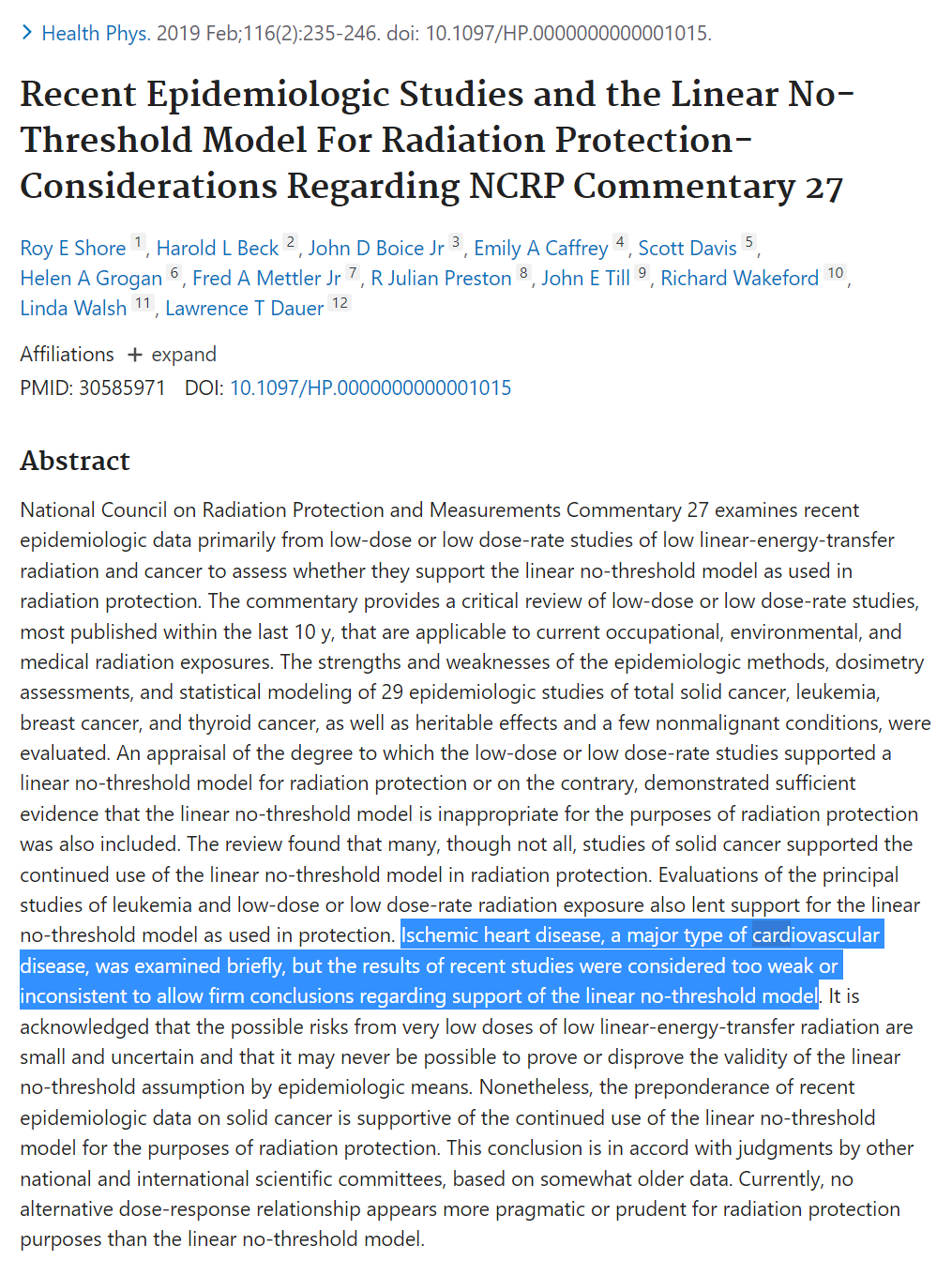
Recall that Ralph W said as little as 0.5 Gy to the heart increases death rates! Makes you wonder about scatter from contralateral breast RT, or cardiac radioablation.
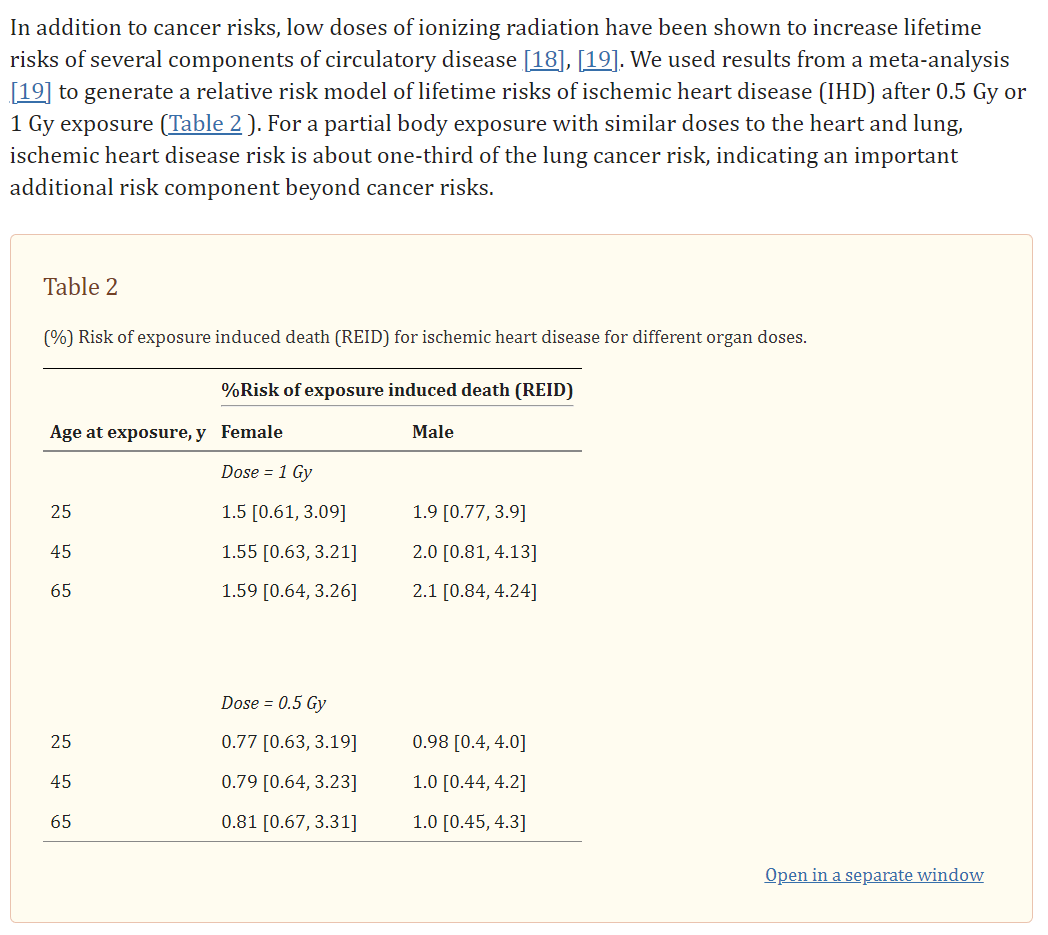
Recall that Ralph W said as little as 0.5 Gy to the heart increases death rates! Makes you wonder about scatter from contralateral breast RT, or cardiac radioablation.
If you believe the Darby paper, the absolute increase in cardiac issues with say an increase in 0 Gy to 4 Gy mean heart dose is very small.
I do not disagree.If you believe the Darby paper, the absolute increase in cardiac issues with say an increase in 0 Gy to 4 Gy mean heart dose is very small.
But, e.g., re: w/ one risk factor, and at 80yo after 0.5 Gy to the heart, the absolute risk of death is +0.1%.
This risk (0.1%) is about the same as the increased breast cancer risk for a post-menopausal woman taking HRT. And on the basis of this small risk, whereas almost all US postmenopausal women were on HRT in the 80s and earlier, by the early 21st century (at least in the U.S.) the practice had almost completely stopped.
A "small" risk is in the eye of the beholder. Let's just say I am at least "open-minded" to the idea that a kV PBI approach could have smaller CV risks vs whole breast EBRT. I do in no way think the case is proven!
It may be just a large burden of senescent cells, secreting inflammatory factors (inflamaging) has a small mortality detriment in a large enough group.
Last edited:
The question remains open if you would be able to see this „small risk“ in a randomized trial with a few thousand women. Questionable.A "small" risk is in the eye of the beholder. Let's just say I am at least "open-minded" to the idea that a kV PBI approach could have smaller CV risks vs whole breast EBRT. I do in no way think the case is proven!
Advertisement - Members don't see this ad
Similar threads

- Replies
- 20
- Views
- 1K

