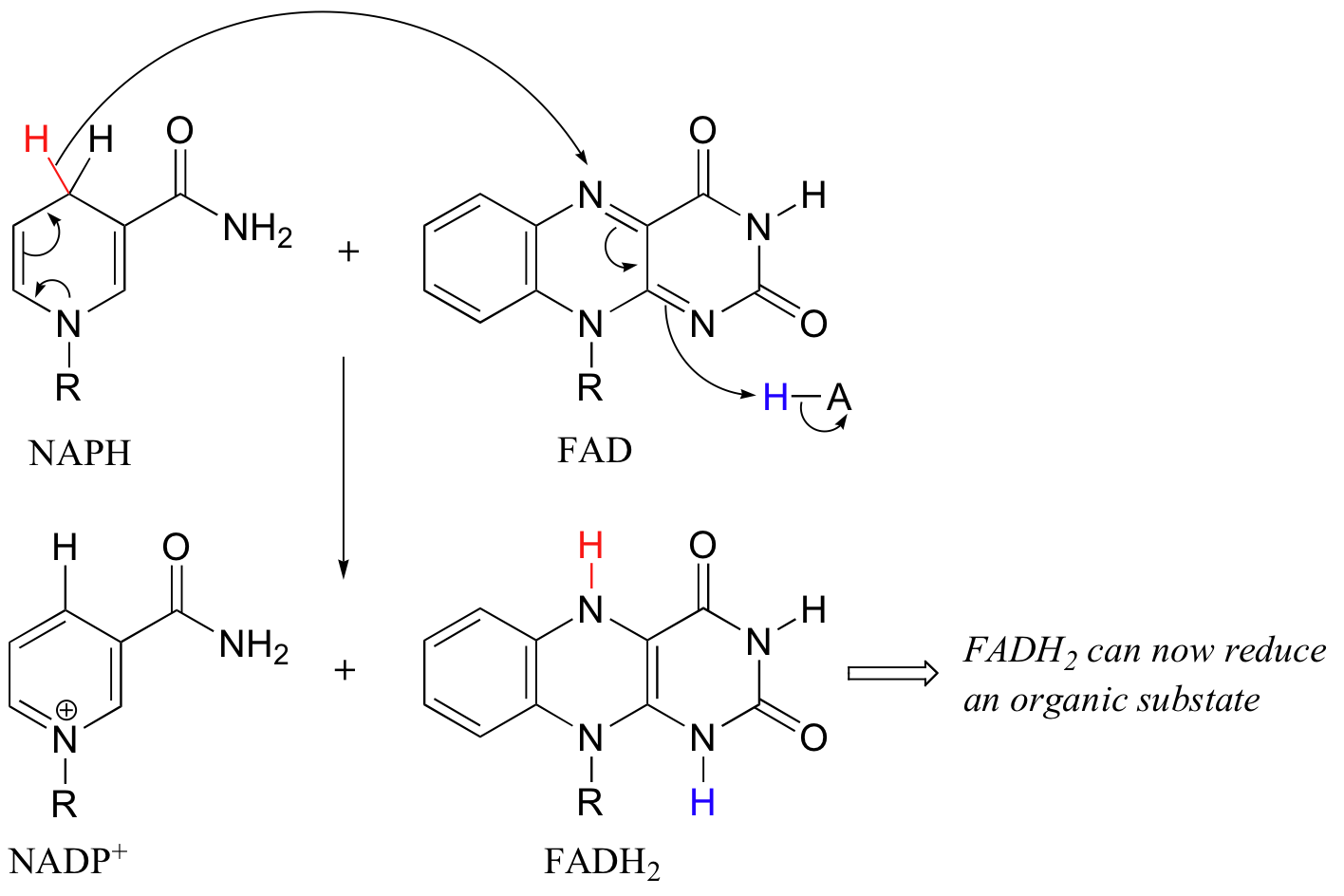
Look at the mechanisms of NAD+ and FAD. There are chemical changes that occur that may clear up your confusion. I don't know what protons you're referring to though - FADH2 will lose two protons and two electrons (proton and hydride equivalent) whereas NADH will lose only one proton and two electrons (hydride equivalent). Here's a mechanism showing electron transfer between these agents - a hydride equivalent (proton plus two electrons) is lost from NAPH and given to FAD, which also gains a proton from an acid somewhere. You can imagine the reverse process as well, where FADH2 is deprotonated by a base, causing it to give the hydride back to NADP+.