Advertisement - Members don't see this ad
Firecracker says this:
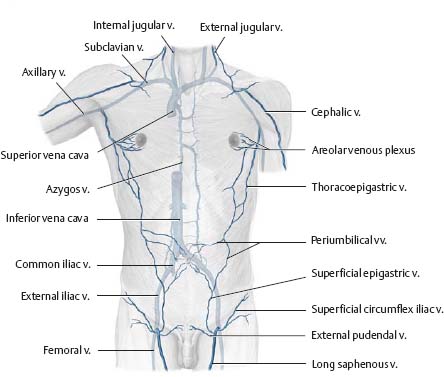
The portal vein is connected to the thoracoepigastric vein via the paraumbilical veins. Dilation of the thoracoepigastric and paraumbilical veins as a result of portal hypertension is what causes the characteristic finding of caput medusae (superficially dilated veins surrounding the umbilicus).
What exactly is the thoracoepigastric vein and what is its relevance to the superficial epigastric veins (which are dilated in caput medusae)?? First Aid 2017's diagram with the portosystemic anastomses doesn't label any thoracoepigastric vein.
The portal vein is connected to the thoracoepigastric vein via the paraumbilical veins. Dilation of the thoracoepigastric and paraumbilical veins as a result of portal hypertension is what causes the characteristic finding of caput medusae (superficially dilated veins surrounding the umbilicus).
What exactly is the thoracoepigastric vein and what is its relevance to the superficial epigastric veins (which are dilated in caput medusae)?? First Aid 2017's diagram with the portosystemic anastomses doesn't label any thoracoepigastric vein.