
Advertisement - Members don't see this ad
Well, it's more of a "motivation" one would give himself, rather than extrapolating.
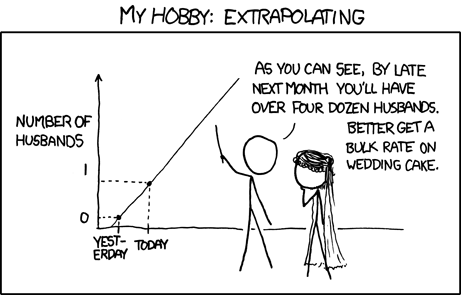
Funny graph though ! lol
Thanks anyway.

Use all the free resources available to you from SDN: articles, guides, expert advising, forums discussions, and school research.
Well, it's more of a "motivation" one would give himself, rather than extrapolating.


First, you got to get out of Iran. The US has no diplomatic relations with Iran. You wouldn't be able to get the visa required to study in the US. End of story.
Really? Then why do I hear about Iranian students? Hmmm... Are ya sure about that?

I don't want to beat a dead horse here but I'll pass on a sound piece of advice I was given which was already given in so many words in this thread but to be more direct.
Effort means nothing unless you have something to show for it. What I mean by that is that once you're out of high school "trying hard" isn't enough. If you have the wrong answer or the wrong idea of a problem then you're flat out wrong. The reason things are this way is that in the real world if you mess up even by a small margin you can face serious consequences, especially in the case of practicing medicine. So you can say you're going to try your absolute hardest but Harvard doesn't care, they only care about your grades and test scores along with the extracurricular activities. That is where the whole effort thing comes in.
All the best in your quest for medical school.

Can anyone show me how on earth am I supposed to be granted an admission and scholarship to Harvard Medical School?
There is virtually no such thing as a scholarship to medical school. Rarely are there medical scholarships. This is mostly since most of the matriculants are fabulous students, it is hard to chose who gets it. Sometimes a hospital will sponsor you to go, but that is also rare, and you will be required to work for them after residency (some even require that you do residency in their own hospital). Joining the military is another option in terms of finances. They will pay all of medical school expenses but you will be required to serve 4 years, plus however long your residency was. Most doctors have 10+ year service obligations if they choose this route. Most medical students graduate more than $150,000 US Dollars in debt.
A couple points of clarification:
1. Military repayment programs, like the HPSP, have various requirements for repayment of time owed. Not so sure about running into the 10+ year range.
2. New MD average debt as of the Class of 2011 is just north of $161k for public and private schools combined, but for context, that does include undergrad debt -- something over 1/3 of new doctors still had. AAMC source is here.
Also, I am unaware of any kind of program where a hospital will sponsor a medical student with the requirement that the med student then completes his residency there. Post a link for this.
1. 4 years of medical school + 4 years of residency = 8 years of service. Yes, I said 10+, but that's if you want a more specialized residency such as neurosurgery. Also, you don't need to do military residency unless you signed up for HPSP before, or during medical school.
2. You virtually just reinstated what I said, adding a little more information.
3. It's not a specific program. Usually it is just during your undergraduate years while you volunteer/do an internship at a hospital they may be impressed with your work and sponser you. That happened to my cousin.

.
3. It's not a specific program. Usually it is just during your undergraduate years while you volunteer/do an internship at a hospital they may be impressed with your work and sponser you. That happened to my cousin.

Harvard, like other well known schools, has its own agenda and quotas to fill. The quality and/or dedication of the students applying is not necessarily what gets you in. Do some more research and you'll see that there are many medical schools around the country that will give you an education just as good if not better. Don't get hung up on the name...among well- educated people names do not mean much...btw, getting in a US medical school as an international student is everything but easy, even for extremely well-qualified applicants. There are plenty of well-qualified american applicants.
what work? Your cousin's ability to fold bed sheets and follow doctors must have been unparalleled.
1. I'm no HPSP pro, but I think it's a little more complicated than that. I get a headache from looking at the threads about it in the military medicine forum here.
2. Because it's useful information from a useful source.
3. That's still foreign to me. I'd just be surprised to see a hospital say "okay kid, you're enough of a rockstar that we'll pave the way to your medical degree, provided you complete a residency with us. Never mind the fact that we have no idea what residency you might want by the time you're an MS4, whether or not that residency would want you in the first place, and oh, the hell with the NRMP and its match which has been used for the majority of US medical students since the 1950s."
Unless you're confusing that idea with how hospitals and groups may offer school loan repayment for physicians AFTER residency and AFTER medical school which the student completed on his own initially. That certainly exists, but that's not the same thing as the hospital putting someone through med school before they get there.
She's in emergency medicine. During her undergraduate years she volunteered at several hospitals and eventually she passed a course and got her EMT license. The same hospital where she worked as an EMT knew she was getting ready for medical school and they sponsored her. They did this under the agreement that she would do a residency in Emergency Medicine (something they were in dire need for).
.

Hello Everyone! I'm a sophomore at high school in Iran. I've just become a member, having found this website while trying to find a liable source to show me the path to Harvard Medical School.
I've done a lot of research online, visited HMS official website and all, but the thing is, though the requirements for admission are mentioned clearly, it's obscure to me as what actions I'll be able to take to meet those requirements. Since I live in Iran, my circumstances are awfully different. To briefly illustrate this difference, I should mention that:
1) The grading system in Iran is not GPA-based, but rather a score out of maximum 20 marks.
2) There's no SAT, MCAT (and literally anything !) being held anywhere.
3) The system of higher education and university is totally different, there's even no such thing as a "college". You would directly go to university for all of your years of education (approx. 7 years for medicine).
4) Volunteering? Gimme a break! Who's using that facility?! I mean there's NO SUCH THING here!
5)Classes and Credits? Just look at this: Anyone in any corner of Iran, will have to pass the same classes, studies the Very same textbook, and finally will take the same university entrance exam (called 'konkur'). I know, that sucks!
There's a lot more to say, but I just wanted to give a big picture of how puzzled I am. Can anyone show me how on earth am I supposed to be granted an admission and scholarship to Harvard Medical School?😎
(I'm already putting my best effort in studies and I'm ready to do what it takes to get into Harvard, whatever may it be)
P.S: One more thing- I'm currently preparing for "IBO contest (International Biology Olympiad)". I'd like to know that, in case of winning a national or international medal, will that be shining on my resume and be a big advantage to be granted a scholarship?😳
Thank you very much!
Hahaha, I forgot about this thread! Ah, memories...
There is virtually no such thing as a scholarship to medical school. Rarely are there medical scholarships. Sometimes a hospital will sponsor you to go, but that is also rare, and you will be required to work for them after residency.
So you can say you're going to try your absolute hardest but Harvard doesn't care, they only care about your grades and test scores along with the extracurricular activities. That is where the whole effort thing comes in.
yeah, good point. I've always wanted to know, does getting an international baccalaureate help me in any way? I mean the exam is a breeze and I can take it in Tehran, but does that really help in any way?(Foreign students who do not have a baccalaureate or advanced degree from an institution in the United States or Canada are rarely accepted for admission.)
10+ years??? Boy that's interminable. Would you choose this route willingly?Joining the military is another option in terms of finances. They will pay all of medical school expenses but you will be required to serve 4 years, plus however long your residency was. Most doctors have 10+ year service obligations if they choose this route.
10+ years??? Boy that's interminable. Would you choose this route willingly?



Our mission is to provide students with free, unbiased information, resources, and advising for careers in the health professions. We believe every student deserves access to trustworthy guidance, regardless of background or ability to pay.


