

Advertisement - Members don't see this ad
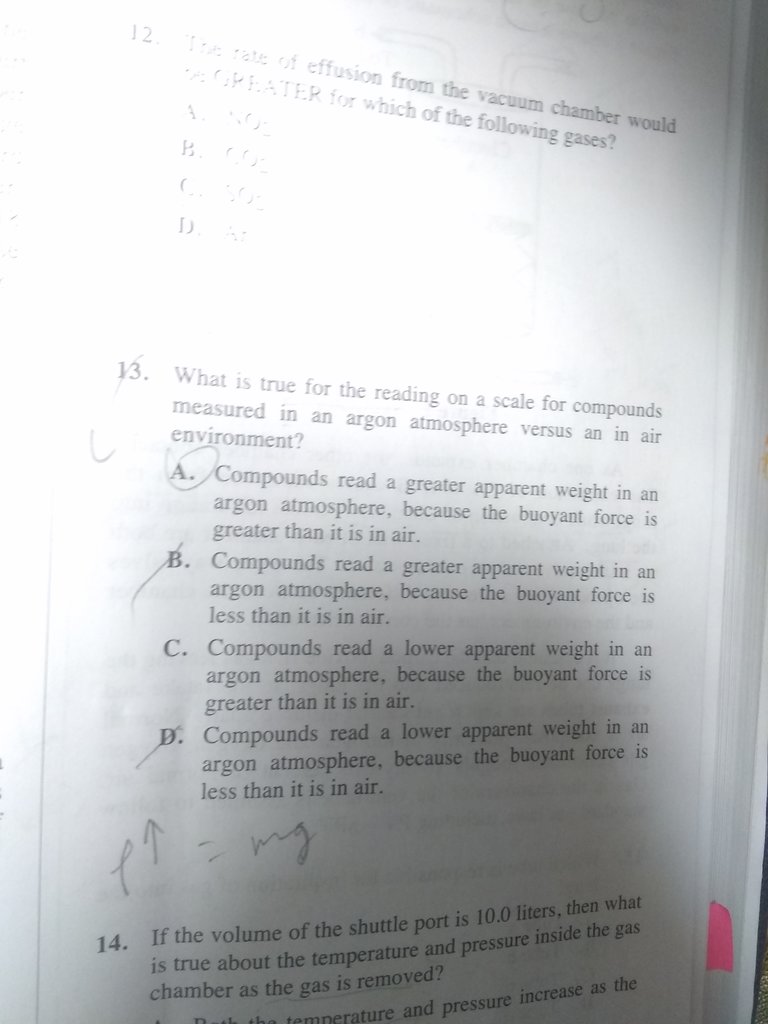
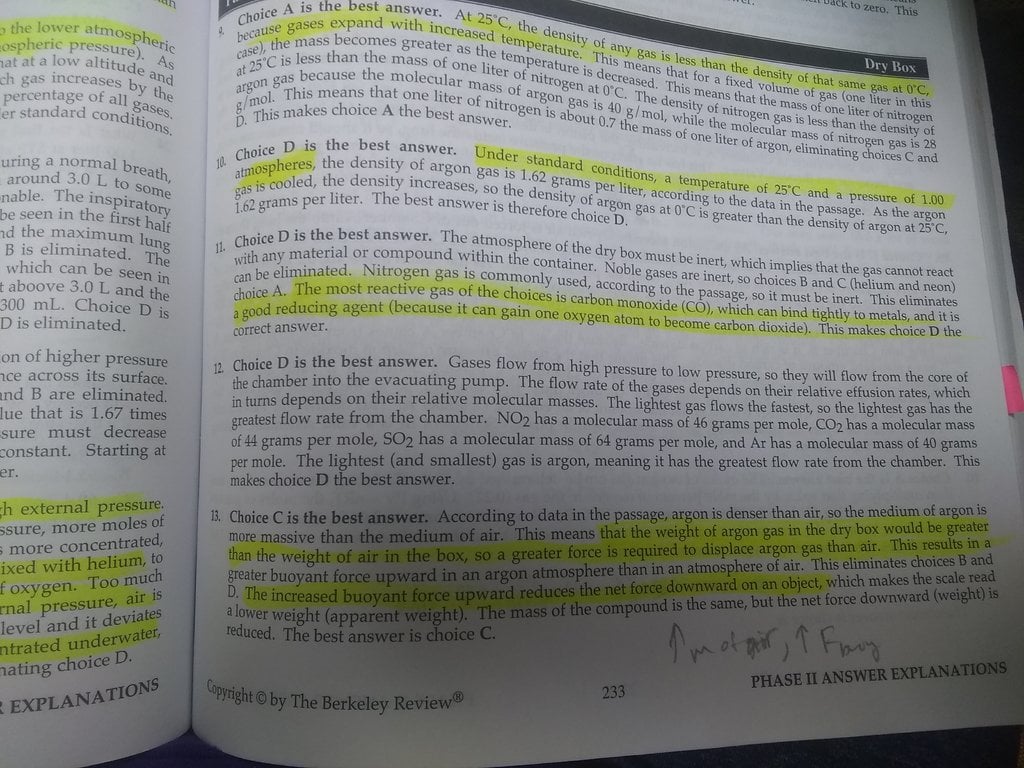
So Q13 says that the compound in argon gas will have a greater buoyant force than the compound in nitrogen air. I agree with this, since heavier compound s have greater buoyant forces.
But the compound is weighed in a scale, so doesn't that mean the (rho)Vg=mg since the object won't be floating? Thus a greater density will correlate to s greater mass read on the scale instead of less mass if u cancel out g to get rhoV=m
This is not the answer. The andwer says the object has a lower apparent weight on scale.
But the compound is weighed in a scale, so doesn't that mean the (rho)Vg=mg since the object won't be floating? Thus a greater density will correlate to s greater mass read on the scale instead of less mass if u cancel out g to get rhoV=m
This is not the answer. The andwer says the object has a lower apparent weight on scale.


