

You are using an out of date browser. It may not display this or other websites correctly.
You should upgrade or use an alternative browser.
You should upgrade or use an alternative browser.
How competitive is IR fellowship after DR residency?
Started by scoopdaboop

Get help with your application
Use all the free resources available to you from SDN: articles, guides, expert advising, forums discussions, and school research.
IR fellowship is now 2 years...not very competitive
IR fellowship is now 2 years...not very competitive
Yeah, 6 vs 7 years seems like an insignificant difference that wouldn't drastically decrease competitiveness to me... I mean something like interventional cards is still competitive even after the regular cardio fellowship. I would imagine interventional radiology also seems like a "safer" specialty where if you have the training, you sort of don't have to worry about the "AI craze".
Advertisement - Members don't see this ad
Yeah, 6 vs 7 years seems like an insignificant difference that wouldn't drastically decrease competitiveness to me... I mean something like interventional cards is still competitive even after the regular cardio fellowship. I would imagine interventional radiology also seems like a "safer" specialty where if you have the training, you sort of don't have to worry about the "AI craze".
you are wrong. anyone who wants to do IR gets onto the direct pathway which is 6 years. an extra year when you've already been in training for 6 years is a lot to swallow.

Just to clear up the confusion, there are now three pathways of training for IR:
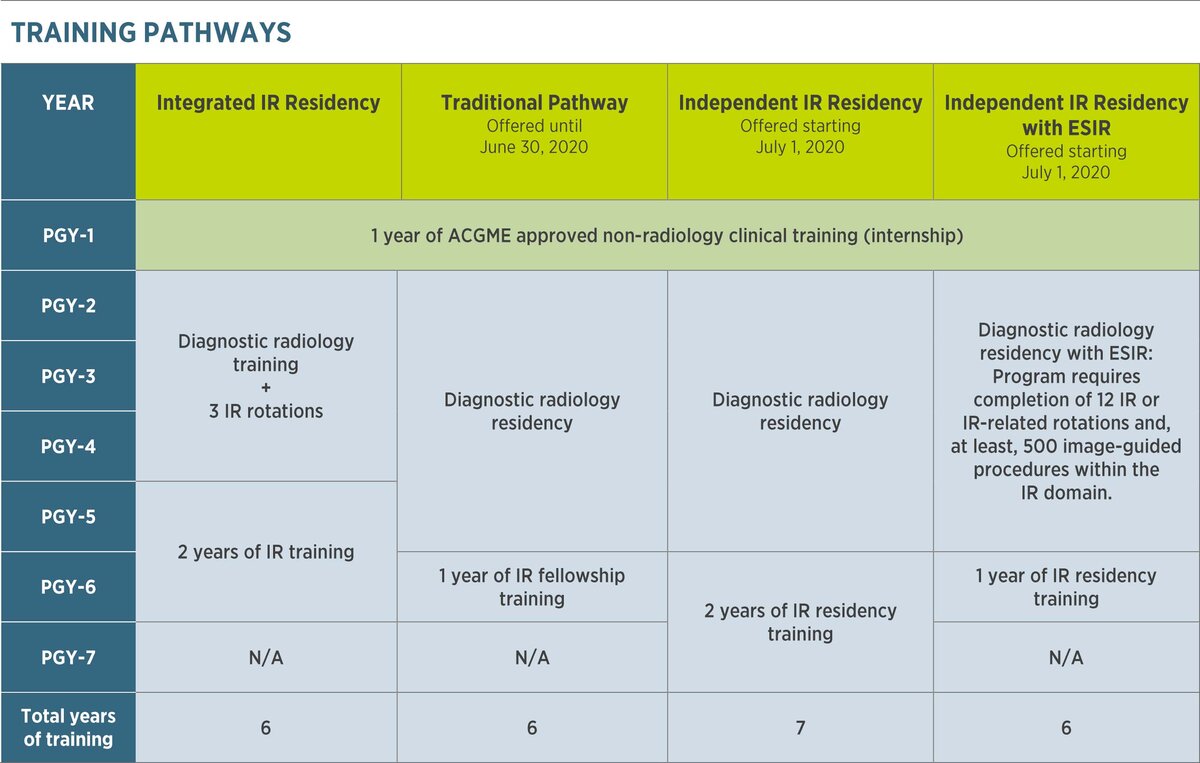
Everyone who applies for IR fellowship and is not in a combined program will do ESIR. The past data for IR fellowship match rates are irrelevant, because this year is the first year that ESIR residents will be applying for fellowship spots which are partially taken up by IR/DR combined residents. So nobody knows how competitive it is yet.
Everyone who applies for IR fellowship and is not in a combined program will do ESIR. The past data for IR fellowship match rates are irrelevant, because this year is the first year that ESIR residents will be applying for fellowship spots which are partially taken up by IR/DR combined residents. So nobody knows how competitive it is yet.
Just to clear up the confusion, there are now three pathways of training for IR:
View attachment 316381
Everyone who applies for IR fellowship and is not in a combined program will do ESIR. The past data for IR fellowship match rates are irrelevant, because this year is the first year that ESIR residents will be applying for fellowship spots which are partially taken up by IR/DR combined residents. So nobody knows how competitive it is yet.
Is it known if many of the independent IR residencies will be transitioning to the integrated IR pathway over the next several years? Additionally, how many spots are available via 1 and 2-year pathway, and will the IR fellowship match rate be released?
So there’s still going to be integrated IR along with ESIR and now the 2 year fellowship after? What’s with all this convoluted mess.Just to clear up the confusion, there are now three pathways of training for IR:
View attachment 316381
Everyone who applies for IR fellowship and is not in a combined program will do ESIR. The past data for IR fellowship match rates are irrelevant, because this year is the first year that ESIR residents will be applying for fellowship spots which are partially taken up by IR/DR combined residents. So nobody knows how competitive it is yet.

When I was on the interview trail I never heard of any infighting for ESIR spots, and it was “pretty” common that people would leave their integrated IR residency, transitioning to DR, opening up a spot that a DR resident slid into.
Before integrated IR became a thing the match rates for IR hovered around where other fellowships for DR were: in other words, not competitive. If you really wanted an IR spot you’d find one without having to go gung-ho neurosurg mode.
Before integrated IR became a thing the match rates for IR hovered around where other fellowships for DR were: in other words, not competitive. If you really wanted an IR spot you’d find one without having to go gung-ho neurosurg mode.
What programs did integrated VIR residents transition to DR spots? Any tell tale signs that would occur. I think that this can happen, if you assume VIR is surgery light and if you don't have adequate exposure your MS4 year to busy surgical type rotations. VIR has increased work load and is becoming much more surgical in nature with surgical hours and an increase in surgical type personalities. DR , has a much more manageable day to day lifestyle.
medradthrowaway
Full Member
it's going to be a 2 year followship soon, i highly doubt that many peolple are eager to be a PGY 7 (approaching neurosurg territory here).
So IR fellowship sucks, surgery hours etc etc. But attending life as an IR doc seems kush? 12-14 week vacays and you work 8-5, and the obvious call. Anything else I'm missing here? Why would IR be a bad option even if it's a 2 year deal.
medradthrowaway
Full Member
So IR fellowship sucks, surgery hours etc etc. But attending life as an IR doc seems kush? 12-14 week vacays and you work 8-5, and the obvious call. Anything else I'm missing here? Why would IR be a bad option even if it's a 2 year deal.
Far from cush...the IR guys at my hospital comes in at 3 to 4 am more often than I expected. Also, at 4 or 5...there will be a sudden dumping of procedures on you from the other docs that want to get out at 5 and not wanting to do it.

Far from cush...the IR guys at my hospital comes in at 3 to 4 am more often than I expected. Also, at 4 or 5...there will be a sudden dumping of procedures on you from the other docs that want to get out at 5 and not wanting to do it.
Yeah agree completely. Just a med student, but ive already seen how busy these guys are. Its definitely not a clock in at 8 punch out at 5 job

IR Categorical this year: 81% match rate - 144 total participants
IR fellowship this year: 83% match rate (down from 95% last year) - 204 total participants (down from 224 last year)
So at a glance it looks like fellowship is still the majority of seats, but may be getting more competitive due to relative scarcity as spots convert over to categorical. Vice versa, categorical will become less competitive as more spots open up (already seen from the much increased match rated compared to categorical IR in 2018 Charting Outcomes)
Overall looks like a bad time to be someone on the fence - if you aren't able to commit upfront and land a categorical spot, you might find it a lot tougher to land a fellowship in ~4 years than they traditionally used to be
IR fellowship this year: 83% match rate (down from 95% last year) - 204 total participants (down from 224 last year)
So at a glance it looks like fellowship is still the majority of seats, but may be getting more competitive due to relative scarcity as spots convert over to categorical. Vice versa, categorical will become less competitive as more spots open up (already seen from the much increased match rated compared to categorical IR in 2018 Charting Outcomes)
Overall looks like a bad time to be someone on the fence - if you aren't able to commit upfront and land a categorical spot, you might find it a lot tougher to land a fellowship in ~4 years than they traditionally used to be

Far from cush...the IR guys at my hospital comes in at 3 to 4 am more often than I expected. Also, at 4 or 5...there will be a sudden dumping of procedures on you from the other docs that want to get out at 5 and not wanting to do it.
The 4 o'clock consult dumps are the worst.
I'm glad I decided to not apply for IR.
Advertisement - Members don't see this ad


