Iron+Bile question. Going crazy.

Started by pfaction
This forum made possible through the generous support of SDN members, donors, and sponsors. Thank you.
Get help with your application

Use all the free resources available to you from SDN: articles, guides, expert advising, forums discussions, and school research.

pfaction

Full Member
10+ Year Member
Advertisement - Members don't see this ad
http://forums.studentdoctor.net/showthread.php?t=496647 but this is an older thread, didn't want to bump it.

I read somewhere in my notes that Iron is eliminated continually in small amounts through the feces (bile). I cannot find these notes. I looked on pubmed and found something that dealt with rats and an oral iron chelator. I also have read that iron is not actively excreted in any way from the body. I would assume since heme breaks down into bilirubin the pathways are interconnected...can anyone post a pathway or a link so I can straighten my mind? Thanks!
 
I seem to remember my prof saying that our only significant way of getting rid of iron is basically bleeding? I could be wrong--I kind of forget since MS1 ended 1 week ago 😕
 
jsf0k3.gif
 
Advertisement - Members don't see this ad
I hope you're not calling me an idiot, VOR. I was simply curious about a question - I found a topic that was somewhat discussing it, I did a PubMed search, but I still had questions.

That's the thing, bomg. Bleeding obviously loses iron - that's why women need more than men do, menstruation. But the fact is, we have to lose iron somehow - the RES can recycle iron but we do have to replenish it like everything else. There may be no way to ACTIVELY secrete iron but it has to be passively lost. I read somewhere that it was due to fecal elimination. I cannot find that source. I found another pubmed source on rat fecal elimination, which would be passive.
 
🙁 I clearly remember seeing biliary excretion being passive and continuous, but I guess I can take relish in the fact that bile -> feces. Technically, when enterocytes are tossed into the GI, maybe they're taken via portal and then my mechanism?

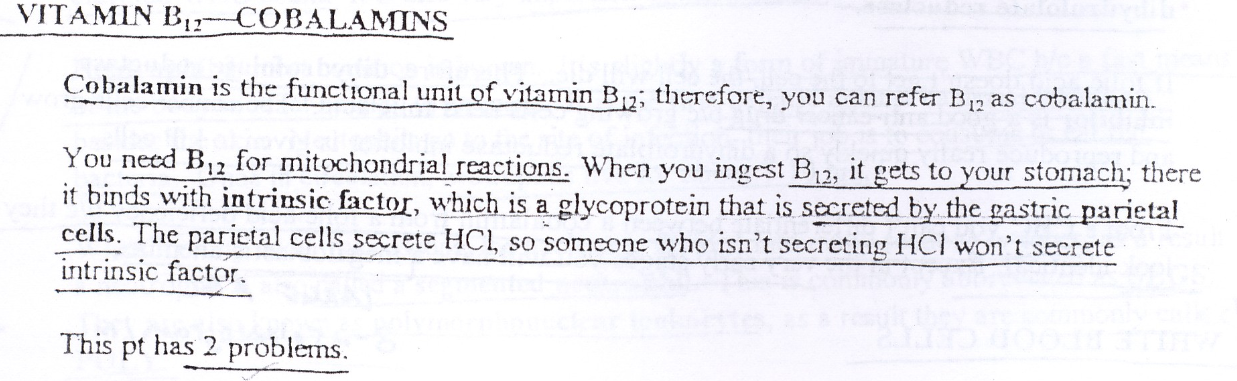
I also read that PPI's cause B12 anemia since they inhibit paretial cells from secreting H2 and IF...but I can't find that either, all I see is Iron and Ca absorption decreased due to low acid. God this sucks.
 
According to an older ed of FA, Magneto pulls it out of you when you're guarding him.

Xmen2_0.png
 
🙁 I clearly remember seeing biliary excretion being passive and continuous, but I guess I can take relish in the fact that bile -> feces. Technically, when enterocytes are tossed into the GI, maybe they're taken via portal and then my mechanism?

I also read that PPI's cause B12 anemia since they inhibit paretial cells from secreting H2 and IF...but I can't find that either, all I see is Iron and Ca absorption decreased due to low acid. God this sucks.
Why does this suck so much--do you have a burning desire to find out that everything in textbooks is wrong?
 
🙁 I clearly remember seeing biliary excretion being passive and continuous, but I guess I can take relish in the fact that bile -> feces. Technically, when enterocytes are tossed into the GI, maybe they're taken via portal and then my mechanism?

I also read that PPI's cause B12 anemia since they inhibit paretial cells from secreting H2 and IF...but I can't find that either, all I see is Iron and Ca absorption decreased due to low acid. God this sucks.

Let's give it a tilt-o-whirl!

IRONZ
Iron is ingested in the food you eat. There is one way it gets into the body... through the gut. Iron is absorbed at a rate of about 1mg/day. The maximum absorption of of iron is 3mg/day. It is absorbed into enterocytes, then from enterocytes into the blood stream.

Ferritin and Transferrin are products of how much iron you have. Let's just eliminate those, right now, because they confound the understanding of iron, though you can spend an entire page and a half in a physiology textbook talking about liver synthesis, this up, that down, and why.

Iron in is rate limited (except in people with hemochromatosis who get iron overloaded because there is no "stop absorbing iron" signal). What about iron out? "Out" needs to be clarified. For all intents and purposes, the GI tract is "outside the body" because it has not been absorbed into the blood. So, when you say (correctly) that iron is lost into the stool, what you really are saying is "the iron that was never absorbed is eventually eliminated into the stool, the enterocytes that absorbed it die, slough off, and take the left over 'outside-the-body-iron' with it."

There is no mechanism in which Iron is taken out of the body, that is, out of the blood, and put back into the environment. This is why people with hemochromatosis get iron overloaded. Too much actually gets into the blood stream, and the body has no means of dealing with it, so it gets deposited in major organs. This is also why people who need regular blood transfusions (Hemophilia B Major), who get 350mg of iron every MONTH (enough iron for the year) with every transfusion need iron chelation with deferoxamine (of the newer oral defisiraox...spelling).

Bleeding is the only means of removing iron from the body.

🙁 then my mechanism?

The natural question should be if bleeding is the only way you get rid of iron, and you absorb 1mg/day, won't you be iron overloaded by the time you're 60? Thats a good question. The other way you get rid of iron is to use it. You use it to make heme. Heme + Globin = Hemoglobin. Hemoglobin goes in red blood cells. Red blood cells last 120 days. When they die, hemoglobin --> un conjugated bilirubin --> liver --> conjugated bilirubin --> bile --> stool. So... heme is eliminated in the form of bilirubin into the stool. Iron is in heme. So... iron is eliminated through the bilirubin into the stool (technically) but it is NOT the processing of iron that does it, it is the processing of hemoglobin that happens to have iron.

So why make the distinction, right? Iron in the stool is iron in the stool. You make the distinction because hemolysis is NOT a treatment for iron overload. People with chronic hemolysis (sickle cell) need to be supplemented with iron. But people with iron overload cannot get rid of excess iron by increasing biliary excretion. They need medical chelation (multiple transsfusions) or to be blood letted (hemochromatosis).

So while TECHNICALLY "iron is eliminated in the bile" (as hemoglobin), the only REAL way of getting iron out of the body is bleeding. Most of the iron in the stool was never absorbed in the first place, it was the stuff in enterocytes the body never wanted.

 
So while TECHNICALLY "iron is eliminated in the bile" (as hemoglobin), the only REAL way of getting iron out of the body is bleeding. Most of the iron in the stool was never absorbed in the first place, it was the stuff in enterocytes the body never wanted.

I was thinking this as well, but I wiki'd the composition of bilirubin and Fe is not attached. A quick pubmed reveals that a small fraction of the iron in heme is excreted in bile, possibly with transferrin.
 
I also read that PPI's cause B12 anemia since they inhibit paretial cells from secreting H2 and IF...but I can't find that either, all I see is Iron and Ca absorption decreased due to low acid. God this sucks.

Lets talk about parietal cells. Parietal cells produce IF (required for B12 absorption in the terminal ileum) and Acid. They are stimulated by Ach (vagus), Gastrin (G Cells in the Antrum of the stomach), and Histamine. I want you to picture this: a cell with 3 receptors and two outputs. This is first year physiology come back to bite you.

Body Blood
-----HR--------GASTRIN-R-------ACH-R---
|____________________________________|
|____________________________________|
|____________________________________|
|____________________________________|
---------ACID PUMP--------IF PUMP--------
Gastric Lumen

Histamine, Gastrin and ACh all work through a common second messenger system (I forget if its PKA or IP3, and it doesnt matter) to produce Acid. These have no impact on the IF pump. The short answer, is that PPI's have no impact on Intrinsic Factor.

You don't like that answer. There isn't enough physiology in it. Ok. Let's just say, for the sake of argument, that any time you turn on a parietal cell, you turn on both, and if you turn off a parietal cell you turn off both. You want to control their acid symptoms with a PPI. Where does the PPI work? HR, Gastrin-R, ACh-R, IF Pump, or the Acid Pump? Hopefully, you said Acid Pump. PPIs (the proton pump inhibitors, protons are acid) target the OUTPUT of acid at the luminal side. Do PPIs ever turn off the parietal cell? That is, do they impact the go signal from Gastrin, Histamine, or Ach? No they don't. Do they target the IF pump? No they don't. Does IF go through the Proton pump? No it does not. So then, I hope without a lot of physiology, and with a little bit of logic, you can reconcile that PPI's do NOT decrease the amount of IF, and do not cause pernicious anemia.

By the way, pernicious anemia is the specific disease where IgA antibodies destroy parietal cells, not the process of B12 deficiency by any underproduction of IF. I think you meant to say "PPIs cause reduced IF, and so can cause a B12 Deficiency Anemia." Also becareful with using abbreviations like H2. I know you meant H+H as in hydrogen gas, but H2 is usually interpreted as Histamine-Receptor-Type-2. The stuff that gets pumped out of the proton pumps is better understood as H+ (since it does lower gastric pH).

If they did, I'd be in big trouble, since I take 80mg of Zegerid daily (and have never been anemic, nor have I ever had an abnormal B12 (i maxed out my payments for my insurance with an EGD, and so anything I ordered after that was free for the year. Man did I order...)
 
I was thinking this as well, but I wiki'd the composition of bilirubin and Fe is not attached. A quick pubmed reveals that a small fraction of the iron in heme is excreted in bile, possibly with transferrin.

More truth, I like it. Its still "used iron in used hemoglobin goes to the liver and iron goes with it."

I stick with easy-to-understand concepts and basic physiology everyone should know. But thanks for calling me out on what is the actual fact of the matter.
 
OveractiveBrain, thank you.

JFYI, I am a pharmacy student...I do understand the physiology and all. But here is the reference for the B12.

VOZja.png


This is also where I probably read the bile thing, I'll post it if I find it. I just saw the book and went OH SH--! So...that's where I got this from.

We also learned that pernicious anemia is when IG's bind to secreted IF...not the mechanism you said, but I'll gladly believe yours.