
-
CycleTrack and SDN are teaming up to make medical school admissions more transparent and accessible! Read the announcement to learn how we’re supporting the future of CycleTrack’s free application-tracking tools .
You are using an out of date browser. It may not display this or other websites correctly.
You should upgrade or use an alternative browser.
You should upgrade or use an alternative browser.
Let's do some echo:
Started by sevoflurane

Get help with your application
Use all the free resources available to you from SDN: articles, guides, expert advising, forums discussions, and school research.
Sethco, I agree, the description is pretty funny. But without knowing the clinical scenario its hard to know what direction to go, so just trying to show where my thoughts are. If it were a catheter, did it go through the NCC?
Advertisement - Members don't see this ad

You pretty much just described exactly the appearance of a well placed Impella, without actually saying the word. That's pretty funny right there.
This would be my guess
I definitely thought the first image without the LAX available was a fibroelastoma
Yes sir. Impella placement post bypass.
Nice job with your description GhostTree.
Balloon dilation in prep for AV deployment in TAVR. Is there a pericardiel effusion?
No TAVR, but yes on the pericardial effusion. Nice pick up.
Same case, different views:


Lol it's either a Russian bot or someone was researching and absent-mindedly posted without looking at dates.

Of all the possible threads to necrobump at least this was a good one. We should revive it- I’ll try to remember to post some of my images later
Of all the possible threads to necrobump at least this was a good one. We should revive it- I’ll try to remember to post some of my images later
Nice Rorschach image I had yesterday
![umg]](/proxy.php?image=https%3A%2F%2Fi.imgur.com%2FF5mV1Lr.gif%5B%2Fumg%5D&hash=d0ba7e11f24d7df2e894c68ede85c23a)

It's a dolphin baby
I was thinking velociraptor.It's a dolphin baby
Nice necro bump... lol
@vector2 how are you uploading your images to SDN?
USB from echo machine/CV synapse... then what. All mine are phone vids so quality isn’t as nice.
@vector2 how are you uploading your images to SDN?
USB from echo machine/CV synapse... then what. All mine are phone vids so quality isn’t as nice.
My machine uploads the images automatically to GE Centricity PACS when I connect the ethernet cable. Once uploaded I use our intranet web browser to open PACS remotely and bring up the study. From there I use an awesome free site gifcap to do a screen capture of the PACS clip playing in the browser. Then I download the clip and upload to the excellent free image host www.imgur.comNice necro bump... lol
@vector2 how are you uploading your images to SDN?
USB from echo machine/CV synapse... then what. All mine are phone vids so quality isn’t as nice.
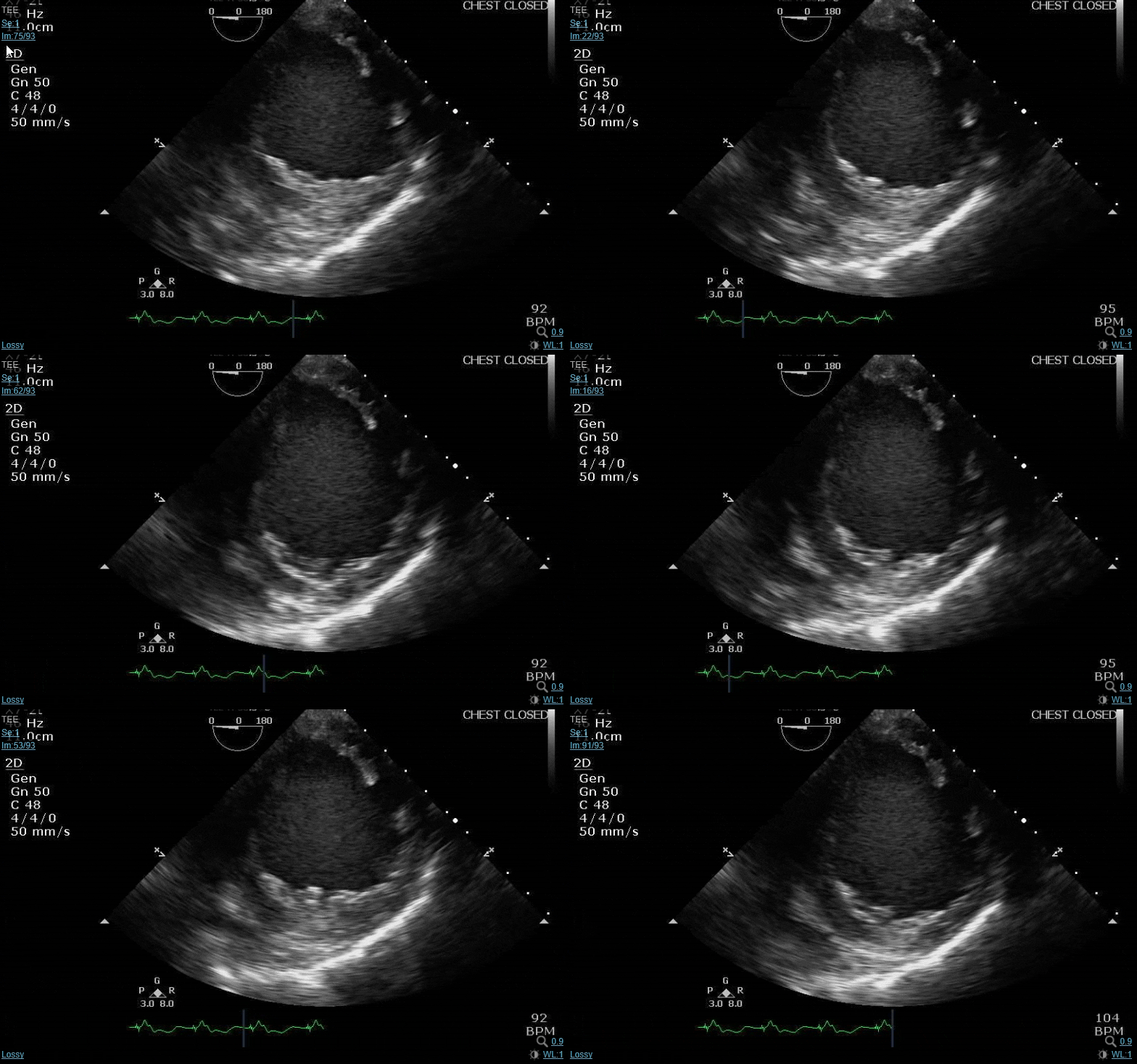
One more bread and butter wall motion. Take note of the annotation in the top right and the ekg when making an assessment
Advertisement - Members don't see this ad
I'm terrible with echo. LAD or left main? LV looks pretty dilated, maybe 30% EF?One more bread and butter wall motion. Take note of the annotation in the top right and the ekg when making an assessment
I'm terrible with echo. LAD or left main? LV looks pretty dilated, maybe 30% EF?
Probably the first thing to identify is the view. This is a Transgastric mid esophageal LV short axis view. This is the view you look at to asses all 3 coronary distributions. From there you can make some deductions of what is happening.
Ouch. LCx went down with left dominant circulation would be my guess?
Left or right, that was 50-50 🤣I'm terrible with echo. LAD or left main? LV looks pretty dilated, maybe 30% EF?
Posterior wall is akinetic so i would say RCA is the pb
Last edited:

Baby seal.Nice Rorschach image I had yesterday
Ouch. LCx went down with left dominant circulation would be my guess?
Left or right, that was 50-50 🤣
Posterior wall is akinetic so i would say RCA is the pb
It does appear that lateral and inferior distributions are akinetic.
Now, as far as mechanism for his RWMAs.......
What if I told you:
1) this TG SAX is from the same patient featured in the Rorschach image above
2) He's 28 yo and his coronaries are clean
Why does his function look like it does?
Ah dammit. I flipped it in my head! I keep thinking probe is at the bottom of the screen! LolLeft or right, that was 50-50 🤣
Posterior wall is akinetic so i would say RCA is the pb
Interesting- lots of reasons to have decreased function (severe MR with blown out LV, Takotsubo, septic cardiomyopathy, coronary vasospasm if the IE was a result of IVDU involving cocaine)... but most of those wouldn’t cause this regional distribution of WMAs. Makes me wonder ‘bout LCx compromise by the mitral valve (if this was immediately post placement) or more likely in this case paravalvular abscess near lateral annulus?It does appear that lateral and inferior distributions are akinetic.
Now, as far as mechanism for his RWMAs.......
What if I told you:
1) this TG SAX is from the same patient featured in the Rorschach image above
2) He's 28 yo and his coronaries are clean
Why does his function look like it does?
What makes you think of mitral instead of aortic valve?!?!?!?!!!Interesting- lots of reasons to have decreased function (severe MR with blown out LV, Takotsubo, septic cardiomyopathy, coronary vasospasm if the IE was a result of IVDU involving cocaine)... but most of those wouldn’t cause this regional distribution of WMAs. Makes me wonder ‘bout LCx compromise by the mitral valve (if this was immediately post placement) or more likely in this case paravalvular abscess near lateral annulus?
also this is from a below mid papillary level....
Interesting- lots of reasons to have decreased function (severe MR with blown out LV, Takotsubo, septic cardiomyopathy, coronary vasospasm if the IE was a result of IVDU involving cocaine)... but most of those wouldn’t cause this regional distribution of WMAs. Makes me wonder ‘bout LCx compromise by the mitral valve (if this was immediately post placement) or more likely in this case paravalvular abscess near lateral annulus?
His MR was surprisingly just mild-moderate in my exam and his previous studies.
Not takotsubo.
He does have infective endocarditis but he was very defervesced. Great response to abx, almost normal white count, no fever, room air, normal blood pressure, negative trp and baseline bnp, no other organ compromise- just a large, very mobile tumor burden actually causing mostly MS.
He does heroin, not cocaine.
Lcx was fine.
No abscess in the annulus.
Hint: He came to the OR with this LV geometry and these WMAs- it wasn’t just a post-bypass finding. Since this is a reoperation (lucky IVDU’er getting a *2nd* MVR), think of the possible sequelae if he had an extensive vegetation burden before his 1st operation.
Interesting- lots of reasons to have decreased function (severe MR with blown out LV, Takotsubo, septic cardiomyopathy, coronary vasospasm if the IE was a result of IVDU involving cocaine)... but most of those wouldn’t cause this regional distribution of WMAs. Makes me wonder ‘bout LCx compromise by the mitral valve (if this was immediately post placement) or more likely in this case paravalvular abscess near lateral annulus?
One more hint. During the first MVR it was discovered that the pt not only had extensive leaflet involvement but also IE of the subvalvular apparatus.
I’m stumped. Veg embolus to a coronary? Prior LV pseudo aneurysm that was repaired?One more hint. During the first MVR it was discovered that the pt not only had extensive leaflet involvement but also IE of the subvalvular apparatus.
I’m stumped. Veg embolus to a coronary? Prior LV pseudo aneurysm that was repaired?
I mentioned that during his first surgery significant IE burden was found, including on the subvalvular apparatus....which at the time required extensive chordal resection.
Keep in mind that the totality of the mitral apparatus (annulus, leaflets, chords, paps), not just LV myocardium, is required for physiologic LV systolic function, and the LV really does not like it when its constituents are disrupted.
"The importance of preserving the mitral valve apparatus in maintaining normal left ventricular mechanics and contractile function has been further emphasized in several experimental and clinical studies. These studies demonstrated that disrupting the chordae tendineae caused a reduction in contraction in left ventricular segments adjacent to the papillary muscles, a less spherical geometry during isovolumic systole, a more spherical geometry at end systole, and a reduction in contractile state."
Think of the locations of the posteromedial and anterolateral papillary muscles...now you know why his function is decreased with clean coronaries but in a specific RWMA pattern.
Last edited:
Nice, very interesting case and nice example of this physiology- thanks for sharing!I mentioned that during his first surgery significant IE burden was found, including on the subvalvular apparatus....which at the time required extensive chordal resection.
Keep in mind that the totality of the mitral apparatus (annulus, leaflets, chords, paps), not just LV myocardium, is required for physiologic LV systolic function, and the LV really does not like it when its constituents are disrupted.
"The importance of preserving the mitral valve
apparatus in maintaining normal left ventricular mechanics and contractile function has been further emphasized in several experimental and clinical studies. These studies demonstrated that disrupting the chordae tendineae caused a reduction in contraction in left ventricular segments adjacent to the papillary muscles, a less spherical geometry during isovolumic systole, a more spherical geometry at end systole, and a reduction in contractile state."
Think of the locations of the posteromedial and anterolateral papillary muscles...now you know why his function is decreased with clean coronaries but in a specific RWMA pattern.
Anyone want to take a crack at this.
Advertisement - Members don't see this ad
Just for fun... not a super complicated case.
all iphone pix and with an i33 so not the greatest.
Anyone want to take a crack at this.
I’ll wrap this up in the next day or two just to drive a couple of points.
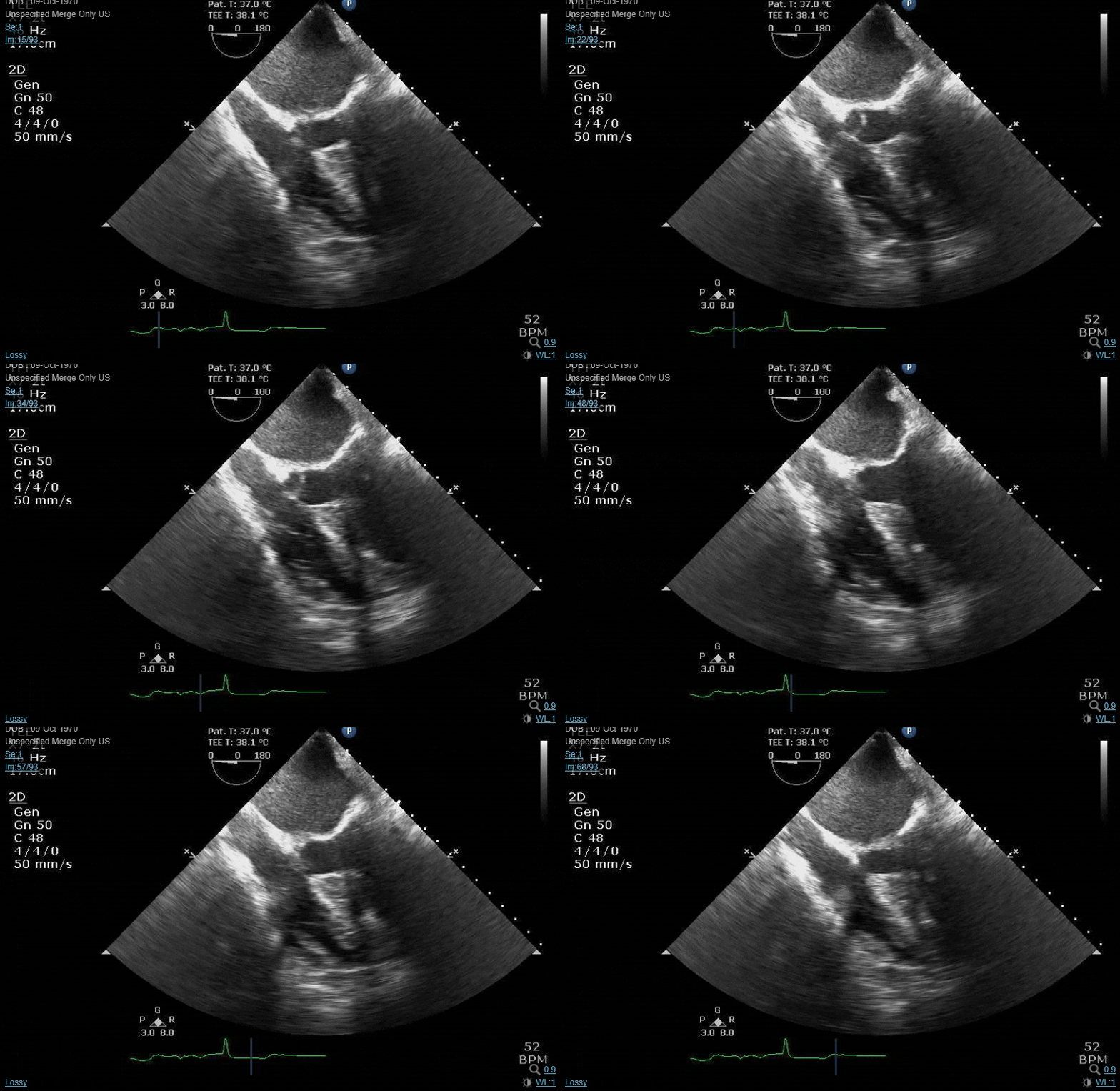
Few questions based on the bicom view above. Will address the CWD a bit later.
1). What leaflets are we seeing at 70 degrees?
2). Where is the ruptured cord (lateral or medial).
3). Anterior or posterior leaflet involvement (a1,a2,a3,p1,p2,p3)?
4). Direction of flow?
*obviously in real life scenario you’ll have more than one clip.
Last edited:
Will also throw in a little bicom zebra from last week/separate case that was a neat finding you might see on the boards.
@sevoflurane i’ll take a stab: hard to tell from just one still picture, but this appears to be a ruptured cord to the lateral aspect of A2. Likely originated from the AL PM. Relatively less common then a ruptured cord to the posterior leaflet, I would expect this to be associated with a posteriorly directed jet.
what’s interesting is that I don’t see any flail or even prolapsed leaflet in this shot- I could be getting fooled by the nature of one still image… But everything I’m seeing above the plane of the valve looks like chordal tissue. Wondering if a ruptured secondary chordae would have that appearance
what’s interesting is that I don’t see any flail or even prolapsed leaflet in this shot- I could be getting fooled by the nature of one still image… But everything I’m seeing above the plane of the valve looks like chordal tissue. Wondering if a ruptured secondary chordae would have that appearance
Last edited:
Hmm, why are the right heart chambers so small?
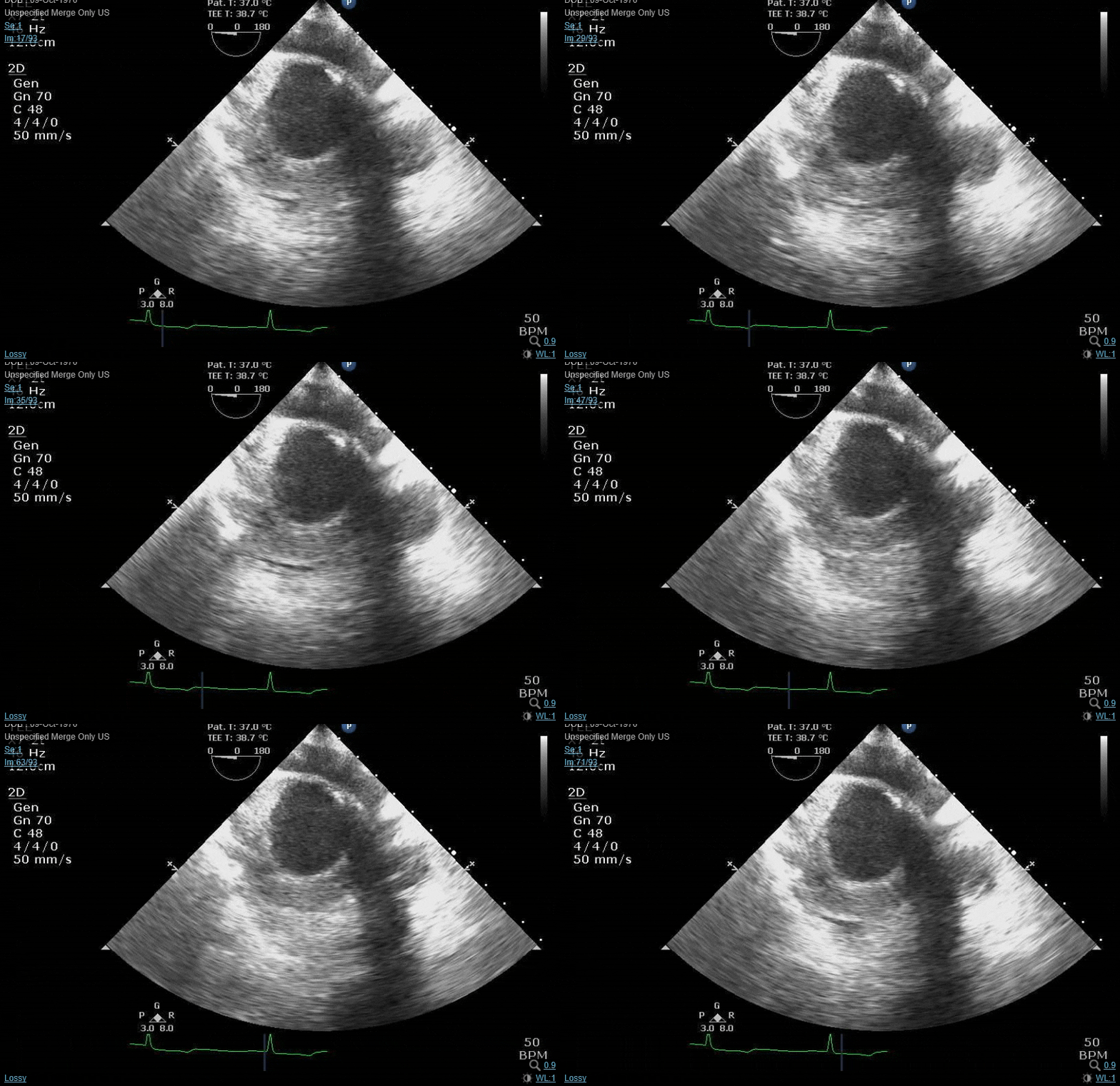

Identify the labeled anatomy and the abnormality
Identify the labeled anatomy and the abnormality
Nice answer dude. Are the clips not working? Should be a few second clip.@sevoflurane i’ll take a stab: hard to tell from just one still picture, but this appears to be a ruptured cord to the lateral aspect of A2. Likely originated from the AL PM. Relatively less common then a ruptured cord to the posterior leaflet, I would expect this to be associated with a posteriorly directed jet.
what’s interesting is that I don’t see any flail or even prolapsed leaflet in this shot- I could be getting fooled by the nature of one still image… But everything I’m seeing above the plane of the valve looks like chordal tissue. Wondering if a ruptured secondary chordae would have that appearance
I see the whole clip (using google chrome)Nice answer dude. Are the clips not working? Should be a few second clip.
Pretty much nailed it . Mainly a1 with some lateral a2 involvement as you mentioned. Posteriorly directed jet.
Any comments on the last clip.
(sorry if some of you can only see still images- not as savy as @vector2 🙂 )
(sorry if some of you can only see still images- not as savy as @vector2 🙂 )
Game for athis
What were you measuring with CW here? Looks like you’re measuring the slope of the MR jet decay, but never seen anyone measure this before... am I missing something basic here? Or are you measuring something different?

Advertisement - Members don't see this ad
Pretty much nailed it . Mainly a1 with some lateral a2 involvement as you mentioned. Posteriorly directed jet.
Beautiful 3-D. Was your surgeon able to repair?
Not showing up as a clip for me. But I see a hyperechoic circle that is maybe a PA catheter balloon or a cannula of sorts (ECMO vs bypass)?probably a little basic, but it’s my turn to contribute and this is the only clip I have on my phone at the moment. For the residents- any guesses as to what the mystery object is? In what chamber does it appear?
Any ideas?
What were you measuring with CW here? Looks like you’re measuring the slope of the MR jet decay, but never seen anyone measure this before... am I missing something basic here? Or are you measuring something different?
Yes, you’re missing something basic. Always look at the EKG too and think about what phase of the cardiac cycle certain things happen when looking at a Doppler jet....
Oh, duh... AI, PHT. I was thinking it was something to do with the mitral image that was posted before itYes, you’re missing something basic. Always look at the EKG too and think about what phase of the cardiac cycle certain things happen when looking at a Doppler jet....
Similar threads

- Replies
- 384
- Views
- 19K


