
-
CycleTrack and SDN are teaming up to make medical school admissions more transparent and accessible! Read the announcement to learn how we’re supporting the future of CycleTrack’s free application-tracking tools .
You are using an out of date browser. It may not display this or other websites correctly.
You should upgrade or use an alternative browser.
You should upgrade or use an alternative browser.
Lumbar RFA Technique
Started by jwalker12

Get help with your application
Use all the free resources available to you from SDN: articles, guides, expert advising, forums discussions, and school research.
PerpendicularFor those that use cooled, do you place parallel or perpendicular? Is parallel considered inferior given the lesion size and shape, or just takes a little longer and thus what's the point?
just to be clear, the study MD87 posted does not discuss parallel (apparently, advanced Australian) vs perpendicular (early Australian)
i seem to remember a study that showed that saline was very effective at increasing lesion size.
i seem to remember a study that showed that saline was very effective at increasing lesion size.
Advertisement - Members don't see this ad
just to be clear, the study MD87 posted does not discuss parallel (apparently, advanced Australian) vs perpendicular (early Australian)
i seem to remember a study that showed that saline was very effective at increasing lesion size.
Correct. The studies just suggest there is *some* lesioning distal to the tip. I know the author of the study that shows contrast and lidocaine extend the lesion - he places needles parallel to the MB. The paper is not suggesting that perpendicular placement should be used.
View attachment 382540View attachment 382541View attachment 382542

RF TridentTM Cannulae | Diros Technology | Radiofrequency (RF) Pain Management
RF TridentTM Cannulae – Diros Technology manufactures Radiofrequency (RF) pain management and neurosurgical products.dirostech.com
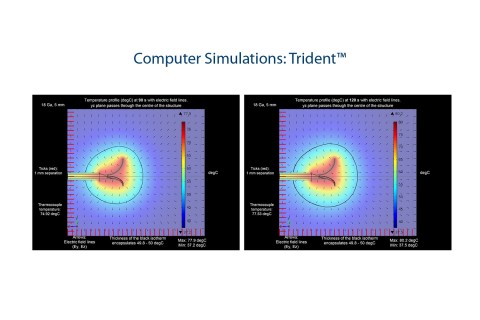
Made by Diros Technology, purchased by Avanos a little bit ago. The hub rotates and deploys the tines. Lesion extends past the needle tip, allowing for direct approach for RFA. Similar idea to cooled. Needles are pricy ($160/each), but contain the electrode , and have a pigtail for giving medication. You place the needle, deploy the tines, test, inject local, and burn, without having to remove/adjust anything. My big complaint with cooled, besides price, is that the stupid cannulas don't stay in place when you remove the stylet, usually requiring redirection once you get the probe in. B/l lumbar RFA takes maybe 10 minutes? Cost doesn't make much sense compared to standard needles, but I like it so much more than cooled.
Do you do perpendicular approach with trident? Just spoke with the Avanos rep, and the recommendation from Avanos is perpendicular angle approach just like Coolief which surprised me. They said that’s the difference between Stryker venom, the latter still needing a parallel approach to the mb

Yes, I've been doing perpendicular approach with Trident. N = 40 or so. I've seen about half back in clinic with all but 1-2 doing very well at 4 weeks. Very pleased with the ease of use, time savings, decreased painfulness of the procedure, and results.Do you do perpendicular approach with trident? Just spoke with the Avanos rep, and the recommendation from Avanos is perpendicular angle approach just like Coolief which surprised me. They said that’s the difference between Stryker venom, the latter still needing a parallel approach to the mb
Yes, I've been doing perpendicular approach with Trident. N = 40 or so. I've seen about half back in clinic with all but 1-2 doing very well at 4 weeks. Very pleased with the ease of use, time savings, decreased painfulness of the procedure, and results.
Thanks for the input. I’ve heard recently how much cheaper it. the hospital is asking me to try a few and see if I’d be okay to convert.
Perpendicular still doesn't make sense. Realistically you're not going to be touching all tines on os. 3 prongs really doesn't make much sense even if parallel. 2 prongs you mimic a short bipolar lesion if both on os not sure what the third prong floating around does
Perpendicular still doesn't make sense. Realistically you're not going to be touching all tines on os. 3 prongs really doesn't make much sense even if parallel. 2 prongs you mimic a short bipolar lesion if both on os not sure what the third prong floating around does
View attachment 383014
Needle tip goes down and makes contact with os. Then twist the hub and deploy the tines. The needle tip doesn't really push back when deploying the tines, so the nerve should still really be right about at the point of the needle, with the tines spreading out from there, with the center of the lesion being at the nerve. I don't know, that's how I visualize it. If the tines pushed the needle tip far back, then I agree, there wouldn't be much lesion contacting the nerve. I've seen good results, and will plan to continue with it as long as results continue to be good.
fact is, early proponents for RFA only did perpendicular.
regardless of what we think now, perpendicular approach must have seemed to help, otherwise RFA would never have gotten off the ground...
regardless of what we think now, perpendicular approach must have seemed to help, otherwise RFA would never have gotten off the ground...
In the models and practice, you actually are getting a nice teardrop of heat that hugs that bone you're pushed again. Also, the mechanism of spreading/deploying the tines here is much more reliable as well with the Diros Trident or the Nimbus as compared to the hope and pray of Venom or Sidekick.Perpendicular still doesn't make sense. Realistically you're not going to be touching all tines on os. 3 prongs really doesn't make much sense even if parallel. 2 prongs you mimic a short bipolar lesion if both on os not sure what the third prong floating around does
View attachment 383014

Interesting….fact is, early proponents for RFA only did perpendicular.
regardless of what we think now, perpendicular approach must have seemed to help, otherwise RFA would never have gotten off the ground...

I had a very large patient recently who I had no choice but to do perpendicular and even with that approach, hubbed the 150mm needles at each level. I did get a nice multifidus twitch and am crossing my fingers it helps but if not I won't do it again.fact is, early proponents for RFA only did perpendicular.
regardless of what we think now, perpendicular approach must have seemed to help, otherwise RFA would never have gotten off the ground...
would anyone have simply said no even after having a successful MBB? I figured I owed it to her to at least try. Do you stop the process once you see how deep they are with the MBB?
Last edited:
I've had 2 patients like this, both did great.I had a very large patient recently who I had no choice but to do perpendicular and even with that approach, hubbed the 15mm needles at each level. I did get a nice multifidus twitch and am crossing my fingers it helps but if not I won't do it again.
would anyone have simply said no even after having a successful MBB? I figured I owed it to her to at least try. Do you stop the process once you see how deep they are with the MBB?

I have had to do the same many times. Seemed to have the same efficacy as normal placement.
Advertisement - Members don't see this ad
I've had some where I had to go perpendicular, hold the RFA needle to bone the entire burn, 2 burns at a time
I had a very large patient recently who I had no choice but to do perpendicular and even with that approach, hubbed the 150mm needles at each level. I did get a nice multifidus twitch and am crossing my fingers it helps but if not I won't do it again.
would anyone have simply said no even after having a successful MBB? I figured I owed it to her to at least try. Do you stop the process once you see how deep they are with the MBB?
Yup. Clearly the issue here is her facets. Nothing else I can imagine affecting her LBP.
good point, do you have a BMI cutoff for procedures? do I make her lose weight before offering a procedure that seems like it would help?Yup. Clearly the issue here is her facets. Nothing else I can imagine affecting her LBP.
Table weight limit is 500 lbs.good point, do you have a BMI cutoff for procedures? do I make her lose weight before offering a procedure that seems like it would help?

Mine too, so clinic only for those pts bc our ASC isn't allowed to do anything over 350 lbs...Table weight limit is 500 lbs.
Perp vs parallel - IMO, parallel is ideal in both practice and theory, but we've all hit an occasional perpendicular that went well.
Sometimes you can't get parallel for any number of reasons...Obesity, arthropathy and especially listhesis. If they're slipping > 7mm (approx) I have had many occasion that I struggle to get parallel. If you have an isthmic spondy at L5-S1, and yall know those will go 15mm and more...Good luck being parallel at your L4 MB needle.
Lucky me, my table weight limit was 650.

I use 20 cm needles 1-2x/year. Not the most fun I have in the procedure room.I had a very large patient recently who I had no choice but to do perpendicular and even with that approach, hubbed the 150mm needles at each level. I did get a nice multifidus twitch and am crossing my fingers it helps but if not I won't do it again.
would anyone have simply said no even after having a successful MBB? I figured I owed it to her to at least try. Do you stop the process once you see how deep they are with the MBB?
good point, do you have a BMI cutoff for procedures? do I make her lose weight before offering a procedure that seems like it would help?
Haha no of course not. It’s a business. Do the procedure. A referral to a weight loss specialist isn’t a bad idea also tho
Though, I should add, you really need to address it head on with them in the office.
“Mama, I think in regards to your lbp, we need to address the elephant in the room. And that’s you!”
You get style points for that.
“Mama, I think in regards to your lbp, we need to address the elephant in the room. And that’s you!”
You get style points for that.
I use 20 cm needles 1-2x/year. Not the most fun I have in the procedure room.
Have done this once. Parallel. Fortunately only unilateral.

I had a large lady that required perpendicular approach with 150mm probes hubbed. Fortunately, had access to Coolief at that time. She showed up in my office over a year later, 75 lbs. lighter and wanting another RFA. This time it was standard approach and routine. YMMV.
Second one failed...haha.I had a large lady that required perpendicular approach with 150mm probes hubbed. Fortunately, had access to Coolief at that time. She showed up in my office over a year later, 75 lbs. lighter and wanting another RFA. This time it was standard approach and routine. YMMV.
When you go perpendicular are you landing at the "eye" of the scotty dog or are you going down in AP to the SAP/TP junction and hitting that corner. Thanks!Yes, I've been doing perpendicular approach with Trident. N = 40 or so. I've seen about half back in clinic with all but 1-2 doing very well at 4 weeks. Very pleased with the ease of use, time savings, decreased painfulness of the procedure, and results.
Yes, I usually oblique 25*, no tilt, and land at the eye. No worries about bulky facets getting in the way.When you go perpendicular are you landing at the "eye" of the scotty dog or are you going down in AP to the SAP/TP junction and hitting that corner. Thanks!

Man, wish people would post more of their own pics- either suboptimal or regular pics.
Not ideal spines
Not ideal spines
Advertisement - Members don't see this ad
Yes, I usually oblique 25*, no tilt, and land at the eye. No worries about bulky facets getting in the way.
But aren’t you ablating distal to the junction, and possibly missing the medial branch?
I'm hitting towards the top of the groove between the SAP and TP, so should be getting medial branch well.
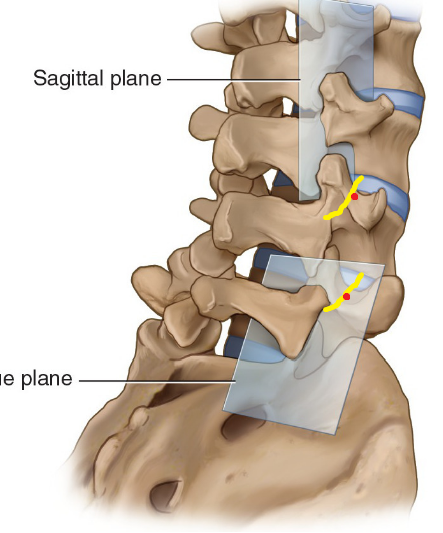
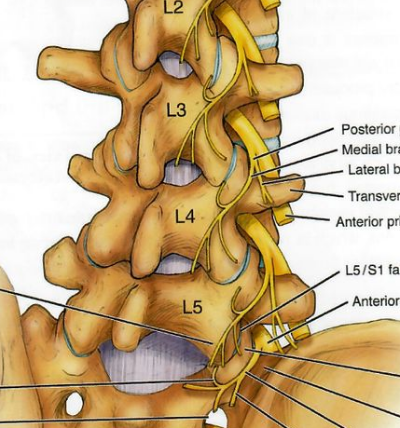
Last edited:
Went through and took a quick random sample.Man, wish people would post more of their own pics- either suboptimal or regular pics.
Not ideal spines
Attachments


Went through and took a quick random sample.
Attachments

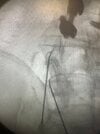


Some of these seem shallow.
agreed. Though if I look on target on AP, 15-20 oblique, and then 30 oblique…. I leave it alone.Some of these seem shallow.
this patient followed up with my PA today, 90% relief. must say I'm surprised with this one.I had a very large patient recently who I had no choice but to do perpendicular and even with that approach, hubbed the 150mm needles at each level. I did get a nice multifidus twitch and am crossing my fingers it helps but if not I won't do it again.
would anyone have simply said no even after having a successful MBB? I figured I owed it to her to at least try. Do you stop the process once you see how deep they are with the MBB?
He liked you and no one else took his pain seriously..this patient followed up with my PA today, 90% relief. must say I'm surprised with this one.
Oh yeah and “maybe” it worked 😁
For those doing mostly cooled, is there a downside to trying to place the needle parallel or at least in between parallel and perpendicular to the nerve? I find sometimes placing perpendicular leads me to be further away on lateral than I'd like. The Coolief reps claim it produces substantial "distal projection" of the burn, but just how much? Anyone have pics of patients with good results from their cooled approaches?

I’ve one used it for my SIJ RFAs. Haven’t found it to be time or cost efficient for lumbar or cervicalFor those doing mostly cooled, is there a downside to trying to place the needle parallel or at least in between parallel and perpendicular to the nerve? I find sometimes placing perpendicular leads me to be further away on lateral than I'd like. The Coolief reps claim it produces substantial "distal projection" of the burn, but just how much? Anyone have pics of patients with good results from their cooled approaches?

For those doing mostly cooled, is there a downside to trying to place the needle parallel or at least in between parallel and perpendicular to the nerve? I find sometimes placing perpendicular leads me to be further away on lateral than I'd like. The Coolief reps claim it produces substantial "distal projection" of the burn, but just how much? Anyone have pics of patients with good results from their cooled approaches?
Didn’t do water cooled in residency but picked it up right away at our HOPD gig. Avanos procedure guide instructs to target the medial aspect of the SAP. Lateral images always looked too superficial and not near the SAP-TP junction. And you’re def not getting enough distal projection. After some questionable results, I returned to conventional and implemented the techniques described here i.e needle parallel to nerve and results have been solid. Consider returning to conventional RFA.
Have you tried the cooled probe/temp with more conventional placement?Didn’t do water cooled in residency but picked it up right away at our HOPD gig. Avanos procedure guide instructs to target the medial aspect of the SAP. Lateral images always looked too superficial and not near the SAP-TP junction. And you’re def not getting enough distal projection. After some questionable results, I returned to conventional and implemented the techniques described here i.e needle parallel to nerve and results have been solid. Consider returning to conventional RFA.
Have you tried the cooled probe/temp with more conventional placement?
No because conventional benefits from the curved needle. Can hug os better. With cooled, straight needle, once you walk off then you gone
Yes that's what I struggle with. Sometimes if I try to get adequate depth I am way off the junction. Other times it has worked out.No because conventional benefits from the curved needle. Can hug os better. With cooled, straight needle, once you walk off then you gone
My results have been fine for the most part but on the occasional failure I wonder if it's because of these depth/placement issues.
If the needle ends up lateral to the junction when you get deep enough that suggests your approach was too medial and the posterior edge of the facet is in the way, so it deflects the needle lateral.Yes that's what I struggle with. Sometimes if I try to get adequate depth I am way off the junction. Other times it has worked out.
My results have been fine for the most part but on the occasional failure I wonder if it's because of these depth/placement issues.
Advertisement - Members don't see this ad
Understood, my main question remains what does ideal placement of Coolief probes look like for others who've had consistent success?If the needle ends up lateral to the junction when you get deep enough that suggests your approach was too medial and the posterior edge of the facet is in the way, so it deflects the needle lateral.

