"Prescribing" (suggesting?) marijuana...

Started by 473912
This forum made possible through the generous support of SDN members, donors, and sponsors. Thank you.
Get help with your application

Use all the free resources available to you from SDN: articles, guides, expert advising, forums discussions, and school research.

Advertisement - Members don't see this ad
I support my patients right to choose unhealthy behaviors. How is that so hard to believe? If they want to have a cigar and cognac after a hard days work, who am I to decide they shouldn't? There is a moralistic tone to the anti-smoking that bothers me. Tobacco is a legal product for adults in this country. My patients know the health consequences, they are not stupid. Some of them might smoke till the day they die, that is their right. Alcohol is a cytotoxic substance that has much more severe consequences for individuals and society, maybe we should tell them to stop using that.

Why is it so hard to understand that it is not my job to tell anyone what they should or should not do? How would it even be psychotherapy? Trust me, my patients have already been told what they should or shouldn't do. What is truly amazing is how much more effective my approach is at helping patients choose healthier behaviors.

NSSI is a great example. I get patients who have been cutting for years. They get lots of people telling them to stop and trying to prevent them from doing it through various control mechanisms. It does not work. About 80 percent of my patients stop cutting in a few weeks just by using DBT and MI principles and by changing the interpersonal pattern by not telling them what to do.
 
It is indeed your job to offer healthy alternatives to unhealthy behavior. The only thing I tell people is that not smoking is healthier than smoking.
No one is deciding anything for anybody. I'm just doing by job.

I would never assume the health literacy of my patients either. Many people have no insight or knowledge about how their health choices effect their minds or their bodies. Education about health behavior, with their consent to address/target it, is not judgement. It's the presentation of fact. I think people are being way, way over sensitive about hurting people's feelings here.

I mean, offering Smoking cessation as disrespecting dignity and worth, get real folks!
 
Last edited:
I can appreciate both side of the argument, and I don't think that making a suggestion for someone to quit smoking is a case of disrespect. But every person has a life story, and if a person has made a lot of progress in other areas, it may be a downer/or they may begin to question your competence, if you are so adamant about it.

I'd use my dad as a great example. He was an alcoholic, anger problems, and just an dingus in general to most people. He has also smoked since he was like 14. He is a totally changed man in those first three aspects but smoking has been something that he still can't give up. When my mom has mentioned in the past that he stop smoking, its been really tough on him and he finds it to be an attack in large part because he's changed so much else. The smoking helps him with stress as he has a tough job. Knowing his situation I'm totally understanding and ask my mom to respect his decision there. We have educated him on it, and if he feels he has any more room for improvement, he needs to make that decision just like he did about the other stuff.

But you are almost detracting from all the other accomplishments if you make it seem like a all or nothing proposition..that is the issue. Ie "Smoking is an addiction..clearly you still haven;t changed".
 
Advertisement - Members don't see this ad
smalltownpsych, it seems to me that you generally agree with others about the therapist job being help people change unhealthy behavior, including smoking, just that you take a different approach and have a different philosophy about how change comes about. You believe that a more humanistic and validating approach to person as a whole helps people change their unhealthy ways in due time. As opposed to example of an indifferent burned out therapist going through a list with the patient on the first day, "You smoke? No, no, you have to stop that...it's unhealthy. Let's see...you have unprotected sex? Okay, also stop that too! What else?" 🙂

If my perception of what you are suggesting is close enough to your truth, then I like your approach, but just the way you frame the issue almost seems like you are saying therapists are not in the business of helping people change unhealthy behavior...but that's the whole reason for the profession! I think the first part is convincing the patient, eventually, that certain behavior is unhealthy, that there are better alternatives, that the person can master these alternatives, that their quality of life will improve as a result. Help them see that vision and once a goal is agreed upon, then eventually help them slowly change when ready. Even purely supportive therapy with severely mentally ill patients has health-relate goals.

These are not threats to autonomy. Now involuntary commitment, that's something else. But I see therapy, in general, a professional legal enterprise that has at its heart a compassion for people who hurt and whose hurt expresses itself in various outward behavior and internal distress. To help such a person find the sources of the pain and help them live a better happier and more meaningful life is helping them in fact regain a higher level of autonomy and freedom as things like addictions can limit people's freedom and make them feel powerless.
 
If these were affecting your patients' physical or mental health functioning, why wouldn't you address these?

well, I would. I'm not arguing against addressing things that affect people's physical/mental health. My original post about marijuana was under the condition that it wasn't doing harm, as far as we could see, or that it was doing less harm than the alternative--that it was operating as a relatively harmless coping mechanism.

You are a behavioral health provider. Smoking is a health behavior. From every objective metric we have, smoking in unhealthy (i.e., contributes to thew development of disease). You should present alternatives. The person may decline. If so, you move on. If they don't, you may have helped saved their life, not too mention free them from an addiction that affects psychiatric functioning (a recognized mental disorder, btw.) This can take, literally, 30 seconds. This is not a "complex issue." This is your job.

I agree. I agree with you and future that it's a good idea to try to present alternative coping mechanisms that appear healthier. Like I said before, if I had a patient who smoked marijuana, I'd want to talk to them about it and see where that went. I may not be as adamant as you in immediately suggesting they stop, because I wouldn't, at least at first, understand the full implications and context surrounding their use, but I'm not suggesting just turning a blind eye to things like smoking (of MJ or tobacco), because these things certainly play into the context of broader mental health.

These philosophical musings may be good masturbation material for you, but its really irrelevant to clinical practice.

I'm not surprised you think that way, but it still scares me. I'd hope critical thought (in addition to empiricism) about both interpersonal and larger social issues would be a foundational element of therapy, especially at the doctoral level. This isn't "masturbation material," it's deeply significant, unreflective ways in which our society operates and how that trickles down to individual behavior and how psychology operates in microcosms. Sorry if I completely disagree with you that we shouldn't think deeply about what we're doing. I'm arguing against black and white thinking (e.g. immediately condemning coping mechanisms without a fleshed out understanding of the mechanism's placement in the person's life in terms of things like managing trauma--or as smalltown points out, how it will be received by and affect people).
 
Last edited:
well, I would. I'm not arguing against addressing things that affect people's physical/mental health. My original post about marijuana was under the condition that it wasn't doing harm, as far as we could see, or that it was doing less harm than the alternative--that it was operating as a relatively harmless coping mechanism.


I agree. I agree with you and future that it's a good idea to try to present alternative coping mechanisms that appear healthier. Like I said before, if I had a patient who smoked marijuana, I'd want to talk to them about it and see where that went. I may not be as adamant as you in immediately suggesting they stop, because I wouldn't, at least at first, understand the full implications and context surrounding their use, but I'm not suggesting just turning a blind eye to things like smoking (of MJ or tobacco), because these things certainly play into the context of broader mental health.


I'm not surprised you think that way, but it still scares me. I'd hope critical thought (in addition to empiricism) about both interpersonal and larger social issues would be a foundational element of therapy, especially at the doctoral level. This isn't "masturbation material," it's deeply significant, unreflective ways in which our society operates and how that trickles down to individual behavior and how psychology operates in microcosms. Sorry if I completely disagree with you that we shouldn't think deeply about what we're doing. I'm arguing against black and white thinking (e.g. immediately condemning coping mechanisms without a fleshed out understanding of the mechanism's placement in the person's life in terms of things like managing trauma--or as smalltown points out, how it will be received by and affect people).

Not embracing philosophy in the context of health service deliver should not be "scary." I work in primary care, and generally, I don't have the luxury of extended time. I think, act, and speak primary care when I'm on the job. its generally preferable that i try **** vs not trying **** and spending time redefining what health means.

It doesn't really matter what you think. You have a job to do.
 
Last edited:
smalltownpsych, it seems to me that you generally agree with others about the therapist job being help people change unhealthy behavior, including smoking, just that you take a different approach and have a different philosophy about how change comes about. You believe that a more humanistic and validating approach to person as a whole helps people change their unhealthy ways in due time. As opposed to example of an indifferent burned out therapist going through a list with the patient on the first day, "You smoke? No, no, you have to stop that...it's unhealthy. Let's see...you have unprotected sex? Okay, also stop that too! What else?"

I'm actually not so sure his approach is any different. I haven't seen anyone advocate for the approach you described...that would be nuts given everything we know about behavior change (though as an aside...MI for smoking cessation seems to be modestly effective at best - humanistic approaches are unfortunately not all they are cracked up to me in that regard either, though probably the best we have to offer right now). I mostly just see people advocating for the idea that it should be at the very least assessed and noted, then based upon an assessment of the patients current situation and motivation to change we should talk with them about the best ways to do so. For me, I was mostly just saying it is silly to be okay with ignoring smoking but horrified at the idea of a therapist ignoring NSSI. I certainly believe that (in admittedly very select situations), an individual can make a rational decision to end their own life but it doesn't mean I balk at the idea of addressing suicide risk during intake and address it if/when relevant and appropriate! I certainly don't think its "disrespectful" of their autonomy to do so...if we're going to make that argument, we'd pretty much need to abandon everything that we do in this field. Maybe I'm misinterpreting others, but that's really all I'm seeing people advocate for.

I think its also important to be clear...I don't think anyone is suggesting psychologists admonish someone who admits they have a cigar on New Year's Eve every year. I think they are advocating that it is poor care to ignore it when someone smokes 2 packs a day and balk at the expectation this should even be recorded. If a patient tells me they have a beer when they go out to dinner, of course I'm not going to focus on that (absent other concerns). If they tell me they have six with breakfast....I probably would. Same with smoking...its not always appropriate to make it a focus of treatment, but shying away from asking about it (and learning to do so in an appropriate, non-judgmental way) is not an appropriate approach for a healthcare provider to take, IMO.
 
smalltownpsych, it seems to me that you generally agree with others about the therapist job being help people change unhealthy behavior, including smoking, just that you take a different approach and have a different philosophy about how change comes about. You believe that a more humanistic and validating approach to person as a whole helps people change their unhealthy ways in due time. As opposed to example of an indifferent burned out therapist going through a list with the patient on the first day, "You smoke? No, no, you have to stop that...it's unhealthy. Let's see...you have unprotected sex? Okay, also stop that too! What else?" 🙂

If my perception of what you are suggesting is close enough to your truth, then I like your approach, but just the way you frame the issue almost seems like you are saying therapists are not in the business of helping people change unhealthy behavior...but that's the whole reason for the profession! I think the first part is convincing the patient, eventually, that certain behavior is unhealthy, that there are better alternatives, that the person can master these alternatives, that their quality of life will improve as a result. Help them see that vision and once a goal is agreed upon, then eventually help them slowly change when ready. Even purely supportive therapy with severely mentally ill patients has health-relate goals.

These are not threats to autonomy. Now involuntary commitment, that's something else. But I see therapy, in general, a professional legal enterprise that has at its heart a compassion for people who hurt and whose hurt expresses itself in various outward behavior and internal distress. To help such a person find the sources of the pain and help them live a better happier and more meaningful life is helping them in fact regain a higher level of autonomy and freedom as things like addictions can limit people's freedom and make them feel powerless.
Sort of correct, but I am also saying that my patients have the right to make their own health choices. Smoking is legal for adults. If they want to do it and are aware of the health consequences, that is their right. I probably shouldn't eat 16 oz T-bone steaks either, but I enjoy them so I make that choice from time to time. My job is to help people change what they want to change. That keeps me busy enough. I have yet to see a patient whose presenting problem was smoking tobacco.
 
My job is to help people change what they want to change.

So if a patient presented with say...depression (or insert anything else) but also exhibited a pattern of extremely risky alcohol use (minus legal problems since apparently we're drawing some kind of boundary there, though I'm somewhat unclear on why) they expressed no interest in changing...you would deliberately ignore it because its their choice? I find that unlikely. I also find the above quote contradictory to your above endorsement of MI, which is basically built on the notion that someone saying "I'm not ready" doesn't mean we get to absolve ourselves of any and all responsibility. To carry forward your example, I don't see anyone advocating telling you that you can't have a T-Bone every now and then😉 I do see people saying that if you present for treatment for something and they find out you are eating 4 a day and your cholesterol is 700 (actually the link between cholesterol and heart disease is much weaker than people think...but let's pretend that isn't the case for the sake of the analogy), they would likely at least broach the subject of diet with you to get your thoughts about it (or offered a referral if they didn't feel competent to address it). I think that's been standard of care in every setting I've worked in.

Unless I'm misunderstanding, this is an attitude I don't think I've ever encountered myself or read about in the literature. I'm tempted to start up a study to see how prevalent it is across providers. Again though, I feel like we must have our wires crossed because based on our previous conversations, I find it really hard to believe you would agree with what I wrote in my first paragraph.

I also rarely see a patient present to a traditional psych clinic for tobacco use (though obviously they do at our tobacco use clinic). If anything, that seems like a justification that we should be addressing it since we can help and they aren't showing up otherwise. That's part of the reason for whole primary care push right now...a huge portion of the population with ANY disorder doesn't formally seek treatment for it. I'm honestly not even sure what a practice would look like that didn't assess for and at least sometimes integrate/address anything outside the immediate bounds of the presenting problem.
 
(though as an aside...MI for smoking cessation seems to be modestly effective at best - humanistic approaches are unfortunately not all they are cracked up to me in that regard either, though probably the best we have to offer right now)

I'm just enjoying the Freudian slip in the above quite a bit.
 
Last edited:
I'm just enjoying the Freudian slip in the above quite a bit. As ever, this thread devolves into an argument of faith, with the baptists demanding there is no other way but theirs. SDN Psych has gotten pretty disappointing. Peace.

I don't think anyone is advocating confrontational methods about smoking, and Ollie is a good poster. Those of us who actually know how to use MI and don't just dabble it in here and there when it is convenient understand that our methods match the mentality of the client. I am sure Ollie knows this quite well. What comes off as immature is folks posting criticism over autocorrect without being open to debate.
 
So if a patient presented with say...depression (or insert anything else) but also exhibited a pattern of extremely risky alcohol use (minus legal problems since apparently we're drawing some kind of boundary there, though I'm somewhat unclear on why) they expressed no interest in changing...you would deliberately ignore it because its their choice? I find that unlikely. I also find the above quote contradictory to your above endorsement of MI, which is basically built on the notion that someone saying "I'm not ready" doesn't mean we get to absolve ourselves of any and all responsibility. To carry forward your example, I don't see anyone advocating telling you that you can't have a T-Bone every now and then😉 I do see people saying that if you present for treatment for something and they find out you are eating 4 a day and your cholesterol is 700 (actually the link between cholesterol and heart disease is much weaker than people think...but let's pretend that isn't the case for the sake of the analogy), they would likely at least broach the subject of diet with you to get your thoughts about it (or offered a referral if they didn't feel competent to address it). I think that's been standard of care in every setting I've worked in.

I'm curious, though... Are there behaviors that we absolutely don't allow as clinicians? Not to beat the NSSI example to (non-self-inflicted 😉 ) death, but would anyone out there actually say, "Yeah, you cut/scratch/head-bang/punch yourself every few weeks to deal with stress--doesn't seem to be impairing your functioning, so not an issue?" Is it that smoking/alcohol use/maybe pot issue/binge eating/risky sexual bx/etc are more socially accepted as "understandable" behaviors and thus we give them more leeway as clinicians than we do something like NSSI?

I don't think anyone is advocating confrontational methods about smoking, and Ollie is a good poster. Those of us who actually know how to use MI and don't just dabble it in here and there when it is convenient understand that our methods match the mentality of the client. I am sure Ollie knows this quite well. What comes off as immature is folks posting criticism over autocorrect without being open to debate.

I agree with @Pragma--I'm not advocating being judgmental or puritanical towards clients by any means, and I don't think anyone here is. For one thing, that simply doesn't work, as anyone who's worked with mandated substance abuse/misuse clients knows. Addressing or assessing an issue or behavior is not synonymous with focusing only on it or berating the client about it.
 
Last edited:
I'm curious, though... Are there behaviors that we absolutely don't allow as clinicians? Not to beat the NSSI example to (non-self-inflicted 😉 ) death, but would anyone out there actually say, "Yeah, you cut/scratch/head-bang/punch yourself every few weeks to deal with stress--doesn't seem to be impairing your functioning, so not an issue?" Is it that smoking/alcohol use/maybe pot issue/binge eating/risky sexual bx/etc are more socially accepted as "understandable" behaviors and thus we give them more leeway as clinicians than we do something like NSSI?

Yes, that is literally what it is, I'm just absolutely shocked someone had to spell it out. I'm sure some of the people on this board will continue to not understand why we should treat those things as different from each other, though.

@Pragma: I generally avoid interactions with certain people here because I know they think differently than me in an irreconcilable way; it is clear to me from reading other threads that Ollie and I have... "different" reads on the research. Probably this colors whether you and I think Ollie is "a good poster." It was not criticism, it was just something I found hilarious for its subtle and unintentional accuracy from my point of view. Although I deleted a portion of what I said before you replied, I do stand by it. There is no point in having debates with a bunch of baptists on a baptist message board. I will from now on use journals for communication as opposed to this internet forum. Have a wonderful evening/life.
 
Yes, that is literally what it is, I'm just absolutely shocked someone had to spell it out. I'm sure some of the people on this board will continue to not understand why we should treat those things as different from each other, though.

@Pragma: I generally avoid interactions with certain people here because I know they think differently than me in an irreconcilable way; it is clear to me from reading other threads that Ollie and I have... "different" reads on the research. Probably this colors whether you and I think Ollie is "a good poster." It was not criticism, it was just something I found hilarious for its subtle and unintentional accuracy from my point of view. Although I deleted a portion of what I said before you replied, I do stand by it. There is no point in having debates with a bunch of baptists on a baptist message board. I will from now on use journals for communication as opposed to this internet forum. Have a wonderful evening/life.

We don't necessarily disagree. I think it is fine to explain the evidence-base to a client and the limits of it, as well as the risks of using other methods that aren't evidence-based. Then meet them where they are at. Of course, the approach always depends on the client, not the ideology of the practitioner. It is our job to either treat effectively or refer to someone who can. I will try to have a nice evening and life, and hope you do the same.
 
Yes, that is literally what it is, I'm just absolutely shocked someone had to spell it out. I'm sure some of the people on this board will continue to not understand why we should treat those things as different from each other, though.

@Pragma: I generally avoid interactions with certain people here because I know they think differently than me in an irreconcilable way; it is clear to me from reading other threads that Ollie and I have... "different" reads on the research. Probably this colors whether you and I think Ollie is "a good poster." It was not criticism, it was just something I found hilarious for its subtle and unintentional accuracy from my point of view. Although I deleted a portion of what I said before you replied, I do stand by it. There is no point in having debates with a bunch of baptists on a baptist message board. I will from now on use journals for communication as opposed to this internet forum. Have a wonderful evening/life.

Don't take your dollies and go home.
 
Advertisement - Members don't see this ad
So if a patient presented with say...depression (or insert anything else) but also exhibited a pattern of extremely risky alcohol use (minus legal problems since apparently we're drawing some kind of boundary there, though I'm somewhat unclear on why) they expressed no interest in changing...you would deliberately ignore it because its their choice? I find that unlikely. I also find the above quote contradictory to your above endorsement of MI, which is basically built on the notion that someone saying "I'm not ready" doesn't mean we get to absolve ourselves of any and all responsibility. To carry forward your example, I don't see anyone advocating telling you that you can't have a T-Bone every now and then😉 I do see people saying that if you present for treatment for something and they find out you are eating 4 a day and your cholesterol is 700 (actually the link between cholesterol and heart disease is much weaker than people think...but let's pretend that isn't the case for the sake of the analogy), they would likely at least broach the subject of diet with you to get your thoughts about it (or offered a referral if they didn't feel competent to address it). I think that's been standard of care in every setting I've worked in.

Unless I'm misunderstanding, this is an attitude I don't think I've ever encountered myself or read about in the literature. I'm tempted to start up a study to see how prevalent it is across providers. Again though, I feel like we must have our wires crossed because based on our previous conversations, I find it really hard to believe you would agree with what I wrote in my first paragraph.

I also rarely see a patient present to a traditional psych clinic for tobacco use (though obviously they do at our tobacco use clinic). If anything, that seems like a justification that we should be addressing it since we can help and they aren't showing up otherwise. That's part of the reason for whole primary care push right now...a huge portion of the population with ANY disorder doesn't formally seek treatment for it. I'm honestly not even sure what a practice would look like that didn't assess for and at least sometimes integrate/address anything outside the immediate bounds of the presenting problem.
The reason I am drawing the line about legality is just to make the point that if someone wants to smoke - they can. For the analogy that you present, I see patients like that all the time and if they don't want to be depressed, they might have to look at their ETOH consumption as it is probably the cause and I will help them see that through skillful questioning. Part of MI is assessing the patients readiness to change and meeting them where they are at. If they are suffering consequences and are willing to see the potential connection, then they are ready to begin changing. That is why they are coming to me. I don't see how that connects to tobacco use since that is rarely causing the presenting problem and for most of my patients it is not causing significant negative consequences, yet, so they usually have little motivation to change and why would I waste much of our valuable time talking about it to them? I actually spend a lot more time talking to my patients about imminent suicidality as opposed to down the road health consequences. When the patient is no longer thinking of death as the best way to escape their pain, then maybe they will think about quitting smoking. I also talk about food and exercise to some of my patients because they are also suffering negative consequences. Again, the patient is wanting the change and is in some stage of readiness and often it is directly connected to their presenting problem. "I hate myself and my body and I am more and more depressed, but the more depressed I get the more I eat."

I have no objection to helping patients make healthy changes in their lives. My objection is when a target behavior is not determined by the patient. I also agree that there is a cultural component to this as futureappsy was stating and I feel uncomfortable about being in a role of imposing some of the more fluid cultural norms on my patients. Not too long ago, psychotherapists would smoke with their patients. I think a little cocktail or two might not have been out of the question either. I sometimes serve coffee or tea to my patients. Maybe twenty years from now that will be looked at as just as appalling.

p.s. I do love these types of conversations. Thinking about issues like this is one reason why I chose to become a psychologist in the first place.
 
Yes, that is literally what it is, I'm just absolutely shocked someone had to spell it out. I'm sure some of the people on this board will continue to not understand why we should treat those things as different from each other, though.

@Pragma: I generally avoid interactions with certain people here because I know they think differently than me in an irreconcilable way; it is clear to me from reading other threads that Ollie and I have... "different" reads on the research. Probably this colors whether you and I think Ollie is "a good poster." It was not criticism, it was just something I found hilarious for its subtle and unintentional accuracy from my point of view. Although I deleted a portion of what I said before you replied, I do stand by it. There is no point in having debates with a bunch of baptists on a baptist message board. I will from now on use journals for communication as opposed to this internet forum. Have a wonderful evening/life.
I was also thinking about the different perspectives on this board earlier today because I often have a different perspective than many posters. It could be because we have such a broad field. What a neuropsychologist does and what an academic psychologist does and what I do as a primary care sort of psychologist are all very different so of course, we are all going to have much different perspectives.
 
As ever, this thread devolves into an argument of faith, with the baptists demanding there is no other way but theirs. SDN Psych has gotten pretty disappointing.

Yes, because humanist (/qualitative research) baptism trumps debate and scientific discourse. 🙄 I find your post ironic given apparently your principle form of debate is apparently to say "My way is just as good and if you don't agree I'm not going to try and convince you, I'll just go pout in the corner and think about how enlightened I am relative to all those quant folks" Certainly wouldn't fly in my program, though perhaps your fellow puritanical humanists support such an approach😉 I'm all for debate....its why I've continued to post all these years after originally coming here many years ago just to find out if Wisconsin had extended interview invites for their clinical program yet.

That said, I'm much more concerned with the topic at hand than individual folks thoughts about my post quality (though I do appreciate the support Pragma!). To me, this is (was?) a relatively civil discussion about a difference of opinion in what falls within our domain. I'm genuinely interested as it relates very much to what I do. Smalltown's last post clarified a great deal and I don't think we're as removed from one another as it originally appeared. All I've really been advocating for is the idea that its worth noting on intake. Obviously that somewhat depends on setting and its not a priority for the guy trying to hang himself by his shoelaces in the psych ER lobby. Rather, just that if we're doing a comprehensive intake eval its something that is worth a question or two. Heck, I even ask about coffee (which I would absolutely qualify as dependent on myself), just because I've had too many clients with "severe sleep/anxiety issues" who coincidentally happened to be horking down 10 cups a day and never connected the dots. I think as comprehensive intakes go...some brief mention of smoking is worthwhile, both because it impacts things we traditionally address (anger/anxiety/depression) in various ways and I generally view my job as encouraging healthier living across the board (in non-judgmental ways, using evidence as a guide, recognizing these are aspirational goals and with the understanding that the client is ultimately the one in the driver's seat and I need to respect their decisions). Because otherwise it never gets addressed (docs say the same thing...why would they waste their time addressing it?). From a public health, RxE viewpoint...that's problematic, though its admittedly not how psychology as a whole is used to thinking about things.
 
Last edited:
I am unclear what this debate is even about anymore, and I fear it reflects why doctoral-level psychology is so shunned in modern healthcare arena. That is, we are known for waffling, shades of grey, "hmmm, could be this, could be that." I showed this debate to by brother-in-law last night who is a family practice physician in local medical group.

His response: "Smoking is an addictive behavioral health disorder responsible for hundreds of thousands of deaths per year. Ask them if they would like to quit. Don't you guys study that stuff? WTF?"
 
Last edited:
I am unclear what this debate is even about anymore, and I fear it reflects why doctoral-level psychology is so shunned in modern healthcare arena. That is, we are known for waffling, shades of grey, "hmmm, could be this could be that." I showed this debate to by brother-in-law last night who is a family practice physician in local medical group.

His response: "Smoking is an addictive behavioral health disorder responsible for hundreds of thousands of deaths per year. Ask them if they would like to quit. Don't you guys study that stuff? WTF?"
But it isn't your fault that we don't know as much as we would like to know in the field. What is your solution? Act like you know what you are talking about even in situations where nuance is required?
 
Act like you know what you are talking about?

Yes, it is. There are lot of uncertainties in medicine too, but they don't him and haw about it.

The conduction of psychological services in the primary care setting is benefitted by clear stated conclusions (state probabilities if you like) and directions and is hindered by psychobabble, waffling, and detailed explanations of your thought process.
 
Last edited:
Yes, it is.

The conduction of psychological services in the primary care setting is benefitted by clear conclusions and directions and is hindered by psychobabble, waffling, and detailed explanations of your thought process.

I know about 4-5 people that have used psychiatric/psychological services, and I've heard almost evenly complaints about a) the provider doesn't seem to know what they are talking about/very wishy washy and b) that the person pissed them off and didn't seem to understand their complex life situation
 
I know about 4-5 people that have used psychiatric/psychological services, and I've heard almost evenly complaints about a) the provider doesn't seem to know what they are talking about/very wishy washy and b) that the person pissed them off and didn't seem to understand their complex life situation

Can't please all the people all the time....
 
shocker, the mind is more complicated than the body? "Waffling" is one way to spin it, being thoughtful and honoring the complexity is another.

I do have friends and know people generally who manage to maintain an element of critical thinking in their primary care settings btw, that's not a very good argument, although we all have our rationalizations, as well as our "reductionisms" that help us cope with complex sets of information and life experiences.
 
shocker, the mind is more complicated than the body? "Waffling" is one way to spin it, being thoughtful and honoring the complexity is another.

I do have friends and know people generally who manage to maintain an element of critical thinking in their primary care settings btw, that's not a very good argument, although we all have our rationalizations, as well as our "reductionisms" that help us cope with complex sets of information and life experiences.

Do they do smoking cessation protocols?

I find nothing "complex" about advising people not to smoke and then treating that if they so choose.
 
talking about a broader principle here, not smoking (I agree that smoking is bad for you overall, that the upsides related to ritual and coping and physiology and whatnot can probably be replaced with better alternatives, and if the patient is receptive to wanting to stop, that's a good thing to help them with).
 
talking about a broader principle here, not smoking (I agree that smoking is bad for you overall, that the upsides related to ritual and coping and physiology and whatnot can probably be replaced with better alternatives, and if the patient is receptive to wanting to stop, that's a good thing to help them with).

So whats your beef, stranger
 
As someone with zero medical training (and no interest in pursuing that training!), I'm hesitant to give any sort of recommendation that falls outside of my expertise and scope of practice.

For me, "outside my scope of practice" includes:
1. Things that the patient may put into his/her body, such as substances (prescription, recreational, and even OTC meds/supplements) - I don't have the training to predict how a given substance will impact a specific patient's body. I encourage patients to take their medications as prescribed, and I support them in talking with the prescriber if they want to request changes in their meds. I encourage patients to stop using substances that are clearly harmful such as tobacco, and I can help with the psychological aspects of smoking cessation but am not trained to suggest medical interventions. If a doctor has recommended or prescribed medication, I can support the patient in adhering to that regimen.

2. It also includes food, to an extent, because I have training in addressing emotional eating patterns and disordered eating behaviors, but I'm not a nutritionist and wouldn't feel comfortable endorsing a particular dietary plan. If a patient is struggling with eating a healthy diet, I work with them on connecting with a provider who is trained to offer guidance on food and nutrition.

3. Even exercise is something that I will recommend in very broad terms: we know that physical activity can be helpful for a range of mental health issues, so I frequently encourage patients to engage in regular physical movement at a level that feels comfortable to them, but I'm not going to suggest running X number of miles per day, trying a specific type of exercise class, etc. We can set goals such as "go for a walk every other day," for example, because the patient determines how long to walk and what intensity, but if they're looking for ways to start being active in a more structured way, I'd recommend talking with their doctor or meeting with a gym trainer. Especially if the patient has physical health issues, I don't want to risk suggesting an activity that may put stress on an old injury or be too intense for their level of fitness.

In short, the political and social issues related to marijuana are largely irrelevant - I'm more concerned about overstepping my professional bounds.
 
Unless the literature has changed, I'm fairly sure smoking is one of the US' most costly modifiable risk factors, and the #1 factor leading to a cessation attempt is physician recommendation. COPD, MI/CHF, stroke, peripheral vascular disease. Horrible crap to live with, possibility of death not even factored in. It's bizarre to me that there's a philosophical discussion here. "Do you smoke..? Would you be open to talking about your smoking?" Done. Pursue it if they want to pursue it. There's no encroachment on patient autonomy
 
Unless the literature has changed, I'm fairly sure smoking is one of the US' most costly modifiable risk factors, and the #1 factor leading to a cessation attempt is physician recommendation. COPD, MI/CHF, stroke, peripheral vascular disease. Horrible crap to live with, possibility of death not even factored in. It's bizarre to me that there's a philosophical discussion here. "Do you smoke..? Would you be open to talking about your smoking?" Done. Pursue it if they want to pursue it. There's no encroachment on patient autonomy
It isn't about patient autonomy. It is more about my autonomy and practice as a psychologist. I am not giving a physical exam for people and giving them health recommendations. They are coming to me for treatment for specific psychological issues. Why would I try to treat something else is more the question? Of course a physician should recommend healthy practices and it is likely more effective when it comes from them as they are experts on the physiological effects of smoking. I appreciate solid physician referrals along those lines. As a psychotherapist I am in a different role. I rarely give advice or recommendations about the patients personal life choice as that is often counter-therapeutic and is something that the patient usually has already received from many others or that they already know. My job is to help the patient figure out what they want from a psychological standpoint and identify the obstacles to attaining that. I have worked with patients to help them quit smoking. It's not that complex of an issue to where much psychological intervention is usually necessary, but I can offer a few tips. Maybe I just recoil against outside agencies telling me what I should treat or not.
 
Advertisement - Members don't see this ad
They are coming to me for treatment for specific psychological issues. Why would I try to treat something else is more the question?

Addiction to nicotine is a psychological disorder. One that affects physical and mental health profoundly.
 
Great conversation!

Although I've never tried mj, I know a lot of people I have. I've read articles saying it's not addictive and some that say it is, but in most I know, it definitely seems to be psychologically addictive and they admit it. They have high anxiety/stress and need it to calm down. Then rely on it. That reaction seems too close to its cousin alcoholism... which gives me reason to pause. I think I'd personally have to do some serious research and forward thinking if I were to suggest it, even if it were legal and common for psychologists to do so. I do support it being legal, however.

...and although I see both sides, I think I'm more in smalltownpsych's camp. Ask them if they want to quit and want help. If they do, offer support and assistance. If not, move right along. I consider smoking itself to be a medical issue. Whatever psych issues are around it, however, would be our issue. Let the medicals handle smoking itself. I don't want an NP/MD dabbling in my patient's MDD coping and I won't mess with their quit smoking techniques that they're certainly going to try to push on the patient. We should stay in our professional lanes and choose our battles.
 
Great conversation!

Although I've never tried mj, I know a lot of people I have. I've read articles saying it's not addictive and some that say it is, but in most I know, it definitely seems to be psychologically addictive and they admit it. They have high anxiety/stress and need it to calm down. Then rely on it. That reaction seems too close to its cousin alcoholism... which gives me reason to pause. I think I'd personally have to do some serious research and forward thinking if I were to suggest it, even if it were legal and common for psychologists to do so. I do support it being legal, however.

...and although I see both sides, I think I'm more in smalltownpsych's camp. Ask them if they want to quit and want help. If they do, offer support and assistance. If not, move right along. I consider smoking itself to be a medical issue. Whatever psych issues are around it, however, would be our issue. Let the medicals handle smoking itself. I don't want an NP/MD dabbling in my patient's MDD coping and I won't mess with their quit smoking techniques that they're certainly going to try to push on the patient. We should stay in our professional lanes and choose our battles.
On the other hand, we can help patients to quit smoking when they so desire, I provide them support and continue to work on developing adaptive coping strategies. Also, as I was researching it a bit this morning, I saw some evidence that treating anxiety in particular improves cessation so we are indicated for the patients with anxiety disorders who want to quit.
 
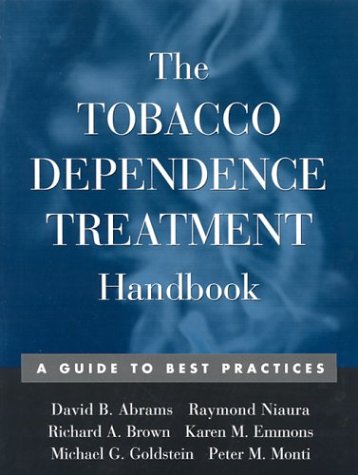
51GV41ZTXAL.jpg
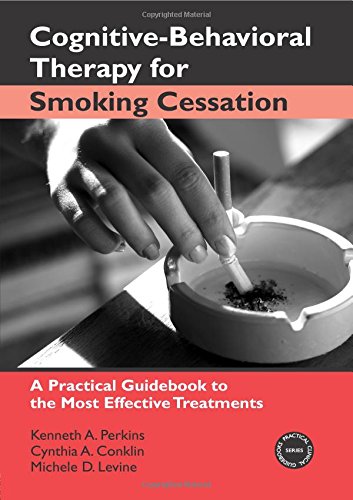
511cRxFD-uL.jpg


Probably the two go-to manuals for smoking cessation - I believe Michael Goldstein is the only non-psychologist author (could be wrong about a couple others though). There are also quite a few psychologists on the AHRQs Clinical Practice Guidelines. If its not within our wheelhouse, whose is it? Medical providers actually have way less training than we do and are the ones for whom treatment consists of an admonition to "stop it" and leaving it there.

Ask them if they want to quit and want help. If they do, offer support and assistance.
Won't speak for others, but that's actually all I've been saying too. My only objection was that some folks started implying it was an unreasonable imposition to expect us to even touch on the issue of smoking (depending on time/context of course), but we seem to have arrived at somewhat of a middle ground on that issue.
 
Probably the two go-to manuals for smoking cessation - I believe Michael Goldstein is the only non-psychologist author (could be wrong about a couple others though). There are also quite a few psychologists on the AHRQs Clinical Practice Guidelines. If its not within our wheelhouse, whose is it? Medical providers actually have way less training than we do and are the ones for whom treatment consists of an admonition to "stop it" and leaving it there.

Won't speak for others, but that's actually all I've been saying too. My only objection was that some folks started implying it was an unreasonable imposition to expect us to even touch on the issue of smoking (depending on time/context of course), but we seem to have arrived at somewhat of a middle ground on that issue.

My take as well. We're not providing a medical treatment (e.g., prescribing bupropion), or even suggesting a particular medical treatment; we're providing psychological treatment of a habit that has the potential to cause significant medical (and psychological) problems if not addressed.

Beyond this, while we aren't medical providers, I do think it's important for us to stay informed on medical topics that are relevant to us. It's useful to know the potential side-effects of various medications (not just psychotropic) or the generalities and complications of different medical treatments, for example, even if we aren't trained in knowing the pharmacokinetics explaining those side-effects. We need to be able to speak intelligently with our physician, nursing, etc., colleagues, which includes having a working knowledge of their vocabulary and associated concepts, and to also help translate our concepts for medical providers.
 
It isn't about patient autonomy. It is more about my autonomy and practice as a psychologist. I am not giving a physical exam for people and giving them health recommendations. They are coming to me for treatment for specific psychological issues. Why would I try to treat something else is more the question? Of course a physician should recommend healthy practices and it is likely more effective when it comes from them as they are experts on the physiological effects of smoking.

The patient may be coming to you for a specific psychological issue, but something like smoking (maladaptive behavior) is well within our wheelhouse. For instance, I put together a pilot study looking at smoking cessation in a VA setting (education v. MI v. education + MI) , and I saw Veterans who smoked for a myriad of behavioral reasons: "It's what we did to kill time on patrol." "It helps me relax." "I get X smoke breaks at work, why wouldn't I take the break?" "It's something I enjoy doing while I read the paper." We all know that smoking is bad (so do they), but how we go about talking about this is most likely MUCH different than how their PCP talks to them about it.

"Mr. Smith…you have smoked for 40yrs and now you have COPD, you gotta stop." Compared to, "Mr. Smith, it sounds like money has been really tight for you lately…what would you do if you had some extra $ in your pocket?" "I'd probably buy a new fishing rod bc I broke mine last year, I really miss fishing." "Oh, that sounds like fun." "How much does a rod cost?" "Yes, $50-$60 is a lot of money on a fixed income." "How much is a pack of smokes?" etc.

Both Mr. Smith and I know smoking is bad, but beating him over the head with it isn't going to be any more effective than when his PCP does it on every visit (It's a check box in the system!!). Sometimes we have the time/expertise/other to help someone at least consider a behavior change, which is a step in the right direction.

Interestingly, one of the most effective/influential pieces of education…that tobacco use could contribute to ED. I had guys who needed to quit bc they wanted to get on transplant lists, they needed surgery for something, etc…and the thing that got them to attempt to quit…dangling a carrot about their carrot. I passed this on to their surgeons, so hopefully they could use it in the future with other challenging cases. At least one of the men quit for over a month (after being a 2-3 pack a day smoker for 30+ years). The only reason I know this is I passed him in the out-pt clinic and he high-fived me bc he and his wife were "frisky" again. Psychology…helping older guys/gals get frisky again! :laugh:

I also found that sitting down with a patient and literally planning their "new" routine was really helpful. Swapping out maladaptive behaviors for better ones. Tying in rewards to quit milestones, etc. Many of these patients smoked for longer than I had been alive, so they needed a much more hands on approach to provide them an opportunity to actually quit.
 
Last edited:
I'm more or less objecting to the check-box and outside agencies dictating targets for treatment. Also, I think that it is helpful for the medical people to lay out some of the hard facts of what addiction of any type costs and then refer them to me. Substance abuse programs will often have med docs present the physiological effects and I think that is a good strategy. Although I have always enjoyed (and been effective IMO 😀) teaching about the psychological and neurological aspects of addiction.
 
Last edited:
On the other hand, we can help patients to quit smoking when they so desire, I provide them support and continue to work on developing adaptive coping strategies. Also, as I was researching it a bit this morning, I saw some evidence that treating anxiety in particular improves cessation so we are indicated for the patients with anxiety disorders who want to quit.
Absolutely. I'm in no way saying psych services wouldn't be beneficial or have nothing to do with it.
 
I don't want an NP/MD dabbling in my patient's MDD coping and I won't mess with their quit smoking techniques that they're certainly going to try to push on the patient. We should stay in our professional lanes and choose our battles.

Mental health cannot be so easily separated and it effects on the body and organ system are well known. I desperately want more NP and MDs paying attention to mental health. Recommendations for coping is not psychotherapy and is well within a primary care physicians purview.

Btw, PCPs provide the vast majority of psych meds in this country, so you are much too late if you don't want them "dabbling."
 
Mental health cannot be so easily separated and it effects on the body and organ system are well known. I desperately want more NP and MDs paying attention to mental health. Recommendations for coping is not psychotherapy and is well within a primary care physicians purview.

Btw, PCPs provide the vast majority of psych meds in this country, so you are much too late if you don't want them "dabbling."
Yeah, and body health can affect mental health. That doesn't mean psychologists should be making medical recommendations. NP/MD can pay all the attention they want, but there's a reason they went to medical/nursing school and we went to psych school. We both should stay in our lanes.

...and yeah, PCPs prescribing psych drugs is a entirely different problem for another thread.
 
I think part of the reason this thread got off topic is that no psychologist is going to recommend marijuana to their patients. We might quibble about role in smoking cessation, but I don't think I saw anyone supporting recommending pot. I tend to advocate strongly against marijuana consumption amongst adolescents because of the effects on motivation. Just thinking we don't need more thirty-somethings in their parents basement playing COD or GTA5 all night long.
 
#GTA4LIFE!!!

Ok…not really.

I never really understood the appeal of GTA, but maybe that just means I'm getting old. There is a japanese arcade game where the entire point is to flip a table and destroy as many things as possible in the room, so….there is that.

I'm pretty sure I'll never recommend marijuana to anyone in a professional context…between the ethics, lack of research support (though there is a small but growing literature), and associated health risks. I was hoping Marinol would be a sufficient alternative, but the data weren't there to support it.
 
These philosophical musings may be good masturbation material for you, but its really irrelevant to clinical practice.
I really don't understand why this comment has not been removed. As a psychologist you should know better to speak in such rude insulting manner to people you disagree with, but I'm equally perplexed at the moderators for not having removed it and given you infraction, such language has no place on an educational psychology forum.
 
I really don't understand why this comment has not been removed. As a psychologist you should know better to speak in such rude insulting manner to people you disagree with, but I'm equally perplexed at the moderators for not having removed it and given you infraction, such language has no place on an educational psychology forum.

Dry your eyes, Harmos. Masturbation (both physical and mental) is very natural human tendency. No need to be offended. It should have been clear that the meaning was intellectual rather than physical.
 
Last edited:
...and yeah, PCPs prescribing psych drugs is a entirely different problem for another thread.

I'm not sure what so problematic about it in uncomplicated cases of depression/anxiety, etc? You really think a psychiatrist is going to start Fluoxetine 10mg with 10 day titration any different than a primary care doc?
 
Advertisement - Members don't see this ad
NP/MD can pay all the attention they want, but there's a reason they went to medical/nursing school and we went to psych school. We both should stay in our lanes.

Indeed. They went to med school to learn about pharmacology, and they chose the broadest of all medical specialties because, presumably, they like caring for the whole person.

I cannot handle all the psych in a 5 panel Primary care clinic. If I told my physicians to "stay in their lane..ILL HANDLE ALL THIS PSYCH STUFF" they'd look at me like I was idiot and say, "yea...good luck wit that."
 
Last edited:
I think part of the reason this thread got off topic is that no psychologist is going to recommend marijuana to their patients. We might quibble about role in smoking cessation, but I don't think I saw anyone supporting recommending pot. I tend to advocate strongly against marijuana consumption amongst adolescents because of the effects on motivation. Just thinking we don't need more thirty-somethings in their parents basement playing COD or GTA5 all night long.
Is there any real literature that supports the idea that people that use marijuana are not productive?
 
GTA V..terrific game. It is entertainment like anything else. Not any different than people that spend all day on the internet, watching tv, etc
 
I think part of the reason this thread got off topic is that no psychologist is going to recommend marijuana to their patients. We might quibble about role in smoking cessation, but I don't think I saw anyone supporting recommending pot. I tend to advocate strongly against marijuana consumption amongst adolescents because of the effects on motivation. Just thinking we don't need more thirty-somethings in their parents basement playing COD or GTA5 all night long.

I mostly agree, but just to put things into perspective, a friend of mine is a PhD student, working on her dissertation, and her smoking aids her in the creative aspects of the work. She doesn't experience lethargy from smoking. Multi-dimensional, psychologically complex phenomena at play here. I'm not saying that's the experience of the majority of people, but it's worth taking a broad perspective to this kinda stuff imo.

as far as erg's tone, I don't take offense from it 😛 it's his style of communicating and honestly attending a humanistic program, now and then the super sensitive liberal kind of communication (to paint with broad strokes) can be frustratingly inhibiting.
 
I'm not sure what so problematic about it in uncomplicated cases of depression/anxiety, etc? You really think a psychiatrist is going to start Fluoxetine 10mg with 10 day titration any different than a primary care doc?

Yes. I think they will. They'll also be better trained to know how to weed out depression and bipolar issues. They'll be better equipped to test for ADHD rather than acquiescing to moms just doctor shopping because their kid won't sit still in church. You pay for that whole hour on that one issue instead of "I need medication for blood pressure, diabetes, asthma, and pre-screened for the sleep study, and oh, by the way, I'm depressed, give me drugs" all within a 30 minute window, then schedule a follow up in a 3 months because they're all booked up until then.

Yeah, I think a psychiatrist will and should do better.