Price controls now

  • Thread starter Thread starter deleted941485
  • Start date Start date
This forum made possible through the generous support of SDN members, donors, and sponsors. Thank you.
D

deleted941485

A frustrated bean counter throws a hissy fit about healthcare and advocates for price controls instead. His gradualist approach is laughable.

Apparently, doctors are not poor enough for his liking because too many students still want to do it. And yet they want people to do primary care and then not pay them.


I’m a doctor and don’t feel poor.
In any case, something new needs to be tried.

You missed that point. It doesn’t matter how you feel about your relative status. It matters how he feels about it. You feeling are irrelevant.
 
Lol at these economists. Can’t see forest for the trees. Where is that aggregate demand going to come from if you rapidly decrease the size of the health care industry?

You go to any flyover country and look at who the largest employer is. Unless there is some big factory, it’s usually the hospital system. What happens when you implement price controls and drive these hospitals into insolvency?
 
Lol at these economists. Can’t see forest for the trees. Where is that aggregate demand going to come from if you rapidly decrease the size of the health care industry?

You go to any flyover country and look at who the largest employer is. Unless there is some big factory, it’s usually the hospital system. What happens when you implement price controls and drive these hospitals into insolvency?

OH no but he’s gonna ratchet it down “gradually” so hospitals have time to adjust and everything will be peaches! And there will be no disruption. No pissed ofF MDs. And everyone will do what the govt orders them to do at the price they want them to do it.
 
OH no but he’s gonna ratchet it down “gradually” so hospitals have time to adjust and everything will be peaches! And there will be no disruption. No pissed ofF MDs. And everyone will do what the govt orders them to do at the price they want them to do it.
Ah right. In healthcare economists we trust. I guess people can just get laid off gradually
 
Last edited:
Any true economist with half a brain understands that the cost of healthcare is largely unrelated to physician salaries. The country’s spending has not been matched with an equal or even upward sloping of salaries.

The culprit is much more the cost of medicine itself - expensive inpatient stays (particularly ICU at the end of life where all avenues are engaged), costly tests done for defensive medicine and an emphasis on ED-directed primary care rather than preventative medicine. Add in an unhealthy, very heterogenous population and you have some semblance of an explanation.
 
Any true economist with half a brain understands that the cost of healthcare is largely unrelated to physician salaries. The country’s spending has not been matched with an equal or even upward sloping of salaries.

The culprit is much more the cost of medicine itself - expensive inpatient stays (particularly ICU at the end of life where all avenues are engaged), costly tests done for defensive medicine and an emphasis on ED-directed primary care rather than preventative medicine. Add in an unhealthy, very heterogenous population and you have some semblance of an explanation.

BUT that’s too nuanced an explanation for this economists to care about. PRICE CONTROLS NOW! They crow about how great Medicare is at controlling costs and how Europe doesn’t have this problem. And then they have the Gaul to tell people oh we need more pcps but good luck getting anyone to pay for it.
 
Any true economist with half a brain understands that the cost of healthcare is largely unrelated to physician salaries. The country’s spending has not been matched with an equal or even upward sloping of salaries.

The culprit is much more the cost of medicine itself - expensive inpatient stays (particularly ICU at the end of life where all avenues are engaged), costly tests done for defensive medicine and an emphasis on ED-directed primary care rather than preventative medicine. Add in an unhealthy, very heterogenous population and you have some semblance of an explanation.

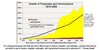
You forgot administration costs.
 

Attachments

  • 20150429_growthinadministratorsopt.jpg
    20150429_growthinadministratorsopt.jpg
    64.1 KB · Views: 117
I never understood why healthcare is different from other industries. When we get rapid growth in manufacturing, farming , tourism, financial services, tech, etc, the industries are supported and applauded. When there is growth in healthcare, something needs to be done about it.
 
BUT that’s too nuanced an explanation for this economists to care about. PRICE CONTROLS NOW! They crow about how great Medicare is at controlling costs and how Europe doesn’t have this problem. And then they have the Gaul to tell people oh we need more pcps but good luck getting anyone to pay for it.

Europe has, on average believe it or not, a healthier patient population (or at least a more homogenous one). Europe also "enjoys" socialized medicine on the whole which has its many issues but it keeps drug and procedure prices FAR below what they cost here. Add into that a much, much less litigious society and things are going to be cheaper - you don't have to cover your butt all the time. Medicare doesn't "control costs" at all - it reimburses at low levels and just says "too bad" in essence. It's about 1/3 the reimbursement that private insurance companies provide for anesthesia services (we are among the worst in that regard, interestingly everyone's favorite grass-is-greener specialty EM has even worse Medicare reimbursement). You could do a "medicare for all" but 1) it's be outrageously, incredibly expensive and 2) most hospitals as you know them would almost certainly close. EM would become an absolute wasteland.

There are a lot of issues with healthcare in this country, but it is a much bigger overall industry than elsewhere. Many more hospitals-per-capita, especially in big cities. As some of it gets squeezed the poorly-performing institutions will start to fall out (see: Hahnemann University Hospital in Philadelphia, which has been 1 or 2 bad months away from closing for two decades and is now ramping down).
 
I never understood why healthcare is different from other industries. When we get rapid growth in manufacturing, farming , tourism, financial services, tech, etc, the industries are supported and applauded. When there is growth in healthcare, something needs to be done about it.
Main difference is exports. When there is surplus production in farming, tech, manufacturing, you export and gain goods and services from other countries. Healthcare, outside of pharma and devices, is non exportable services which have to be consumed within your own borders.
 
Sounds like you are trying to justify the broken window fallacy. If rural areas can’t support economic activity that increases productivity growth, perhaps people should leave. Subsidizing life through increasingly expensive (but not more productive) sectors like healthcare or higher education is a waste of taxpayer dollars.
I’m not justifying anything. I’m pointing out the macroeconomic predicament that we are in. Unless the public sector is ready to massively stimulate with fiscal policy, significant decreases in healthcare sector will result in cratering of aggregate demand. The idea that you can take an axe to the largest industry in the country and somehow productivity will remain unchanged and diffuse into other sectors is a pipe dream in today’s world. There’s a reason universal basic income has actually been brought to the mainstream and why economic schools of thought like MMT is gaining traction.
 
Europe has, on average believe it or not, a healthier patient population (or at least a more homogenous one).

Don't underestimate both of those factors on why some of those European countries have better healthcare. Also add in the entire attitude behind "work" in this country. The US is a workhorse country, which leads to stress, which leads to health problems, and these even among white collar professions. A good example is medicine itself which has countless articles on "burnout" mainly because US physicians are for the most part overworked. On the other hand we, some of us at least, envy the "laid back" vibe of many European countries. They're just happier overall because the majority live a modest lifestyle. Add to that not needing to worry about paying (or overpaying) for healthcare and education. It is interesting though, healthier on average but smoke and drink themselves silly but they also bike or walk a whole lot more, especially in the cities.

Seriously, we could learn a lot from countries like The Netherlands.
 
Most probably won’t leave. They’ll just sit a home at wait for their jobs to return. Healthcare became the largest employer in a lot of rustbelt areas simply because the factories folded. No competition so they grew.

Also, how are we determining what industries are “productive” vs “unproductive”. It seems more like a scapegoating exercise than anything else.
 
Sounds like you are trying to justify the broken window fallacy. If rural areas can’t support economic activity that increases productivity growth, perhaps people should leave. Subsidizing life through increasingly expensive (but not more productive) sectors like healthcare or higher education is a waste of taxpayer dollars.

So what, if anything, should be subsidized? Food production? Steel and defense?
 
Cost control expansion for the healthcare industry is inevitable since our current rate of increase of healthcare expenditure increases coupled with an already high percentage of GDP being spent on healthcare is unsustainable. The only question is what form will it take. The US healthcare system cannot be simply transformed into an European model because 1. European patients have healthier lifestyles and are realistic about what the healthcare system can do for them 2. European patients are accepting of not having the greatest latest treatment immediately available to everyone 3. Europeans personally accept the risk of utilizing the medical system whereas in the US the risk is shifted to the deepest pocket via litigation- something rare in Europe 4. Price controls exist across the board in Europe from physician payments to medications to hospital reimbursement whereas in the US, we have a system of corporate hegemony intent on finding ways around the patchwork of price controls we do have through self referrals, offering services not covered by insurance and not telling patients about this prior to surgery, and continually escalating charges. 5. Medical education costs are borne by the physicians in the US but in Europe, a significant fraction is picked up by the governments in many countries.
 
Like everything else in America, healthcare is very consumer driven so every new hospital costs a billion dollars with immense hotel style lobbies and luxurious all private rooms. Hospitals in other countries tend to be functional but very utilitarian. And things like food and linens are up to the families to provide.
 
Hospitals in other developed countries wouldn't qualify as military hospitals in this one. 😉
 
Have all of you practiced in Europe? You seem to know so much about it's intricacies. 🤔
 
If you exclude obesity, substance abuse, and trauma, US healthcare outcomes and life expectancy is actually pretty good. Is it fair to exclude those things? Maybe. Maybe not. Hard to completely fault the healthcare delivery system for these cultural problems.
 
At some point people will say enough is enough - it’s not worth spending increasing amounts of GDP on sick people living a little longer. That time is now.
I get what you are saying and you're probably correct, but this is also where certain politicians from the '08 election start hot taking about "death panels" just to simply rile up their base. It's a hard sell to say, "Yeah. Nana's got to die because the one of the wealthiest countries in the world doesn't want to pay to keep her alive." Again, I get what you're saying.
 
I get what you are saying and you're probably correct, but this is also where certain politicians from the '08 election start hot taking about "death panels" just to simply rile up their base. It's a hard sell to say, "Yeah. Nana's got to die because the one of the wealthiest countries in the world doesn't want to pay to keep her alive." Again, I get what you're saying.


True. For example William Huesel saved the healthcare system tons of money. Unfortunately that money will now be shifted to the legal system😉
 
I’m not justifying anything. I’m pointing out the macroeconomic predicament that we are in. Unless the public sector is ready to massively stimulate with fiscal policy, significant decreases in healthcare sector will result in cratering of aggregate demand. The idea that you can take an axe to the largest industry in the country and somehow productivity will remain unchanged and diffuse into other sectors is a pipe dream in today’s world. There’s a reason universal basic income has actually been brought to the mainstream and why economic schools of thought like MMT is gaining traction.
Lol. It’s not productivity. When I anesthetize demented grandma for her 10th bringback for sacral ulcer washout I am not being “productive”. Nothing will change her outcome. I am essentially being paid by the government to pretend to treat her. So is the surgeon, nurses, internist, and hospital.....
 
Lol. It’s not productivity. When I anesthetize demented grandma for her 10th bringback for sacral ulcer washout I am not being “productive”. Nothing will change her outcome. I am essentially being paid by the government to pretend to treat her. So is the surgeon, nurses, internist, and hospital.....
It is economic productivity. It doesn't matter what the eventual outcome is. It drives the movement of the trading of goods and services which is the foundation of an economy. It's messed up, but it is what it is.
 
It’s economic activity, not economic activity that increases productivity.

You’re literally using the broken window fallacy to justify your position.

We might as well dynamite hospitals and rebuild them to make America great again!
It's not actually a fallacy... it's only a fallacy when economic conditions make it so that the resources that would have gone into fixing the window go into producing something else. Right now, that's not the case - the money simply sits there.

Instead, what we have now is the constant threat of recession and deflation. If anything, there is overcapacity of productive means, yet majority of the population doesn't have money due to stagnant wage growth. And there's further pressures by globalization and mechanization.

Let's say we wake up tomorrow and everyone is healthy without need for health care. The economy would go into a depression that would require the largest fiscal stimulus in the history of the world.
 
Last edited:
Your point here is muddled to the point of being nonsensical.

First, the broken window fallacy is a fallacy - we are not any better off having fixed the window that we just broke.

Next, you’re now veering into the lump of labor fallacy, by postulating that increasing productivity in the workforce or shifting investment from healthcare to more productive sectors is bad. It isn’t and increasing productivity has never caused deflation in the history of the world (neither has gradual public disinvestment - look at US defense spending over the last 50 years).

If we spent less money on healthcare, we could spend that money on different, more productive endeavors. Publicly that could be more scientific research or better early childhood education. Privately, that could more efficient electric cars or adding solar power to every home in the US.

The money could be used for anything! Anything other than keeping grandma alive for one more month.
You're completely misinterpreting my position.

I'm not suggesting that we should not steer resources into more productive sectors. I would be entirely for this. My contention is that there are no PRIVATE sector industries currently able to absorb the labor force employed by the health care industry if there was to be a top-down government action to reduce the size of health care.

Yes, if you are proposing that the public sector should fund more scientific research or early childhood education, then I have no qualms with that. In fact, my posts were explicit about this - "without large fiscal stimulus,..." Public sector spending into infrastructure, research funding and education, etc would be fiscal stimulus.
 
Last edited:
True! But we’re getting to the point where costs are so high that both parties are getting on board for some type of reform. See: rumors of Trump pegging drug reimbursement to the lowest prices in the world. Alliances are shifting here - healthcare and pharma are important stakeholders, but not important enough that Republicans won’t betray them when the time comes.

Im not sure about the drug reimbursement rebate reform. I heard it was shelved by the WH hence why there was a little bump in HC drug stocks last week.

I wish I could find these article that claims most jobs are BS.

idk if this whole productive/unproductive industry is all that productive a way of looking st the economy. I don’t think it’s a very satisfying definition.

I mean I’d leave it to society to determine if something is of value and Or not. If it is of value to a person, I do not see how rendering it is unproductive.
 
This "economist" wants to jump to price controls, but he doesn't care about price transparency.

Maybe if third party payors were forced by executive order to reveal what they were actually paying for things, competition could happen.......?
 
Top Bottom