

Tbr acid/base

This forum made possible through the generous support of SDN members, donors, and sponsors. Thank you.
Get help with your application

Use all the free resources available to you from SDN: articles, guides, expert advising, forums discussions, and school research.

akimhaneul

Full Member
7+ Year Member
Advertisement - Members don't see this ad
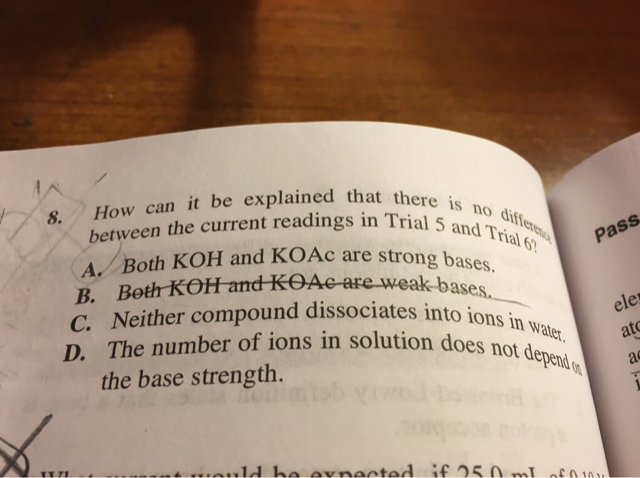
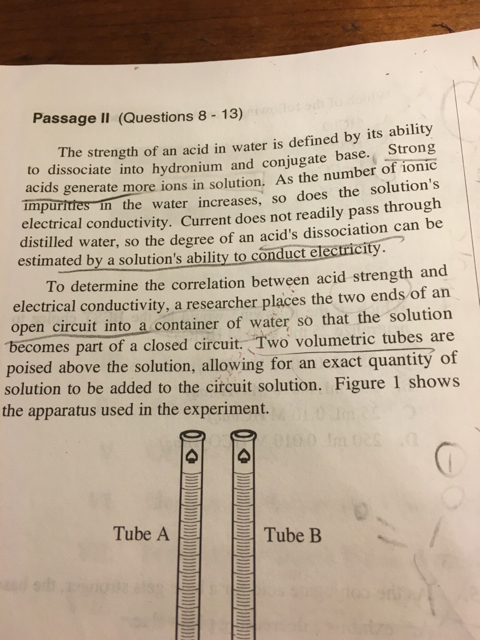
Confused about this question. I thought strong base and acid always create more ions in solution? Answer is d
ImageUploadedBySDN1471057885.343375.jpg
ImageUploadedBySDN1471057899.108877.jpg
ImageUploadedBySDN1471057910.176330.jpg


Sent from my iPhone using SDN mobile
 
I am not 100% sure, but since no one else has replied I will try to help. Let's go through each of the answer choices:
A. KOH is a strong base, but KOAc is a weak base.
B. KOH is a strong base, but KOAc is a weak base.
C. KOH is a strong base and thus dissociates into K+ and OH-. KOAc is a ionic compound and will dissociate into K+ and OAc-.
D. I really do not know what this option is saying but since I think A, B, and C are incorrect, I'd pick D as my answer.
 
Confused about this question. I thought strong base and acid always create more ions in solution? Answer is d
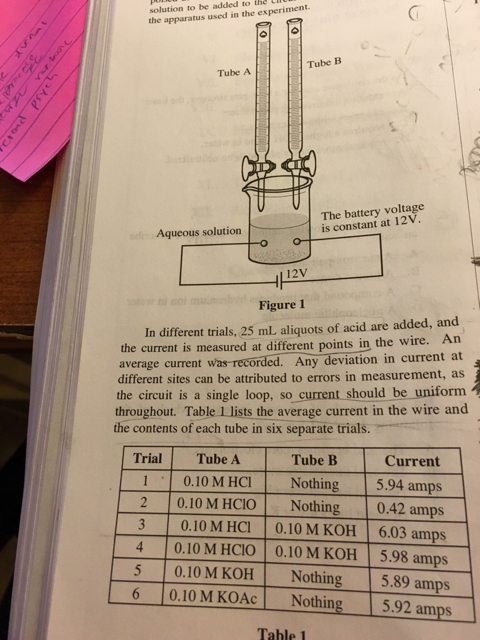
You're confused because you don't understand your point of reference. "More ions" than what? Than weak acids and bases? Sure. But here, you're not comparing weak acids/bases with strong acids/bases. You're comparing electrolyte strength. In other words, KOAc and KOH will both dissociate into K+ and -OAc/-OH ions in solution and to a similar extent. You're assessing how well the salts of two bases dissolve in solution, not the strength of the bases themselves.
