Obviously, I read and follow this thread, although I am not a True Believer in all that is Revealed here. Much fashion advice is based on personal aesthetics, on trends and popularity (however long- or short-lived) and on "received wisdom." Were it otherwise, high school yearbook photos would not be so shudder-producing, generation after generation, and standards would be much less variable than they are. (Even "classics" do not endure forever--early Chanel IS distinguishable from later incarnations; hem length, patterns, color combinations, styling details. . .all clue us in on whether we are looking at "vintage" or at "fashion forward.") Come on, folks--we know this, with whatever certitude we offer our (sincere) pronouncements.
Having dared that observation, I have to say that I am a believer in White Coat Hypertension and am intrigued by the findings of empirical studies such as those conducted by Leonard Bickman and Robert Cialdini. These results suggest that people are more likely to comply with a stranger's request if he (and the masculine pronoun seems to be crucial here) is dressed in "professional" clothing and that more pedestrians cross against a red light when the first to do so wears a business suit than when he (he, again) is clad in jeans or other casual clothing or in a non-police uniform of any kind. The term "face validity" (in its less-scientific contexts) springs to mind.
The prejudice for certain forms of dress is just that--a prejudice. I doubt that any of us is prepared to argue that prejudice is powerless. Our interviewers, for instance, would deny vehemently that the "wrong" clothing (and a sequined club dress is certainly "wrong" in a way that a green plaid suit with black tights is simply not) determines their evaluation of our suitability for medical school. They might also maintain that verbal patterns--accents, speech habits, vocal quality, and other idiosyncrasies--play no part in their judgments. No intentional bias, perhaps--but we know that some interviewers obviously take exception to our height, weight, complexion, hair length, natal place. Our search for advice about what to wear reflects our desire to overcome as many unacknowledged negative influences as possible. (I know someone who confessed that she voted not to hire someone whose conversational filler was "ya know?" and who substituted "anyways" for "anyway" and "infer" for "imply." Yet I notice that, although I often cringe in response to many misspellings and grammatical errors in postings on sdn, there is no thread offering guidance on speech. Perhaps the visual impression is more immediate or more easily improved.)
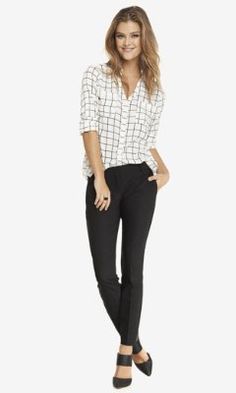
So I follow the small controversies here and consider the advice offered and am grateful for the perspective. Nevertheless, "it"--it being the acceptable or preferred choice--moves, whatever the orthodox view may be. I have had interviewers (more than one, female) ask me where I purchased my "sensible-but-stylish" and decidedly "flat" shoes. Those interviewers bemoaned the difficulty of looking professional and moving quickly and feeling comfortable simultaneously--so I have continued to ignore the admonitions concerning heel height. For all I know, my footwear may be responsible for my earning only a place on a particular waitlist rather than being welcomed into the clearly accepted desirables. All the factors count; I don't doubt that.
So thank you, those of you who are kind enough to consider our nervous questions and who respond to our anxious requests about what "works" and what does not. I am sincerely grateful. I do notice, however, that judges on Project Runway disagree on every program. Isaac Mizrahi and Zac Posen have dramatically different responses; Heidi Klum and Nina Garcia quibble about whether an outfit is flattering or hideous. Aesthetics is a philosophical inquiry, and not all agree on what is beautiful--or even appropriate. It is helpful, though, to see through the eyes of another.