

You are using an out of date browser. It may not display this or other websites correctly.
You should upgrade or use an alternative browser.
You should upgrade or use an alternative browser.
AI in Psychiatry
Started by PsyDr

Get help with your application
Use all the free resources available to you from SDN: articles, guides, expert advising, forums discussions, and school research.

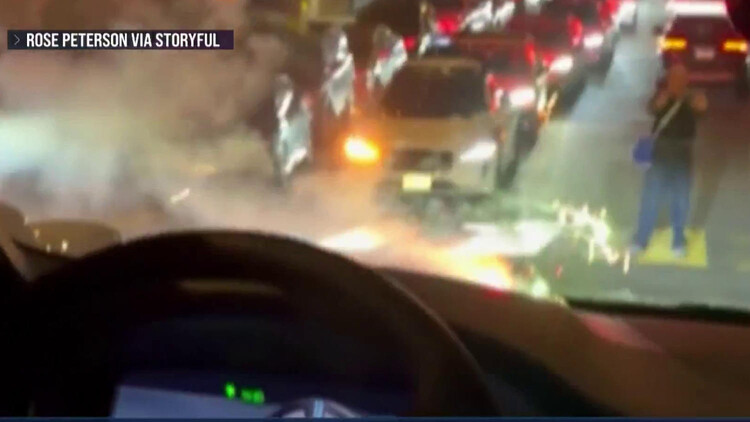
Saw this article come up. I realize it’s a different kind of AI but we were talking about Waymo earlier. Several cars drove over fireworks and one caught fire this weekend, others driving into flood waters, also an active police scene. A bunch got stuck in traffic so long their batteries died. Stuff that mostly seems like common sense that AI is struggling with. Not trying to doom and gloom AI, just thought it was funny and thankfully no one was hurt.
 apple.news
Waymo car travels over lit firework as other cars run out of battery in holiday gridlock — NBC News
A passenger in a San Francisco Waymo vehicle was recording as the car failed to detect a lit firework and drove over top of it. The incident comes as the robotaxi provider had to tow other cars in its fleet after their batteries died in heavy holiday traffic. NBC’s Liz Kreutz reports.

You have to be careful with accepting things are actually AI. Waymo augments their AI with Filipino "remote drivers". Amazon's "Just Walk Out" stores purported to use AI, but was actually 1000 Indian workers looking at cameras. I'm sure this "human augmentation" strategy will be applied to healthcare too.Saw this article come up. I realize it’s a different kind of AI but we were talking about Waymo earlier. Several cars drove over fireworks and one caught fire this weekend, others driving into flood waters, also an active police scene. A bunch got stuck in traffic so long their batteries died. Stuff that mostly seems like common sense that AI is struggling with. Not trying to doom and gloom AI, just thought it was funny and thankfully no one was hurt.
Waymo car travels over lit firework as other cars run out of battery in holiday gridlock — NBC News
A passenger in a San Francisco Waymo vehicle was recording as the car failed to detect a lit firework and drove over top of it. The incident comes as the robotaxi provider had to tow other cars in its fleet after their batteries died in heavy holiday traffic. NBC’s Liz Kreutz reports.

Waymo defends use of remote assistance workers in US robotaxi operations
Alphabet self-driving unit Waymo on Tuesday defended its use of remote assistance personnel in the face of questions from Congress and said they have never been used to move robotaxis in U.S. on-road operations.

Waymo Exec Reveals Company Uses Remote Operators in the Philippines to Assist Autonomous Vehicles
During a Senate hearing on Wednesday, Feb. 4, Waymo's cheif safety officer revealed to lawmakers the company uses remote operators in the Philippines to assist their U.S.-based autonomous vehicles. The hearing comes less than two weeks after a Waymo vehicle hit a child walking to school in Santa...
Amazon's Just Walk Out technology relies on hundreds of workers in India watching you shop
Amazon promoted Just Walk Out as AI-powered cashierless technology. But the tech reportedly relied on workers in India for accuracy.
 www.businessinsider.com
Advertisement - Members don't see this ad

You have to be careful with accepting things are actually AI. Waymo augments their AI with Filipino "remote drivers".
This is absolutely false. They 70 odd remote response people they have on call at any time cannot control the cars and can only provide higher level guidance when query'd by the vehicles (essentially decision support in ambiguous situations). The latency issues alone on remote controlling vehicles would be catastrophic.
I mean, with or without them there seem to be some very major and obvious problems that are getting missed. Driving over fireworks and getting set on fire, driving into 4 foot deep water, and driving fast enough in school zones to kill kids are all things I'd call catastrophic as well.This is absolutely false. They 70 odd remote response people they have on call at any time cannot control the cars and can only provide higher level guidance when query'd by the vehicles (essentially decision support in ambiguous situations). The latency issues alone on remote controlling vehicles would be catastrophic.
I mean, with or without them there seem to be some very major and obvious problems that are getting missed. Driving over fireworks and getting set on fire, driving into 4 foot deep water, and driving fast enough in school zones to kill kids are all things I'd call catastrophic as well.
I'd love to see any reports of Waymos killing kids, since there are no known fatalities in any incident a Waymos has been involved in. But the overwhelming safety argument is not that they will prevent all crashes forever but they will be dramatically more safe than human drivers. The alternative to AI driven vehicles is not 'driving is always and everywhere safe.' it is, in fact, driving accidents being the leading cause of death for children and one of the top 3 for people under 50.
As an issue of harm reduction, even before the technology improves an iota, this is a slam dunk.
Didn't kill the kid, apparently article I saw was misquoted or something. Kid was hit in a school zone during drop off time in January, which is problematic regardless of who is driving. I agree that the argument that it will make driving safer is THE argument. I'd also argue that there are many people who have licenses who have no business having them, but that's a separate argument.I'd love to see any reports of Waymos killing kids, since there are no known fatalities in any incident a Waymos has been involved in. But the overwhelming safety argument is not that they will prevent all crashes forever but they will be dramatically more safe than human drivers. The alternative to AI driven vehicles is not 'driving is always and everywhere safe.' it is, in fact, driving accidents being the leading cause of death for children and one of the top 3 for people under 50.
As an issue of harm reduction, even before the technology improves an iota, this is a slam dunk.
Either way, I'd still say driving into 4 foot water or over active fireworks is something that should not be difficult to avoid and it's kind of wild that it happened at all.
On the large scale yes. But would I rather ride in a Waymo vs drive myself? If you're a good driver who's never been in an accident and cognitively intact, idk that a Waymo would actually be safer. It's like EBM, great for looking at population level issues and creating guidelines but not necessarily the best option at the individual level. I sure as hell wouldn't get in a car with someone who would drive drunk or over active fireworks, which seems to be two scenarios that are pretty likely to overlap...It is all about relative, not absolute harm. My guess is that a couple (of thousand) people drove over fireworks too and a lot more drove drunk.

Honestly Waymo has really impressed me. I tried it out and it feels solid, an interesting combination of being more safety-conscious than most drivers while still being relatively assertive.
I think there are rough spots to work out and definitely sympathize with discomfort about turning over such an important task to a fallible machine (versus doing it myself), but I keep in mind that around 1% of people in the U.S. die in auto crashes, with about 37k dead last year alone. These numbers are truly insane when you sit back and think about it.
Based on a quick search it seems Waymo has not caused any fatalities, though has been involved in some fatalities (for example waiting unoccupied at a red light and being rear-ended by a human driver going 98 mph, resulting in a pedestrian death: Waymo Accidents | NHTSA Crash Data [Updated 2026]).
So stacked up against our collective record as human drivers, I am optimistic that the worst we’ve got on Waymo so far appears to be fixable, non-fatal, relatively benign dumb mistakes.
I think there are rough spots to work out and definitely sympathize with discomfort about turning over such an important task to a fallible machine (versus doing it myself), but I keep in mind that around 1% of people in the U.S. die in auto crashes, with about 37k dead last year alone. These numbers are truly insane when you sit back and think about it.
Based on a quick search it seems Waymo has not caused any fatalities, though has been involved in some fatalities (for example waiting unoccupied at a red light and being rear-ended by a human driver going 98 mph, resulting in a pedestrian death: Waymo Accidents | NHTSA Crash Data [Updated 2026]).
So stacked up against our collective record as human drivers, I am optimistic that the worst we’ve got on Waymo so far appears to be fixable, non-fatal, relatively benign dumb mistakes.

Maybe no human fatalities yet but a Waymo did kill Kit Kat, a beloved bodega cat. I have found Waymo to be much safer than the typical uber or Lyft driver though it sometimes drops you off or picks you up ages from where you want.Honestly Waymo has really impressed me. I tried it out and it feels solid, an interesting combination of being more safety-conscious than most drivers while still being relatively assertive.
I think there are rough spots to work out and definitely sympathize with discomfort about turning over such an important task to a fallible machine (versus doing it myself), but I keep in mind that around 1% of people in the U.S. die in auto crashes, with about 37k dead last year alone. These numbers are truly insane when you sit back and think about it.
Based on a quick search it seems Waymo has not caused any fatalities, though has been involved in some fatalities (for example waiting unoccupied at a red light and being rear-ended by a human driver going 98 mph, resulting in a pedestrian death: Waymo Accidents | NHTSA Crash Data [Updated 2026]).
So stacked up against our collective record as human drivers, I am optimistic that the worst we’ve got on Waymo so far appears to be fixable, non-fatal, relatively benign dumb mistakes.
Honestly Waymo has really impressed me. I tried it out and it feels solid, an interesting combination of being more safety-conscious than most drivers while still being relatively assertive.
I think there are rough spots to work out and definitely sympathize with discomfort about turning over such an important task to a fallible machine (versus doing it myself), but I keep in mind that around 1% of people in the U.S. die in auto crashes, with about 37k dead last year alone. These numbers are truly insane when you sit back and think about it.
Based on a quick search it seems Waymo has not caused any fatalities, though has been involved in some fatalities (for example waiting unoccupied at a red light and being rear-ended by a human driver going 98 mph, resulting in a pedestrian death: Waymo Accidents | NHTSA Crash Data [Updated 2026]).
So stacked up against our collective record as human drivers, I am optimistic that the worst we’ve got on Waymo so far appears to be fixable, non-fatal, relatively benign dumb mistakes.
Yes, even the incident involving a Waymo hitting a child, if you read the incident report, involved the vehicle travelling at about 40 mph when a kid darted out from between parked cars only a few meters in front of it. Robotic reaction times meant the Waymo decelerated to roughly 10 mph at the time of the collision. Frankly if it had been a human driver that wouldn't have been a non-fatal MVA, that would have been a dead kid.
Cars are sometimes going to kill people (or cats), no matter who is driving them. The question is how to make both of those things as rare as possible, and right now the balance clearly points in one direction.
True, but I've had zero accidents in 20+ years of driving and I've witnessed Waymo have one the second time I drove through a city where they exist. I realize the latter is not the norm, but I'll take the driver with zero accidents any day as long as they're intact cognitively and in terms of reflexes.People tend to dramatically overestimate their own skills. I'd go with the Waymo if the costs were the same.
I'd say mostly true, but driving into 4 feet of flood water isn't really a benign mistake. Possibly fatal. I think that's the one that really shocked me the most of any from that story as I'd think whoever programmed that AI would have considered avoiding bodies of water to be relevant.So stacked up against our collective record as human drivers, I am optimistic that the worst we’ve got on Waymo so far appears to be fixable, non-fatal, relatively benign dumb mistakes.
Overall I agree that Waymo's as a whole are probably safer than the average driver. That said, the whole "dropping you off ages from where you want" could be deadly in some cities. Having grown up in/near Chicago and having lived in New Orleans I can say that the difference in safety from ending up 2-3 blocks from where you want can be massive in those cities. I know several people (including myself) who were escorted out of neighborhoods by local cops because we were targets for gang violence. Maybe not an issue in places like SF, but in some cities accidentally ending up in the wrong neighborhood is very dangerous.Maybe no human fatalities yet but a Waymo did kill Kit Kat, a beloved bodega cat. I have found Waymo to be much safer than the typical uber or Lyft driver though it sometimes drops you off or picks you up ages from where you want.
Reports I saw said the Waymo was going 17mph in a school zone and hit the brakes to get down around 6-7mph on contact. I'd be a lot more concerned if the Waymo was going 40mph in a school zone during school times. I also don't think it's physically possibly to decelerate from 40mph to 10mph in a few meters unless there's a wall or some other barricade involved...Yes, even the incident involving a Waymo hitting a child, if you read the incident report, involved the vehicle travelling at about 40 mph when a kid darted out from between parked cars only a few meters in front of it. Robotic reaction times meant the Waymo decelerated to roughly 10 mph at the time of the collision. Frankly if it had been a human driver that wouldn't have been a non-fatal MVA, that would have been a dead kid.
Cars are sometimes going to kill people (or cats), no matter who is driving them. The question is how to make both of those things as rare as possible, and right now the balance clearly points in one direction.
You are right, I misremembered the speeds. It was a deceleration from 17 mph to 6 mph. This still represents pretty rapid application of brakes. I am not sure how much better we expect human drivers to have done in this situation. The child in question apparently fell down, then immediately got up again and walked away. It is probably more accurate to say the car bumped a kid than hit it quite honestly.Reports I saw said the Waymo was going 17mph in a school zone and hit the brakes to get down around 6-7mph on contact. I'd be a lot more concerned if the Waymo was going 40mph in a school zone during school times. I also don't think it's physically possibly to decelerate from 40mph to 10mph in a few meters unless there's a wall or some other barricade involved...
I am sure it is going to happen someday that a much more tragic version of this even happens with a driverless car. The only want to completely prevent car accidents is to ban cars, period.
Advertisement - Members don't see this ad
Imo the big difference is variability in driving skill/attention/whatever. Replace that Waymo with another Waymo and you'd likely get the same outcome 99/100 times (maybe 1% or less some malfunction or situation with a worse outcome). With a human you get more variability. I can honestly say I 100% believe I wouldn't have hit the kid because I basically idle through school zones when kids are present. Going from 4-5mph to 0 in a couple of feet is pretty easy. I'm sure some human drivers would have caused a lot more damage.You are right, I misremembered the speeds. It was a deceleration from 17 mph to 6 mph. This still represents pretty rapid application of brakes. I am not sure how much better we expect human drivers to have done in this situation. The child in question apparently fell down, then immediately got up again and walked away. It is probably more accurate to say the car bumped a kid than hit it quite honestly.
I am sure it is going to happen someday that a much more tragic version of this even happens with a driverless car. The only want to completely prevent car accidents is to ban cars, period.
One positive I could see for this is the possibility of dramatically increasing the threshold to obtain a license someday. Keep drivers who frankly shouldn't have a license at all off the roads and force them to use an AI based vehicle. I'm sure we are at least decades from that happening if ever, but I do think we are closer to this happening in major metros where the majority of accidents occur than that.
Or make it much easier to take away a license. It's scary how many grossly demented people are driving.One positive I could see for this is the possibility of dramatically increasing the threshold to obtain a license someday. Keep drivers who frankly shouldn't have a license at all off the roads and force them to use an AI based vehicle. I'm sure we are at least decades from that happening if ever, but I do think we are closer to this happening in major metros where the majority of accidents occur than that.
If cars are all driven by AI, there will be no need for car insurance. That should have some interesting market and legal effects.
Similar threads


- Replies
- 2
- Views
- 492


- Replies
- 95
- Views
- 9K


