B/B Section Bank Question 81

This forum made possible through the generous support of SDN members, donors, and sponsors. Thank you.

itsalwayssunny96

Full Member
5+ Year Member
Advertisement - Members don't see this ad
Screen Shot 2017-03-21 at 15.29.54.png

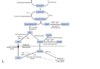
I answered the question correctly but I am still confused. How is alpha-ketoglutarate a precursor to gluconeogenesis? I know it's involved in the TCA cycle but how does that make it a precursor to making glucose?

Also, I knew oxaloacetate was correct because I remembered that when the oxidation of FA's yields an odd number of carbons, this intermediate is formed and eventually makes succinyl CoA which can be formed into oxaloacetate (which serves as a precursor for gluconeogenesis). And I knew lactate could become glucose via the Cori cycle.
 
Advertisement - Members don't see this ad
After hepatic glycogen is depleted, GNG will be happening. The reason you can't convert acetyl coa to glucose through GNG is that as you convert OAA to malate for transport through the malate shuttle, you remove substrate from the mitochondria necessary for the citrate synthase step, and cease to be able to incorporate acetyl coa into the cycle since OAA isn't around anymore. High acetyl coa will keep that cell alive, but won't sustain blood glucose. After OAA is removed TCA will actually slow due do high NADH and acetyl coa will be shunted to ketogenesis


Sent from my iPhone using SDN mobile