DPT School Loans - Am I crazy to do this?

Started by Kepania
This forum made possible through the generous support of SDN members, donors, and sponsors. Thank you.
Get help with your application

Use all the free resources available to you from SDN: articles, guides, expert advising, forums discussions, and school research.

Advertisement - Members don't see this ad
@lee9786 - A well-written, informative post. No one, including myself, who is heading into the profession wants to pay a $20 co-pay. In fact I paid my PT one visit when I injured my knee just so she could show me how to perform certain exercises, then asked her for a print-out of those exercises and never returned just because of the co-pay. I performed those exercises on my own and healed up just fine.

Where I disagree with you is that I do believe the profession will hold steady in the immediate future simply because of the baby-boomers. Although Medicare reimbursements may decrease in the future, the fact that there will be a greater population of elderly folk will help offset that problem from a PT's perspective.

The great fear is 20-30 years down the line when the baby boomers are no longer with us. That's when I really see what you have outlined above coming into play.

I will acknowledge that the tuition these DPT programs charge, especially the private programs, is outrageous. Six-figure debt for a profession where salaries typically start around 60K is nothing more than a huge scam.

Despite this, I am more than hopeful that the investment will be a sound one because of the job security. The profession is expected to grow by roughly 30% over the next ten years. Basically every other profession you look into is going to have its own problems going forward (with the exception of perhaps engineering).
 
lee9786 - I have heard others express these same concerns. In fact, I did the majority of my volunteer hours with a very seasoned PT (who holds only a bachelors degree from way back in the day, and is likely not paying off any debt anymore) and she spoke openly about this very situation. She expressed a lot of frustration about the direction that insurance / medical reimbursement is already heading, and that it already is a problem. This is a HUGE concern and I agree with you that when it all crumbles, PT will be one of those medical services that people will choose to go without. That doesn't mean that people can or should go without it, but at the end of the day, when money is tight, quality of life suffers and this is a perfect example. I myself am in need of PT but cannot afford it right now, so I go without, and just live with the migraines and neck pain.

I do feel confident that the field will continue to grow, like RizDPT has said. In fact I am counting on it, as job security is one of my top motivations for pursuing this field. The world will always need health care professionals, but which ones will continue to be in demand? Obviously doctors and nurses will always be needed, but some fields may be more expendable in the long run. Someone in class today was talking about her father, who is a plastic surgeon who does mostly reconstructive surgery (not elective cosmetic procedures) and she was saying that he has seen his income decrease in recent years. This is really frightening, and wouldn't really bs a concern if it weren't for the overinflated cost of obtaining the DPT degree. Just another reason I continue to go back and forth about this, although I am leaning towards doing it anyway because I've worked too hard not to follow through. I guess only time will tell...
 
To all of those wondering whether PT is worth it....here is my two cents. After a few years working in health care and finishing up pre-reqs for PT school, I have decided this degree is not worth it. My final decision was based upon an essay for one of the schools I applied to which required me to research current issues in health care/PT field. I believe every field in health care has issues, and no particular area will ever be perfect. However, the PT salary-debt ratio was my final deciding factor.

For every school I applied too, I was looking at roughly $120-150 of total debt, not including $35k from undergrad. While comparing these numbers to other fields, I found that PT currently has one of the worst salary-debt ratios. If you compare it to other fields with a clinical doctorates, PT is behind the eight ball for average salaries.

This is a wonderful career to pursue, but the APTA is not doing enough to compensate for how much students are going in debt. What I also find frustrating is the limitations/restrictions many PT's are facing without direct access. Although they are trying to gain this by 2020 nationally, I find it very odd that someone with a doctorates degree can't diagnose and decide the duration of rehabilitation without getting a referral from an MD. As a DPT, I would hope that I could perform an initial evaluation and make decisions on treating a patient without going through an MD. Too many states do not have direct access, and after talking with PT's in the field, these issues are very frustrating for them.

I will say the debt does depend on where you go to school, but most programs will put you between $100-120 K easily, without living expenses, etc. Everyone's situation is different, but this is a HUGE amount of money, regardless of the field. I have several close friends that have finished their DPT, and the majority of them are paying $1200-1800 in loans per month. Even with a 70K salary, after loans, living expenses, etc...they are having troubles actually just saving money. I also have a few friends that have graduated from med school, and although they are typically in the range of $200-250 K in debt, their salaries will eventually pay out. I have talked to several MD's regarding different fields, and after discussing numbers about PT, they couldn't fathom going that much in debt with the current salaries in PT.

At the end of the day..everyone needs to decide what will make them happy. I could see myself being very satisfied as a PT, but there is more to life then just your occupation as well. If I went PT, I know I would be happy doing my daily job, but I will admit that the financial stress would be too much. After looking at the overall quality of life of several new DPT graduates, I feel fortunate that I went in a different direction. Before you all ultimately decide, I would just look at your financial situation, break down costs after graduation, and just make the best decision based upon what you want from an advanced degree!
 
Advertisement - Members don't see this ad
Just curious, Runner107, what career did you decide to pursue?

I do find it ridiculous to spend 120k-150k on your dpt degree, but you don't have to pay that much. Many in-state tuitions total from 30k-60k for the 3 year program. I'm also lucky to be living with my parents, though, so my living expenses will equal 0
 
I have decided to go to PA school. I worked 3 years as a certified athletic trainer...so I had the taste of both professions (PA and PT). Although I loved the rehabilitation component, I also loved the assessment/medical diagnosis. I plan on doing the orthopedic surgical route. Like I said...all fields have their issues! The PT field is great...but long term, I find PA is a better fit for me personally. I do agree that some state schools are less expensive, and there are ways of getting your debt paid off. However, I watched too many friends go the DPT route, and they would all say "the finances will work out". The reality is...not every graduate will be able to get their loans paid off! It starts with the APTA...they are putting too many individuals in a potential financial crisis. All of these programs are the ones that are benefiting the most from the DPT. I initially had interest to do PT when it was just a masters...in some ways....I wish they just kept it like that because this "DPT" credential has only put more financial stress on the students, while the programs are making that much more!!

I just hope everyone makes the best decision for themselves. If you are not sure....go out on a limb and do some shadowing in other health care fields. You def. do not want to be kicking yourself after accumulating all this debt and wish you took the time to look at other options! Before ANYONE goes into an advanced health care degree....you have to be 100% sure it is the right choice in all aspects! Best wishes everyone!
 
Runner, that had to be a tough decision, but I think you analyzed the situation quite well for yourself. It's very easy to just assume an overly optimistic "everything will work itself out" perspective toward huge debt, but the reality of making huge monthly payments for 10+ years is a different story. I hope you get great satisfaction being a PA!

I have the especially lucky privilege to get my DPT education tuition-free due to a parent working at the university to which I'm attending. In my personal case, the economic argument actually favors me taking this route on top of my interest in the field. Obviously this is an extremely rare (and VERY lucky) situation though, and it might have been a different story if I had to pay out well into the 6-digit mark for tuition alone (let alone ~$15k/yr living expenses or so, give or take).

As I've mentioned earlier in the thread, I live very cheaply, but even so it's scary to have that much debt hanging over your head despite embracing a thrifty lifestyle.
 
I totally get where you are coming from as I am in your shoes too. I'm 36 and facing everything you are except that I will have free rent and I'm planning on working part time so that the debt I attain will be tuition alone. That + undergrad debt and I'll probably be around 150k in debt once I graduate. BTW - are you going to SMU? That's where I'm going and from your post I guessed you might be too (if you decide to go). Anyway, I went through the whole freak out stage regarding cost and reading all these posts doesn't exactly make me feel comfortable right now - I personally try to stay away from reading these types of posts or having these conversations now that I've made up my mind to go to school. I will deal with what comes and make it happen and worrying about it isn't going to help me.

Lee9786 brings up some valid points, which I had already researched before making my decision. In fact, the PT I volunteer with told me that all the PTs with the company where she works got salary freezes this year, and she knew of some companies where PTs took drops in their salaries. However, I don't think it's going to be as dire as Lee 9786 makes it out to be....I think it will be somewhere in between. Every medical field is in the same boat, and I'm sure other careers have their own problems - at least PTs aren't having problems with finding work, right? However, it's definitely something everyone should consider when looking into this career.

In regards to current salaries, I have found several forums where PT's were able to make over 100k in their first years out of school by taking on a couple extra patients (home health care) in addition to their full time job - something I am considering to pay off my debt quickly. As well, the bay area, I believe, is among the highest in PT salaries in the country. Lastly, one of my old professors is a woman and close to 70 years old and just opened up her own practice this year! She absolutely loves this field and is someone I hope to be like once I graduate. Even if fitness becomes an issue as we get older, there are many areas in this field that aren't as physical - you can teach, career coach, do hand therapy (OT's normally do this, but I was recently told PT's do this as well), etc. Life is short, so if this what you really want, I'd recommend it.

In regards to other careers, in my opinion, it's not as easy as some posters suggest to just turn around and jump into any other field and be on your way - I'm sure for some people it is, but for the average it isn't. First, you have to figure out what you want to do - which isn't easy!, then you may have to get more schooling, take more prereqs, start from the bottom and work your way up, or hope that a company is going to hire you over a new college grad with similar experience.

Anyway, I think it's a great career and every PT I've volunteered with so far has highly recommended it. Good luck with your decision and I hope to see you next year!
 
greenwoodwa -

It sounds like we've both put a lot of thought and research into many similar aspects of this process! You've made great points. I definitely trust in the job market and it seems to be very strong here in the bay area. Also salaries tend to be a little higher around here in many fields and PT seems to be no exception. The flexibility within the field is also huge for me. Not just in settings but, like you said, the opportunity to take on additional home care clients to boost income in the first few years. I'm also very interested in traveling PT, which I understand can make a fair amount more than average.

It's very true that just switching gears and choosing another path is not so simple. Especially as an older student. I feel like I've decided on this field for so many reasons, I can't look back now. And once I make my decision, I have to choose to let this issue go and just move forward! Btw you are correct, I am hoping to go to SMU. Currently waitlisted and waiting... Hope to see you there and glad to know there will be at least one other 30-ish student! :-D

Runner107 - thank you for your perspective. I am grateful for everyone on here who is taking the time to give feedback, and I definitely want to here from all sides of this issue. It sounds like you chose what is right for you and in the end that is what I hope to do as well.

ptdpt - excellent comic relief! It sounds uncannily similar to the conversations I keep having with myself about all of this!!!
<8-O
 
@lee9786 - A well-written, informative post. No one, including myself, who is heading into the profession wants to pay a $20 co-pay. In fact I paid my PT one visit when I injured my knee just so she could show me how to perform certain exercises, then asked her for a print-out of those exercises and never returned just because of the co-pay. I performed those exercises on my own and healed up just fine.

Where I disagree with you is that I do believe the profession will hold steady in the immediate future simply because of the baby-boomers. Although Medicare reimbursements may decrease in the future, the fact that there will be a greater population of elderly folk will help offset that problem from a PT's perspective.

The great fear is 20-30 years down the line when the baby boomers are no longer with us.
That's when I really see what you have outlined above coming into play.

I will acknowledge that the tuition these DPT programs charge, especially the private programs, is outrageous. Six-figure debt for a profession where salaries typically start around 60K is nothing more than a huge scam.

Despite this, I am more than hopeful that the investment will be a sound one because of the job security. The profession is expected to grow by roughly 30% over the next ten years. Basically every other profession you look into is going to have its own problems going forward (with the exception of perhaps engineering).

The problem is there are a lot of folks that could use therapy treatment, but who is going to pay for those treatments in an event of the currency reducing to the value of toilet paper. Sadly, this is where competent financial advisers are pointing to - Fiscal insolvency. People by and large don't understand. They believe it's just going to work out. Thus why we are in this position in the first place.

People that are betting on this, are putting their time and money into an investment that big brother Government is going to be able to provide for the "baby boom" generation. America is an impoverished nation. No nation that is 6 trillion dollars so in debt that runs with a welfare-service based (not production based) economy that's strength falls upon on a fiat (faith-based) currency (which has its strength tied to OPEC as the World's Reserve currency that the nations are "diversifying" away from) can make the claim that they aren't impoverished. We simply haven't seen the ball roll yet I think. Very sad.

So I suggest people to question how secure this profession really is. Who is the competition (DC's, ATCs, and Massage Therapists <sadly the public perception by many is still that PT's specialty is massage.) Do you want to take the risk of getting into Physician type of loans for this Certification (<The certification is where the value is <Medicare reimbursement>). I don't have a good prognosis at all for Medicare. How does everything equate in an inflationary environment? (<even the best case scenario says there must be inflation). The concern of course is hyperinflation of currency by the nations moving away from the Dollar in a drastic move as they see it as a risky investment (which is happening in countries like China).

Hate to be debby downer here. I spent two years post BS degree getting pre-reqs done for the DPT. I have plenty of posts on here for people that want to check them out for a perspective.
 
I have decided to go to PA school. I worked 3 years as a certified athletic trainer...so I had the taste of both professions (PA and PT). Although I loved the rehabilitation component, I also loved the assessment/medical diagnosis. I plan on doing the orthopedic surgical route. Like I said...all fields have their issues! The PT field is great...but long term, I find PA is a better fit for me personally. I do agree that some state schools are less expensive, and there are ways of getting your debt paid off. However, I watched too many friends go the DPT route, and they would all say "the finances will work out". The reality is...not every graduate will be able to get their loans paid off! It starts with the APTA...they are putting too many individuals in a potential financial crisis. All of these programs are the ones that are benefiting the most from the DPT. I initially had interest to do PT when it was just a masters...in some ways....I wish they just kept it like that because this "DPT" credential has only put more financial stress on the students, while the programs are making that much more!!

I just hope everyone makes the best decision for themselves. If you are not sure....go out on a limb and do some shadowing in other health care fields. You def. do not want to be kicking yourself after accumulating all this debt and wish you took the time to look at other options! Before ANYONE goes into an advanced health care degree....you have to be 100% sure it is the right choice in all aspects! Best wishes everyone!

If I could go back, I would have gotten the ATC, maybe progressed to PTA, then maybe progressed to PA. Or maybe I should have stuck my job out with UPS as a teenager. Could have gotten an education from the library for late fees. BsPTs will be the first to tell you how bad an idea the DPT is. Not much support even from the professionals. I'm growing more and more convinced the APTA (and other healthcare lobby groups), the Universities, the Insurance Companies, the Government, The Banks etc are all shaking hands when the cameras are off. The people that are losing are the professionals and the people/patients. The banks, the universities, the insurance companies, the hospitals, the politicians etc are all winning getting what they want out of the deal. The public/patients aren't. IMO
 
Last edited:
I totally get where you are coming from as I am in your shoes too. I'm 36 and facing everything you are except that I will have free rent and I'm planning on working part time so that the debt I attain will be tuition alone. That + undergrad debt and I'll probably be around 150k in debt once I graduate. BTW - are you going to SMU? That's where I'm going and from your post I guessed you might be too (if you decide to go). Anyway, I went through the whole freak out stage regarding cost and reading all these posts doesn't exactly make me feel comfortable right now - I personally try to stay away from reading these types of posts or having these conversations now that I've made up my mind to go to school. I will deal with what comes and make it happen and worrying about it isn't going to help me.

Lee9786 brings up some valid points, which I had already researched before making my decision. In fact, the PT I volunteer with told me that all the PTs with the company where she works got salary freezes this year, and she knew of some companies where PTs took drops in their salaries. However, I don't think it's going to be as dire as Lee 9786 makes it out to be....I think it will be somewhere in between. Every medical field is in the same boat, and I'm sure other careers have their own problems - at least PTs aren't having problems with finding work, right? However, it's definitely something everyone should consider when looking into this career.

In regards to current salaries, I have found several forums where PT's were able to make over 100k in their first years out of school by taking on a couple extra patients (home health care) in addition to their full time job - something I am considering to pay off my debt quickly. As well, the bay area, I believe, is among the highest in PT salaries in the country. Lastly, one of my old professors is a woman and close to 70 years old and just opened up her own practice this year! She absolutely loves this field and is someone I hope to be like once I graduate. Even if fitness becomes an issue as we get older, there are many areas in this field that aren't as physical - you can teach, career coach, do hand therapy (OT's normally do this, but I was recently told PT's do this as well), etc. Life is short, so if this what you really want, I'd recommend it.

In regards to other careers, in my opinion, it's not as easy as some posters suggest to just turn around and jump into any other field and be on your way - I'm sure for some people it is, but for the average it isn't. First, you have to figure out what you want to do - which isn't easy!, then you may have to get more schooling, take more prereqs, start from the bottom and work your way up, or hope that a company is going to hire you over a new college grad with similar experience.

Anyway, I think it's a great career and every PT I've volunteered with so far has highly recommended it. Good luck with your decision and I hope to see you next year!

I looked into it too late how much this whole process was going to cost. I assumed (big mistake) that it would be reasonable. Paying 100k+ (150 it looked like to be after expenses) for a piece of paper which has its salary historically tied in with Social funding that is failing seems to defy logic. I fought it for more than 2 years attempting to reconcile and make sense of it. The reason why I couldn't make sense of it is is because it doesn't make sense. The motivation wasn't money, but no one jumping through these hoops will be content setting up the Therapy volunteer clinic after spending money they don't have to the extant of mortgage (which isn't a debt that the student can declare bankrupt with).

I would suggest people to think about the kind of money they are spending for what skill set. How does the DPT with it's loans compare with the ATC, DC, MT ( I know the difference - does the public). Tough economic times, the cheaper one wins. It's tough to compete with a $1000+ monthly student loan payment on top of the others.

Just saying. I've found many aren't looking at the dynamics.
​
 
Lee9786...I agree with you at looking at the dynamics. I can honestly say as an ATC, the whole financial obligaiton is much better. Typically, you become a GA and receive your masters degree for free, and if not...for very cheap! Although the salaries are not as high, the debt ratio is much better. I will admit that the hours can sometimes be very long....but it all depends on what setting you work in (DI vs DIII collegiate level, clinic, hospital, professional sports, etc). Besides the financial burden of PT, I thought it was ridiculous that I would go get my DPT, and then have MORE restrictions on the type of care I could provide to my patients. The referrals, limited amount of visits, restrictions of diagnosis, were a huge turn off! Like I said...it is almost amusing that the APTA made this a Doctoral degree....made schooling more expensive, have not improved upon the types of restrictions PT's are limited too, and have not compensated for the difference in pay scale. Personally, those three facts demonstrate they did it for the money. I will say it does make the profession stronger in some weird sense that it's a doctorates degree...but not with all the lacking support!

The job demand will continue to be high for quite some time in PT....but there are more and more allied health care professionals that are gaining more access in the field of rehabilitation. For those of you that think its to "late" to switch focus, I assure you its not. For three years I too busted my butt off finishing the pre-reqs for PT. Now that I have switched paths, I am only two semesters away of completing the rest of the pre-reqs I need. If you look at the long term picture, 2-3 extra semesters is not much when you are talking about your long term career. At the age of 27, I personally could not see myself finishing school at 30 and being $180-200K in total debt (under grad + PT). Those numbers are very close to med school with a hugeee difference in pay scale! It's sad that some of these decisions are based upon money....but I do not believe any degree is worth that much financial risk, especially with such a low debt-salary ratio.

I believe those that have elected to continue towards a DPT degree should start contacting local state agencies, the APTA, etc. to get more things done about the debt! Currently, theres a few loops you may have to get it paid for. 1.) Working for non-profit for 10 years (although this may not always be around). 2.) Indian reservation jobs (they can pay down debt on top of a salary). 3.) Scholarships from navy, army, etc. The APTA is also trying to get the NHSC to sponsor PT, which would allow students to go to underdeveloped areas and get paid $20-30K on loans for up to two years.

Either way, I don't agree with what the APTA has done with the field...its a wonderful profession but they are not supporting those going into the field like many other health care fields are!
 
Lee9786...I agree with you at looking at the dynamics. I can honestly say as an ATC, the whole financial obligaiton is much better. Typically, you become a GA and receive your masters degree for free, and if not...for very cheap! Although the salaries are not as high, the debt ratio is much better. I will admit that the hours can sometimes be very long....but it all depends on what setting you work in (DI vs DIII collegiate level, clinic, hospital, professional sports, etc). Besides the financial burden of PT, I thought it was ridiculous that I would go get my DPT, and then have MORE restrictions on the type of care I could provide to my patients. The referrals, limited amount of visits, restrictions of diagnosis, were a huge turn off! Like I said...it is almost amusing that the APTA made this a Doctoral degree....made schooling more expensive, have not improved upon the types of restrictions PT's are limited too, and have not compensated for the difference in pay scale. Personally, those three facts demonstrate they did it for the money. I will say it does make the profession stronger in some weird sense that it's a doctorates degree...but not with all the lacking support!

The job demand will continue to be high for quite some time in PT....but there are more and more allied health care professionals that are gaining more access in the field of rehabilitation. For those of you that think its to "late" to switch focus, I assure you its not. For three years I too busted my butt off finishing the pre-reqs for PT. Now that I have switched paths, I am only two semesters away of completing the rest of the pre-reqs I need. If you look at the long term picture, 2-3 extra semesters is not much when you are talking about your long term career. At the age of 27, I personally could not see myself finishing school at 30 and being $180-200K in total debt (under grad + PT). Those numbers are very close to med school with a hugeee difference in pay scale! It's sad that some of these decisions are based upon money....but I do not believe any degree is worth that much financial risk, especially with such a low debt-salary ratio.

I believe those that have elected to continue towards a DPT degree should start contacting local state agencies, the APTA, etc. to get more things done about the debt! Currently, theres a few loops you may have to get it paid for. 1.) Working for non-profit for 10 years (although this may not always be around). 2.) Indian reservation jobs (they can pay down debt on top of a salary). 3.) Scholarships from navy, army, etc. The APTA is also trying to get the NHSC to sponsor PT, which would allow students to go to underdeveloped areas and get paid $20-30K on loans for up to two years.

Either way, I don't agree with what the APTA has done with the field...its a wonderful profession but they are not supporting those going into the field like many other health care fields are!

We tend to plan life assuming linearities (go to college, get a career, have some kids, kick them out of the house at 18 😉, buy a sail boat to retire on, die at the average age <70 so> whatever). We live in a world of non-linearities; however, and I believe there is some major correction coming to an America near you as was proposed in previous posts.

"Like I said...it is almost amusing that the APTA made this a Doctoral degree"

I do sometimes wonder if the Schools are laughing at the PT profession as they collect their investment. I don't think all the grad DPTs will be laughing however.

"Those numbers are very close to med school with a hugeee difference in pay scale!"

Isn't it mind shatteringto see PT cost on a level with Med School? Outrageous! The only reason it's so high is because the Schools have an unlimited DEMAND for their seats. If the kids get the loans, they are going to go as they will rationalize it long-term (as we see here). These people are smart. The difference between MD and PT though is MD is inelastic demand while PT is elastic demand.Two different worlds with comparable educational debt. The Numbers don't add up at all.

"I believe those that have elected to continue towards a DPT degree should start contacting local state agencies, the APTA, etc. to get more things done about the debt!"

People don't understand why education is so expensive to being with. Long story short, the Govt. got involved in direct loans a couple decades ago. Now they are lending directly. Everyone gets to go to school. Supply increases. With supply increase = increase # of students /increase demand for schooling = increase cost. So kids have to get into debt now way more than they used to. It used to be people had to pay out of pocket (the price was in line with the market not like now). The demand was in check. The lender (private banks) had to make sure the lendee (the student) had some type of business plan (evaluate the risk). Price was reasonable. I talked to some BsPTs on here that graduated with less than $1000 debt. The one guy is an MD surgeon now (went back to Med School). I think the name is Dr. Wagner if you want to look it up.

The best thing people could do is get the Govt. out of the process all together, but they are going the other way. Now they want Govt. bailouts. The problem is, the Govt. is broke (really 6 trill dollars in debt). Writing letters to congressman that the PTs are having trouble paying the bills is them telling the PTs to get in line with everyone else saying the same thing.

Sorry to be a downer. I've gone down the optomistic (idealistic?) path for a long time with this.
 
Advertisement - Members don't see this ad
Sorry if I missed it lee, but what is your "safe" career plan now that you have abandoned physical therapy?
 
Last edited:
Sorry if I missed it lee, but what is your "safe" career plan now that you have abandoned physical therapy?

Is there a safe career plan? 😳

With any decision, there is a risk value assessment. I've abandoned the DPT or even the PTA for that matter. I'm done playing school running around in circles so I can donate the School money that I don't have which ends up burying me with debt that is unpayable. I've decided to cut my losses. There looks to be a very big correction coming. So I am waiting to see what happens and pay down some debt. I think we are heading into dark times. Looking at getting EMT. I've also been focusing on the Spiritual side of things growing in the Christian faith. Wish I could be more sunny-side optimistic. Kind of hard when decades of fiscal irresponsibility look to finally come to pay the piper and what looks to be a war looming on the horizon.
 
Last edited:
So you have not decided upon a better "better" path?

The better path I would suggest is keeping a tighter reign on the educational expenses, in a shorter period of time, learning a skill set that is unique (not something that has it's value historically tied into social programs). See the salary of PT is highly the result of Social funding. Sorry but no way would a PT evaluation have been $200 in the hospital if Medicare wouldn't have set the bar that high to begin with. This trickles down the entire health field. And they wonder WHY costs are so high. Not really the Government has more experts at their disposal than they could ever need. They aren't stupid or uninformed. They know the logistics of the operation, but they went the opposite way instead. Why? because Special interests.

This healthcare bill is not about helping the people. It's about control and $$$.
 
I had to chuckle when I saw the #1 job in the USN&WR "top 25" was that of a RN... Also many of the jobs in that list are in the IT field. I think the article is slightly misleading: my previous career was in IT, and the outlook there is far from bright, except for top-flight coders and software architects. All of the routine programming tasks, and many of the intermediate ones, have been outsourced to India, China, Russia, etc. IBM just had a mass layoff a few days ago as it strives to replace highly-paid US programmers with less expensive ones overseas. One of the good things about PT is that we must have direct contact with the patients, so sending our job overseas would be more difficult.

As for how much people are really making, read this discussion (it spans a broad range of careers and fields)
http://www.fatwallet.com/forums/finance/1156626/
 
The better path I would suggest is keeping a tighter reign on the educational expenses, in a shorter period of time,

Choosing which program you attend can make a huge difference in the cost of attendance variable. Of course it's unfortunate when people end up regretting racking up massive debt when they turned down an offer at a much cheaper school.

The time issue isn't likely a universal concern for people. I worked for a few years right away after I originally got my bachelor's degree. I hated the job though. I'd say what's far more important than the length of an educational program is whether you are spending your time in life pursuing something you value.

learning a skill set that is unique (not something that has it's value historically tied into social programs).

I'm not sure I follow this. How does the uniqueness of a particular skill set relate to its independence of social funding? A customer service skill set is extremely common, and this skill set is most often utilized in the private sector.

See the salary of PT is highly the result of Social funding. Sorry but no way would a PT evaluation have been $200 in the hospital if Medicare wouldn't have set the bar that high to begin with. This trickles down the entire health field.

It seems somewhat unfair to single out PT with this broad criticism. Could not the same criticism be made toward any medical profession working with Medicare? Why is this a reason not to pursue medical professions?
 
Lee is obviously a skeptic. I've read the thread and there is a lot of undifferentiated facts bunched up, making it seemingly intuitive to believe that PT is destined for a crisis. To me, it seems to all be quite weak inductive reasoning. Everything that was said is purely speculation.

I suggest if you love PT and value what the profession does, strive to be the best clinician you can and you will be perfectly fine.

I talked to the PT I worked for about the economic issues of obtaining a DPT degree and the lifestyle afterwards. He went to a private school and has no qualms about entering the profession. He is still paying off loans, but he also opened two of his own ortho clinics with cash, gotten married and had a daughter, travels/vacations, etc. He loves what he does and lives and breathes PT, just as I plan to do.

The internet is a breeding ground for skepticism. I encourage everyone reading this thread to do so very critically and not be intimidated or scared by all these "facts" being spat out.
 
Choosing which program you attend can make a huge difference in the cost of attendance variable.

Actually it makes no sense to go to a private school with how much they're costing. An in-state Public school is the only ones that are reasonably priced. I applied to Pitt University last year (a couple others as well) to see what would happen. 750 apps. 50 so spots. The common thing people say is just go public school. In reality, it didn't work like that for 700 people.


"learning a skill set that is unique (not something that has it's value historically tied into social programs)."

I'm not sure I follow this. How does the uniqueness of a particular skill set relate to its independence of social funding? A customer service skill set is extremely common, and this skill set is most often utilized in the private sector.

It seems somewhat unfair to single out PT with this broad criticism. Could not the same criticism be made toward any medical profession working with Medicare? Why is this a reason not to pursue medical professions?
You can indeed apply the brush across the entire healthcare system, but PT is in a much different position than the others because it is unique to "healthcare". PT grew out of nursing as a specialty initially for Polio patients. As the Vaccine for polio was found, the field progressed more into the Neuromusculoskeletal rehab specialty. Medicare went into action in the mid 60s and the PT profession bloomed for decades because of it. The success of the entire profession is highly linked to Medicare. Check it out.

PT is considered "ancillary"/secondary in Medicine. That's why when PT is only ~1% or so of Medicare B expenses and they still are getting cut, we see how much MedPac values it. It's a shame but a reality.

The problem with spending so much on PT is the "skill set" that's perceived by many can be done by a "cheaper" source from the viewpoint of both payers and the public. PT has a huge uphill battle trying to convince both payors and people that they're worth the kind of money to pay off the Physician-type loan burden the APTA has successfully put on their professionals. I think the days of $200 evaluations are over. I think it's about to come down to what the market will pay. Not a good thing when the public complains about a $20 copay.

The DPT was an ambitious move but a wrong one IMO. They have overpriced themselves. What stops another profession from stepping in to pick up the slack in the Acute Hospital/nursing care setting for a cheaper rate that is perfectly fine with getting the exercise perscriptions fed to them by the MDs? ONLY the Lobbyists. The AMAs influence greatly exceeds the APTA. If the PTs want autonomy. They might get it. Meanwhile giving up their traditional roles in nursing homes and acute care up to someone else letting the DPTs fight it out autonomously in the outpatient setting with the DCs, ATCs, etc..

The concept I've been suggesting is that life is non-linear and it looks like some non-linearity is about to happen as the market looks to correct itself. It might not be a good idea to be over $100K indebted directly to the government when that happens.
 
Lee is obviously a skeptic. I've read the thread and there is a lot of undifferentiated facts bunched up, making it seemingly intuitive to believe that PT is destined for a crisis. To me, it seems to all be quite weak inductive reasoning. Everything that was said is purely speculation.

I suggest if you love PT and value what the profession does, strive to be the best clinician you can and you will be perfectly fine.

I talked to the PT I worked for about the economic issues of obtaining a DPT degree and the lifestyle afterwards. He went to a private school and has no qualms about entering the profession. He is still paying off loans, but he also opened two of his own ortho clinics with cash, gotten married and had a daughter, travels/vacations, etc. He loves what he does and lives and breathes PT, just as I plan to do.

The internet is a breeding ground for skepticism. I encourage everyone reading this thread to do so very critically and not be intimidated or scared by all these "facts" being spat out.

It's fine, I'm just offering a different perspective than what most have been hearing from others, the schools, etc. I'm not some guy that's just passing by with skepticism. I spent 3 so years extensively researching both this profession, the Healthcare system, payments, other healthcare professions and all. I spent over 2 years post BS degree finishing Pre-reqs volunteering in 4 or so settings talking to a number of both current and previous PTs. An awful lot of my invested in PT. Check out some of my previous posts on here. So I'm not some uninformed passing by skeptic.
 
I'll just add another point of frustration. One of the places I volunteered at there was a nice gentleman of Phillipino decent (not in any way trying to be segregative). The guy was real nice and was trying to help his family back home. We talked a good bit. I told him about the volunteer hours and I had 3 more years to go and told him about what type of debt I was looking at getting into. He offered encouragement but could I could tell he was pretty amazed at my previous commitment.

One thing that is very tough to grasp; however, is that over the shortage of PTs and the attempt to move this to a "D"PT, there is foreign workers coming over working with a BS degree. These folks haven't either paid into Medicare like Americans yet they are collecting. I can't blame them obviously. I'd do the exact same thing. Maybe it's time to go the Philipines and get a PT degree. Sarcasm but gets the point across. The APTA must be in Acadamia Fantasy land. All the Hospitals care about is that they have a PT / PTA that can bill medicare to bring in revenue. They don't care about the "D" in front of the PT. If anything it's a liability because it is more expensive.
 
Actually it makes no sense to go to a private school with how much they're costing. An in-state Public school is the only ones that are reasonably priced. I applied to Pitt University last year (a couple others as well) to see what would happen. 750 apps. 50 so spots. The common thing people say is just go public school. In reality, it didn't work like that for 700 people.

Schools often have to accept around twice as many students as they have seats for due to students applying to increasing numbers of schools with each application cycle and turning down resulting extra acceptances. I've turned down 3 acceptances myself (including Pittsburgh). In reality, about half of all applicants in last year's application cycle received no acceptances.

Not all private schools end up more expensive than public schools too. A private school that accepted me offered $36,200 worth of aid (scholarship+GA), making it cheaper than many public school programs. Usually though, you're right that it's advantageous to cut your costs by taking advantage of in-state tuition rates at a public school. Some states though, like California, have public schools that are pretty crazy expensive in my opinion! It "pays" (har har har) to shop around and explore out-of-state options in that case. In other words, it's more complicated than saying it makes no sense to go to private school.

Also, the rising costs of education cant be explained by a single variable like the APTA too. That would be a gross oversimplification of a monumentally complicated subject.

You can indeed apply the brush across the entire healthcare system, but PT is in a much different position than the others because it is unique to "healthcare". PT grew out of nursing as a specialty initially for Polio patients. As the Vaccine for polio was found, the field progressed more into the Neuromusculoskeletal rehab specialty. Medicare went into action in the mid 60s and the PT profession bloomed for decades because of it. The success of the entire profession is highly linked to Medicare. Check it out.

Patients wouldn't pay physicians or surgeons hundreds or thousands of dollars out-of-pocket if they didn't have health insurance/Medicare either. I don't see how you're significantly separating PTs from other health professionals (PAs, physicians, nurses, OTs, psychiatrists, dentists, etc.) with regards to how they are funded. The fact that patients would rather utilize insurance mechanisms than pay for services out-of-pocket says nothing about the future outlook of a profession. Would you be equally hesitant to pursue any profession that is compensated out of insurance payments of any kind?

I agree with you that people shouldn't blindly pursue PT "at any cost." I made cost of attendance one of my primary variables in school selection in order to avoid many of the stresses associated with debt. Everyone should do the math and calculate exactly how much it will cost you to get a DPT (including the subsequent payback schedule after graduation) to ensure it will be acceptable for your desired living standards.

I'm not convinced, however, that you've made a strong argument against PT itself. Honestly, your arguments seem kind of vague and jump around a lot. You mostly paint a bleak picture without acknowledging the many reasons why PT is consistently regarded as being a great profession that is in very high demand. You should at least address the age demographics of the U.S. Don't you think the onslaught of debilitating age-related illnesses we should expect to see for decades will increase demand for PT? The high-risk sedentary lifestyle and poor diets could produce an explosion of heart attacks. What about low-income and rural areas of the country already in high demand for PTs? You don't address these issues at all in your criticisms, instead focusing on a what-if doomsday scenario of all public funding being cut for PT. That's just not realistic.

Given your skepticism though, I'm curious how much you would be willing to go into debt for a DPT.
 
I do find it ridiculous to spend 120k-150k on your dpt degree, but you don't have to pay that much. Many in-state tuitions total from 30k-60k for the 3 year program. I'm also lucky to be living with my parents, though, so my living expenses will equal 0

Living with parents will save so much! Good deal!
 
Advertisement - Members don't see this ad
Physical therapists will have stable careers for years to come. IMHO, even with declining rates, the entire managed care system is changing and more of the public will have access to healthcare. I believe in the opposite of what many predict. I see that demand will eventually overwhelm capacity with such a system. My fear is that the quality of care will suffer as a result. We will see when the supreme court makes its final decision. I'm not going to give my economic analysis of my prediction because I'm not willing to throw down a 30 page case report. It's like what one poster said, it's actually quite complicated. We can just simply look at how physiotherapists are doing in other countries where healthcare is a public service. http://www.worldsalaries.org/physiotherapist.shtml.

As for student loans, I'm going to be at about $180k. Am I worried? Yes. Do I have plans for tuition forgiveness, compete for scholarships, etc.? Yes! And everyone who invests in higher learning should also. The system is broke. All we can do, should we decide to pursue a career we enjoy, is work with what we have while supporting changes that we need.

Best of luck!
 
I stumbled upon these forums a little while ago...and never bothered to comment because the majority of individuals in these posts have no professional experience as an allied health care professional. When I say professional....I do not mean an "aide", I am referring to someone who has passed some type of Board Exam, and is a licensed professional. Although there are some individuals on here with professional experience, the majority are making statements based upon what they have "heard" from who they have been doing observation hours with. As an ACI, if my students were thinking of a different direction after they got their ATC, I would give them my perspective, both good and bad (because EVERY field has BOTH). I find, however, that many individuals on here get upset when some harsh realities are brought up.

I worked on a health care team that incorporated MD's, DO's, RN's, PA's, PT's, OT's, ATC's, Exercise Physiologist, Strength coaches, Nutritionists, and psychologists/counselors. I can honestly say that I gained a wonderful appreciation of how our health care system can and does work as a team, and every field contributes in many special ways. I learned a lot about each field, and all the pros and cons in each. I learned a lot more information about PT when I actually stepped away from what others were saying...good or bad...and did the research.

Rangadrum....I agree that the APTA can't be the sole reason on the high costs of PT. In general, we know education in all fields have increased. However, the APTA is basically the governing board of PT. They DID push for the DPT, and HAVE NOT addressed the issues with the cost/salary issues. Sure, they are doing things like trying to get the NHSC to get involved. The real issue here is not even costs....its the restrictions MANY PT's are facing. It is very mind blowing that they did make it a DPT...but have not gained direct access in more then half the states. I find it sad that a "DPT" is considered to be at the top of their field....yet in many states...they cannot diagnose, need an MD to make a referral (basically an approoval/OK for PT), and are only allowed certain amount of visits based upon the MD's referral. These issues are a huge problem because they can/do alter the way a PT goes about treating their patients, and no doubt, can alter results for the patients. A DPT has more restrictions then an ATC in the traditional setting...which I find very amusing.

At the end of the day.....I find and have witnessed.....many people in denial, rationalizing....and then all of a sudden...either before/during/after this degree....it hits them that maybe they should have addressed some hard facts/realities instead of just leaping into a field and accepting it! I admit I fell for it too....but between the costs/restrictions, and seeing the large spectrum of our health care system...if one is going over $120 K for in debt for PT (under grad included)...then no, I do not see how you can justify this degree with many other wonderful health care professions!
 
Last edited:
The real issue here is not even costs....its the restrictions MANY PT's are facing. It is very mind blowing that they did make it a DPT...but have not gained direct access in more then half the states.

"The professional training and expertise which characterize physical therapists has been recognized by 46 states and the District of Columbia. These states have removed the out-dated provisions requiring a referral by a physician, from their statutes."

http://www.apta.org/StateIssues/DirectAccess/Overview/
 
"The professional training and expertise which characterize physical therapists has been recognized by 46 states and the District of Columbia. These states have removed the out-dated provisions requiring a referral by a physician, from their statutes."

http://www.apta.org/StateIssues/DirectAccess/Overview/

Yup. But it's still unfortunate that in my home state, PT's still need a diagnosis before the administration of treatment. Also, many insurers still require a referral for reimbursement.
 
Right.....but look at how each state varies....not consistent enough to justify a doctoral degree! Once you get into health care....you will realize how these impact your work! Not here to argue...wish you all the best of luck!
 
Yup. But it's still unfortunate that in my home state, PT's still need a diagnosis before the administration of treatment. Also, many insurers still require a referral for reimbursement.

Yeah, that is unfortunate. I wonder to what extent this plays an impact in where PTs ultimately decide to work. Do PT grads from non-direct access states (and states with relatively more restrictions) tend to leave those states, or is this not a sticking point for many/most of them?

Another point to consider is where the general trend is going rather than our current focus on the exact snapshot of today. The political momentum seems to be favoring increased direct access. For instance, just think if the situation was the reverse and only 4 states allowed direct access, having originally been nearly all states. Things don't change overnight.
 
Check out the unemployment rate for physical therapists: http://online.wsj.com/article/SB10001424052748703791904576075652301620440.html

Unfortunately the data stops here at 2010. Through the Great Recession, with people checking their spending at every given opportunity to cut costs, and 9%+ national unemployment rates, the unemployment rate for PTs remained very low from 2007-2010 (0.5-2.0% range). Being a career changer myself, this should not be taken for granted.

On a side note: just saw an infomercial for a home physical therapy DVD program. **sigh**

I hear home surgeries are on the rise too...

http://www.ktla.com/news/landing/ktla-glendale-hernia-butter-knife,0,1672181.story
 
Last edited:
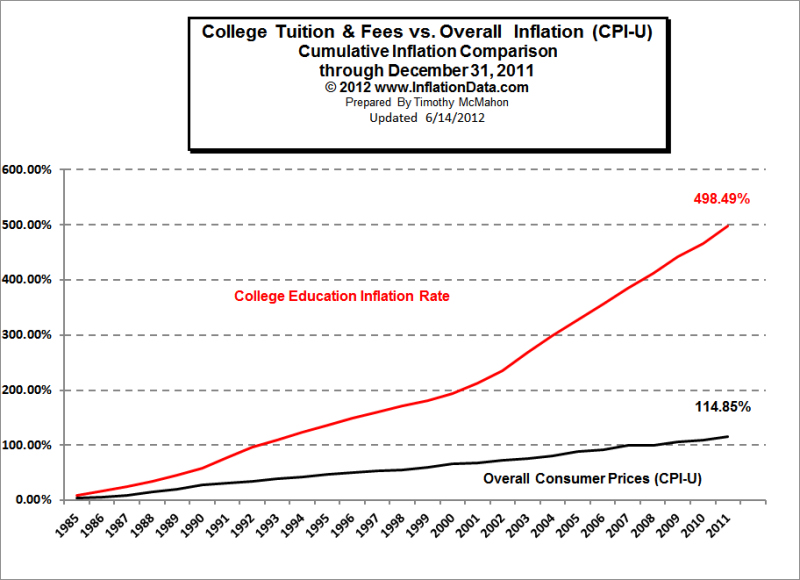
Also, the rising costs of education cant be explained by a single variable like the APTA too. That would be a gross oversimplification of a monumentally complicated subject.

Considering the bold, that is true. That's why I gave some more of the dynamics prior to.

education.jpg


Long story short, once the government got involved in guaranteeing loans (i.e. direct loans), prices started going up. Private lenders assess the risk. When there is a gaurantee, there is no risk. When there is no risk, the amount that is lended increases. Why not? Works out well for the banks. They can't lose. The government's "gauranteed" it with taxpayer dollars. What's all this do to the cost of tuition? Goes up. Why not? They now have more $$$ available (through loans) and an increased demand for seats. Works out well for the Schools. Basic Supply and demand concepts taking course.

So no the APTA is not the sole reason, but putting another year requirement on graduate loans isn't helping things, especially when the market hasn't recognized it.

Patients wouldn't pay physicians or surgeons hundreds or thousands of dollars out-of-pocket if they didn't have health insurance/Medicare either. I don't see how you're significantly separating PTs from other health professionals (PAs, physicians, nurses, OTs, psychiatrists, dentists, etc.) with regards to how they are funded. The fact that patients would rather utilize insurance mechanisms than pay for services out-of-pocket says nothing about the future outlook of a profession. Would you be equally hesitant to pursue any profession that is compensated out of insurance payments of any kind?
Already covered, but we'll do it again. PT is an ancillary service (secondary service) in healthcare. It's demand is "elastic". If someone's Mom needs surgery or quite likely suffer a fatality for not doing so, the family will chip in (sell houses if needed) to pay for the surgery. What happens when the coPay in PT goes up to say $60. People stop showing up. No patient = no money. While it's both called "health care", there are two different ballgames.
 
With regards to age demographics in which many would need therapy due to increased age, what determines the true demand for Physical Therapy services? The number of people or the number of people paying?

Volunteer service is noble, but it won't pay the bills. In an inflationary environment, those on fixed incomes (the elderly) are going to see their discretionary income decrease. Food, Gas, etc wins.
 
Last edited:
Cutting state funding of higher ed has also led schools to increase tuition rates instead of make up the difference entirely by budget cuts. Schools have that option when they have a healthy-sized applicant surplus.

Already covered, but we'll do it again. PT is an ancillary service (secondary service) in healthcare. It's demand is "elastic".

The unemployment rate for PTs through this so-called Great Recession doesn't seem to support a strongly elastic relationship in regards to copay cost. Otherwise PTs would have had unemployment rates spiking like other professions when Americans were cutting back their spending. Copays evidently have not been a problem though when only around 1% of PTs are unemployed at the current average salary rate.

If someone's Mom needs surgery or quite likely suffer a fatality for not doing so, the family will chip in (sell houses if needed) to pay for the surgery. What happens when the coPay in PT goes up to say $60. People stop showing up. No patient = no money. While it's both called "health care", there are two different ballgames.

I'm not convinced by this kind of hypothetical, highly specific, "what-if" conjecture of a single story like this. Using anecdotal scenarios to suggest that PT is declining as a profession just doesn't cut it when compared to documented statistics of overall job growth, overall unemployment rates, overall salary movement, etc. that contradict your conclusions. We should be focusing on the overall market demand and not these hypotheticals. I could just as easily say that surgeons are doomed because families will not have the tens of thousands of dollars necessary to pay for surgery out-of-pocket, no matter how many people try to chip in. I'd rather focus on overall economic data instead though.

Every job market forecast source I've encountered paints a picture of faster than average growth for PT's as the baby boomers continue to age, and unemployment remains low while salary remains above average. Cost of education is definitely a major issue of concern, especially at the higher cost end of PT schools. Compared to other industries/professions in this country though, far fewer professions have growth projections enjoyed by PT. I find sources addressing overall market trends more credible than individual, what-if scenarios that don't speak about to the overall market. The latter can be used to paint a negative picture about ANY profession while ignoring market demand.
 
So you don't think there will be any room for PTs and that the profession will disappear?

I'll just finish with this comment. Currently RC3-11 looks to pass which the PTAs and PTA programs are REALLY sweating it because a lot of folks look to be taking a huge paycheck reduction if not lose their job entirely.

I do not see this as a move that was a reaction to advance the profession as it is being put forth. I believe it is a knee jerk reaction to the Healthcare Law as well as Medicare cuts in an effort to save the profession with their DPT.

I believe that payors seeing his move will end up weakening the profession. Payors get to see how many treatments didn't really need a certified PTA but a on-the-job trained CNA,PT Aide, Medical Assistant, etc. Reimbursement rates go down.

Everything is so dependent upon politics (yes those guys). You have a whole group of PTAs and PTA instructors that look to be looking for work real soon all at a strike of a pen.
 
Advertisement - Members don't see this ad
http://www.apta.org/PTinMotion/News...2&blogday=28&blogyear=2012&blogid=10737418615

http://www.apta.org/Media/Releases/Legislative/2011/3/17/


Considering the bold, that is true. That's why I gave some more of the dynamics prior to.

education.jpg


Long story short, once the government got involved in guaranteeing loans (i.e. direct loans), prices started going up. Private lenders assess the risk. When there is a gaurantee, there is no risk. When there is no risk, the amount that is lended increases. Why not? Works out well for the banks. They can't lose. The government's "gauranteed" it with taxpayer dollars. What's all this do to the cost of tuition? Goes up. Why not? They now have more $$$ available (through loans) and an increased demand for seats. Works out well for the Schools. Basic Supply and demand concepts taking course.

So no the APTA is not the sole reason, but putting another year requirement on graduate loans isn't helping things, especially when the market hasn't recognized it.

Already covered, but we'll do it again. PT is an ancillary service (secondary service) in healthcare. It's demand is "elastic". If someone's Mom needs surgery or quite likely suffer a fatality for not doing so, the family will chip in (sell houses if needed) to pay for the surgery. What happens when the coPay in PT goes up to say $60. People stop showing up. No patient = no money. While it's both called "health care", there are two different ballgames.
 
So I know this is not exactly what the threat is discussing. But I want some input on my situation.

I have been accepted to an OOS DPT program, after foolishly declining two in state schools. :scared:

Over the past months, I have grown an interest in medicine as well to physical therapy. While I want to practice PT clinically, I feel like I will want to go back and learn more from a DO/MD program and move my career to that side of the house.

So essentially I am asking, am I nuts for considering OOS tuition to go through DPT with the possibility of moving into medicine later? I know the education and experience PT offers will be beneficial no matter which way I may end up going and I have a thirst for gaining the knowledge both professions offer.
 
So I know this is not exactly what the threat is discussing. But I want some input on my situation.

I have been accepted to an OOS DPT program, after foolishly declining two in state schools. :scared:

Over the past months, I have grown an interest in medicine as well to physical therapy. While I want to practice PT clinically, I feel like I will want to go back and learn more from a DO/MD program and move my career to that side of the house.

So essentially I am asking, am I nuts for considering OOS tuition to go through DPT with the possibility of moving into medicine later? I know the education and experience PT offers will be beneficial no matter which way I may end up going and I have a thirst for gaining the knowledge both professions offer.

Yes, you are nuts for considering that.

Sounds like you should just go to med school and then specialize in physical medicine and rehabilitation.

http://en.wikipedia.org/wiki/Physical_medicine_and_rehabilitation
 
I've found a majority of PT students aren't really informed in what's going on in the world around them or have any real perspective on the future of this field. It seems many are short-sighted looking at statistics on the BLS for salary without really understanding where their Salary comes from (Medicare reimbursement rates, etc.).

Long story short, this country has some huge fiscal issues. PT is seen as an ancillary service. Currently what happens when insurance no longer covers PT and the patient starts having to pay out of pocket? 9 out of 10 cases (don't know the exact ratio) the patient doesn't arrive. No patient = no money. Currently we hear about patient's complaining about $20 copays with Medicare flipping most the tab. Private Insurance, historically has looked at Medicare's reimbursement rate to see what they should pay for PT services (paying a percentage of that). When Medicare cuts rates, PTs can forecast what will happen based on these trends.

The sad thing is, many aren't realizing that the pressure on Salaries is going down. While this is the case, Students are getting piled high over their heads in debt. Worse case scenario, how does PT fare on the free market? This is untested waters. The salary is inflated due to the standard, Medicare reimbursement. Not only is their pressure on Medicare reimbursement going down, dynamically it looks to be unsustainable reaching its end relatively shortly it looks like. So things look to be changing drastically. The APTA has destroyed the profession by asking their professionals to get into so much debt.

Do you want to have $100K possibly + debt (now directly lent from the Government) and hear the bad news that Medicare is no longer a viable program? I mean we know that the economics are unsustainable, especially with a Currency that is extremely risky to go into hyperinflation mode as the OPEC currency is moving away from the Dollar as the world's reserve currency.

We like to think that the Govt. is going to bail everyone out, but with what money? America is not only broke, it is trillions of dollars in debt, but this Country is still spending like it has money. Not good.

So I can not recommend anyone to get into the kind of debt that is required for the DPT. I think the Universities have been giving each other high fives behind closed doors that they are still filling the seats.

I asked a PT once about how he thought PT would fare on the free market. He said you can't squeeze water from rocks. The target population is the elderly. Their income comes from fixed sources such as Social Security. Something tells me the little old lady is going to opt out of PT treatment when Gas hits $7 a gallon as she sees her purchasing power go down. Utilities and food wins.

The skeptic says, well everyone will have to buy insurance.

The entire foundation rests upon the fiat currency the world is diversifying away from and the fact that America doesn't produce things anymore. We are on shaky territory. Our welfare-service based economy that has run off the strength of its currency will be a thing of the past.

So I cannot recommend anybody to go through the hoops getting over $100k+ debt for this certification. There is a huge bubble that looks about to pop to correct itself because people haven't decided to correct it the responsible way.
Whoa.