

-
CycleTrack and SDN are teaming up to make medical school admissions more transparent and accessible! Read the announcement to learn how we’re supporting the future of CycleTrack’s free application-tracking tools .
You are using an out of date browser. It may not display this or other websites correctly.
You should upgrade or use an alternative browser.
You should upgrade or use an alternative browser.
Let's do some echo:
Started by sevoflurane

Get help with your application
Use all the free resources available to you from SDN: articles, guides, expert advising, forums discussions, and school research.
lol... nevermind. Vector beat me to it.
D
deleted697535
Tommy burch talks about this alot...Some examples of what Peterman is talking about
View attachment 328186View attachment 328187
M-mode through the AV leaflets is also nice to get a qualitative sense of how good LV function is. M-mode the leaflets of a normal function CABG and compare the visually assessed ejection time to an EF 30% guy and you'll see what I mean.
Hocm, autosomal dominant, spares basal infeolateral wall, shark tooth cwd, chattering of aov on m mode... Hey i guess it works lol
Advertisement - Members don't see this ad
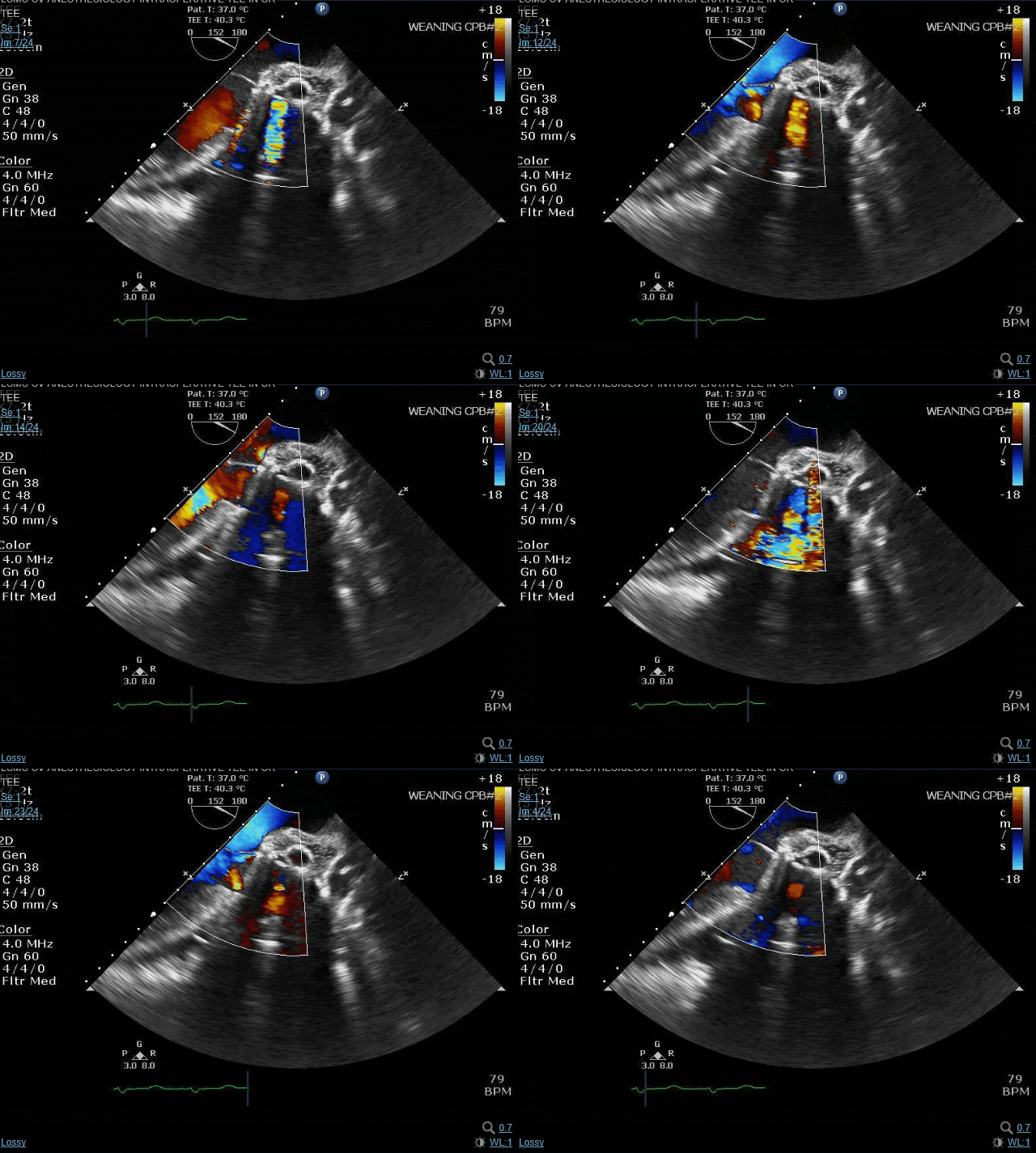
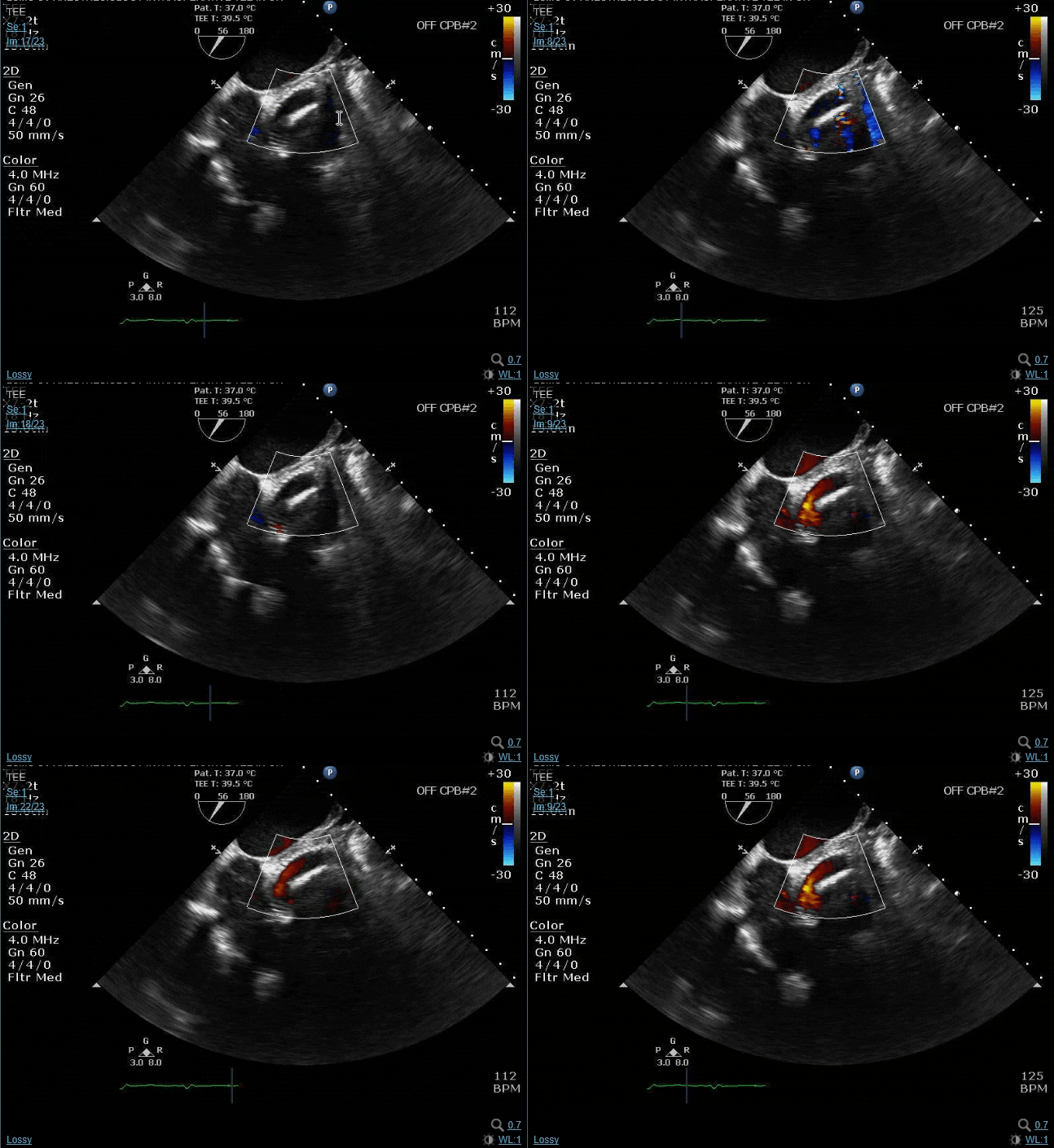
Who can tell me what's designated by the yellow arrow?

e: @sevoflurane without giving it away, do you know what this is? it's def not something one might routinely see in most shops...
e: @sevoflurane without giving it away, do you know what this is? it's def not something one might routinely see in most shops...
Last edited:

@vector2 this is one where it’s a little bit hard to tell without holding the probe in your hands… But with that being said, looks like some thing going on in the vicinity of the aortic root. In the 60 degree view looks like a wire or catheter of some kind, though less so in the backwards four chamber. doesn’t really look like any root abscess I’ve ever seen. Clinical context?
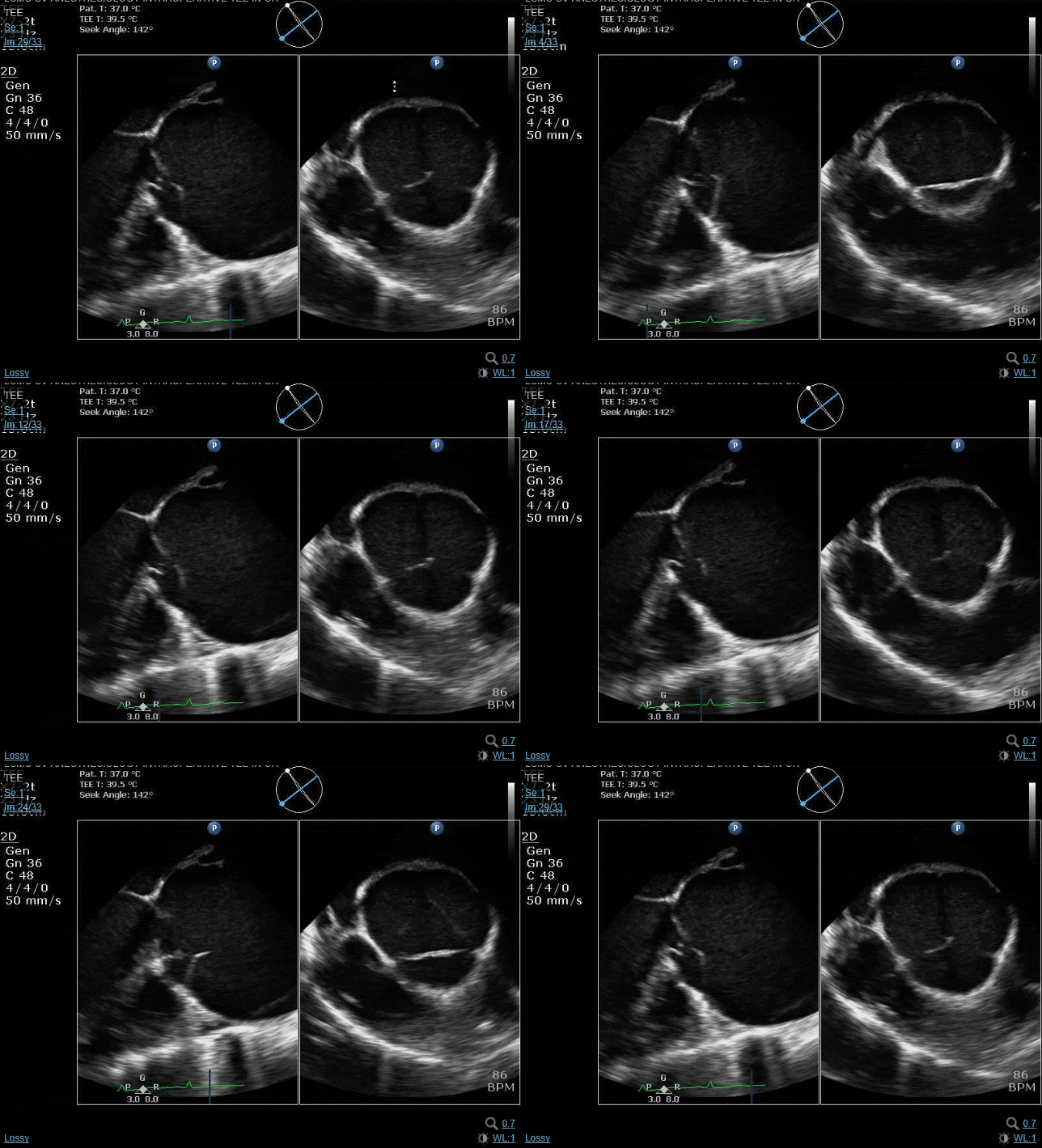
Clinical context? Here's a pre-bypass clip@vector2 this is one where it’s a little bit hard to tell without holding the probe in your hands… But with that being said, looks like some thing going on in the vicinity of the aortic root. In the 60 degree view looks like a wire or catheter of some kind, though less so in the backwards four chamber. doesn’t really look like any root abscess I’ve ever seen. Clinical context?
D
deleted697535
It almost looks like sax of impella but its in lax and not seen in the LV.... hmmm
Very low flow around it. Obviously AoV isnt opening then so its some form of an outflow cannula? idk...
So you have a massively dilated Asc Aorta. RCC looks really wierd going to be severe AI. Elkhoury 2? with vegetation on the RCC back into LVOT
is there an abscess just above the stj?
Tricuspid blown too?
Very low flow around it. Obviously AoV isnt opening then so its some form of an outflow cannula? idk...
So you have a massively dilated Asc Aorta. RCC looks really wierd going to be severe AI. Elkhoury 2? with vegetation on the RCC back into LVOT
is there an abscess just above the stj?
Tricuspid blown too?
Make sure you look at the labels in the clips too. The first one says "Weaning CPB" and the 2nd one says "Off CPB". That should give you guys some idea as to the likelihood of whether there's going to be significant non-iatrogenic pathology still remaining in the clip.It almost looks like sax of impella but its in lax and not seen in the LV.... hmmm
Very low flow around it. Obviously AoV isnt opening then so its some form of an outflow cannula? idk...
So you have a massively dilated Asc Aorta. RCC looks really wierd going to be severe AI. Elkhoury 2? with vegetation on the RCC back into LVOT
is there an abscess just above the stj?
Tricuspid blown too?
Another hint: what is the pathology in the pre-bypass clip and what is the most common type of surgical repair? What are the less common variants of that surgical repair?
D
deleted697535
Most common is a Bentall? But isnt there a davids modification.
Plus bentall can mean many different things and not all like the original bentall. Modified bentall is what our surgeons usually say while one of them is off in the corner making a bioprosthetic into a tube graft or FET for ages intraop
So i just say modified bentall and move on.
Plus bentall can mean many different things and not all like the original bentall. Modified bentall is what our surgeons usually say while one of them is off in the corner making a bioprosthetic into a tube graft or FET for ages intraop
So i just say modified bentall and move on.
Last edited by a moderator:
Modified bentall is the most common. However, the last step of that procedure, when you're putting the pt back together, sometimes needs to be modified for an anatomic concern if a certain thing(s) doesn't reach....Most common is a Bentall? But isnt there a davids modification.
Plus bentall can mean many different things and not all like the original bentall. Modified bentall is what our surgeons usually say while one of them is off in the corner making a bioprosthetic into a tube graft or FET for ages intraop
So i just say modified bentall and move on.
D
deleted697535
Ah ok so its a graft to a coronary likely to LM, in a Bentall likely bio but cant really see enough to comment re AoV or rootModified bentall is the most common. However, the last step of that procedure, when you're putting the pt back together, sometimes needs to be modified for an anatomic concern if a certain thing(s) doesn't reach....
Ah ok so its a graft to a coronary likely to LM, in a Bentall likely bio but cant really see enough to comment re AoV or root
Yep, this procedure is called a Cabrol (type B in the diagram below). It's used sometimes when the aneurysm is so big or if there's some abnormality in the coronaries that prevents the normal "coronary button" implantation technique used in Bentalls. The yellow arrow is pointing to the Dacron graft that is end-to-end anastomosed to a remnant of the left main. If you look close enough at the ME AV SAX, you can even see the division into the LAD (red arrow) and Cx (blue arrow)
Last edited:
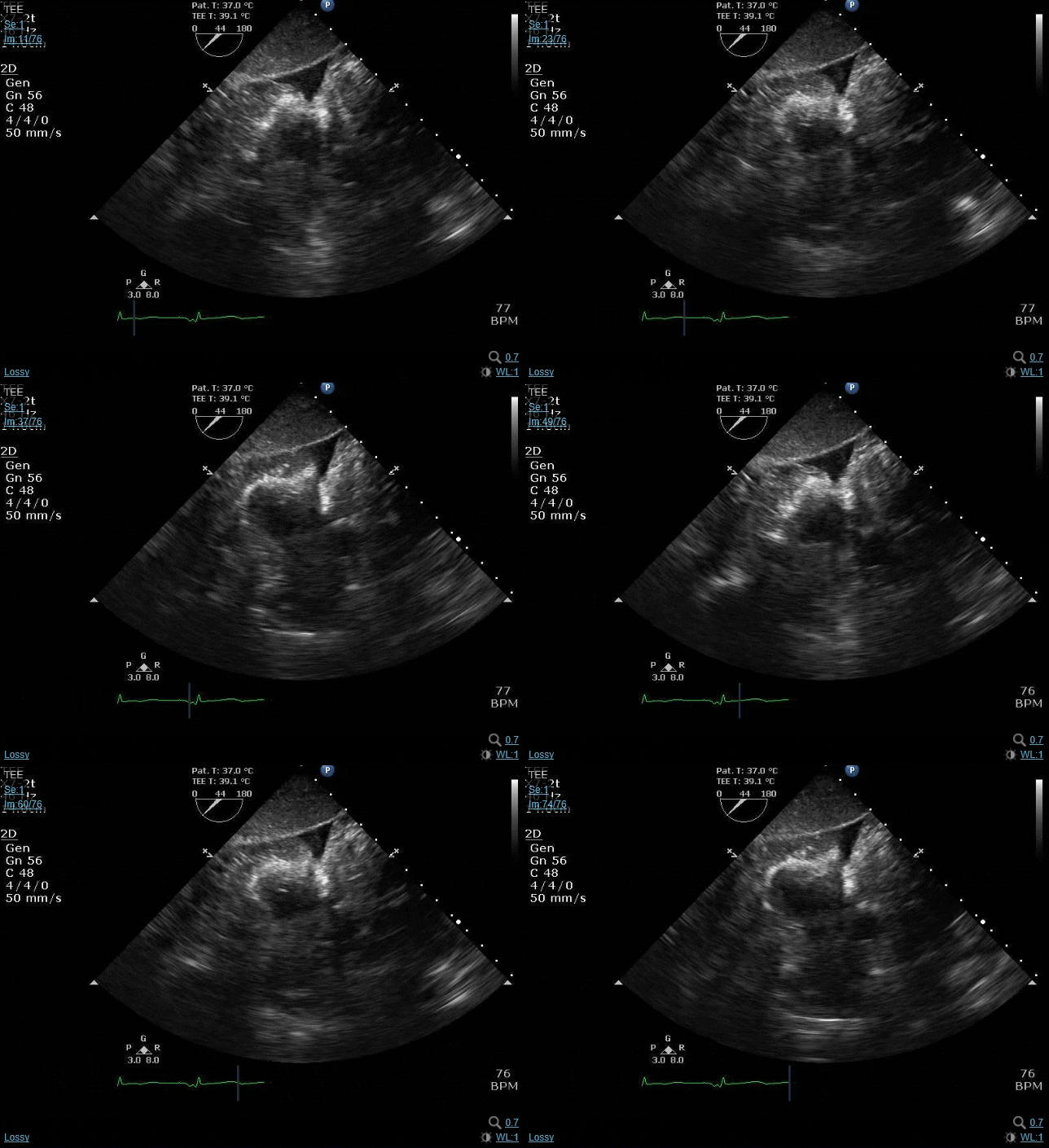
Who can tell me what's going on here?
It’s a boy!Who can tell me what's going on here?
Advertisement - Members don't see this ad
D
deleted697535
Someones having a really bad day
I see liver, a small posterior collection, RV and LV hypertrophy, ventricular dyssynchrony, not sure what the circle is in the septal LV wall but doesn’t look like a muscular VSD repair. Anterior RV looks like someone is doing internal cardiac massage (ekg would argue otherwise).
that being said... anybody have any scuba gear I can borrow.
should have another foot on top of that this morning . 🤗❄️🤗

My best guess was maybe a finger there wrapping around the heart?Who can tell me what's going on here?
The chest is not open in that clip
@vector2 is this some type of paraesophageal hernia with abdominal viscera in the chest?
D
deleted697535
Well ouch...
Pleural and pericardial effusion?
Pericardial concerning for tamponade physiology. clinical correlation required lol
Pleural and pericardial effusion?
Pericardial concerning for tamponade physiology. clinical correlation required lol
@vector2 is this some type of paraesophageal hernia with abdominal viscera in the chest?
We see the liver as @sevoflurane pointed out, we see something weird going on with the myocardial-pericardial interface....and we also see something that is causing reverberation artifact. What ventricle are we looking at and what things cause reverberation artifact?Well ouch...
Pleural and pericardial effusion?
Pericardial concerning for tamponade physiology. clinical correlation required lol
This should give it away
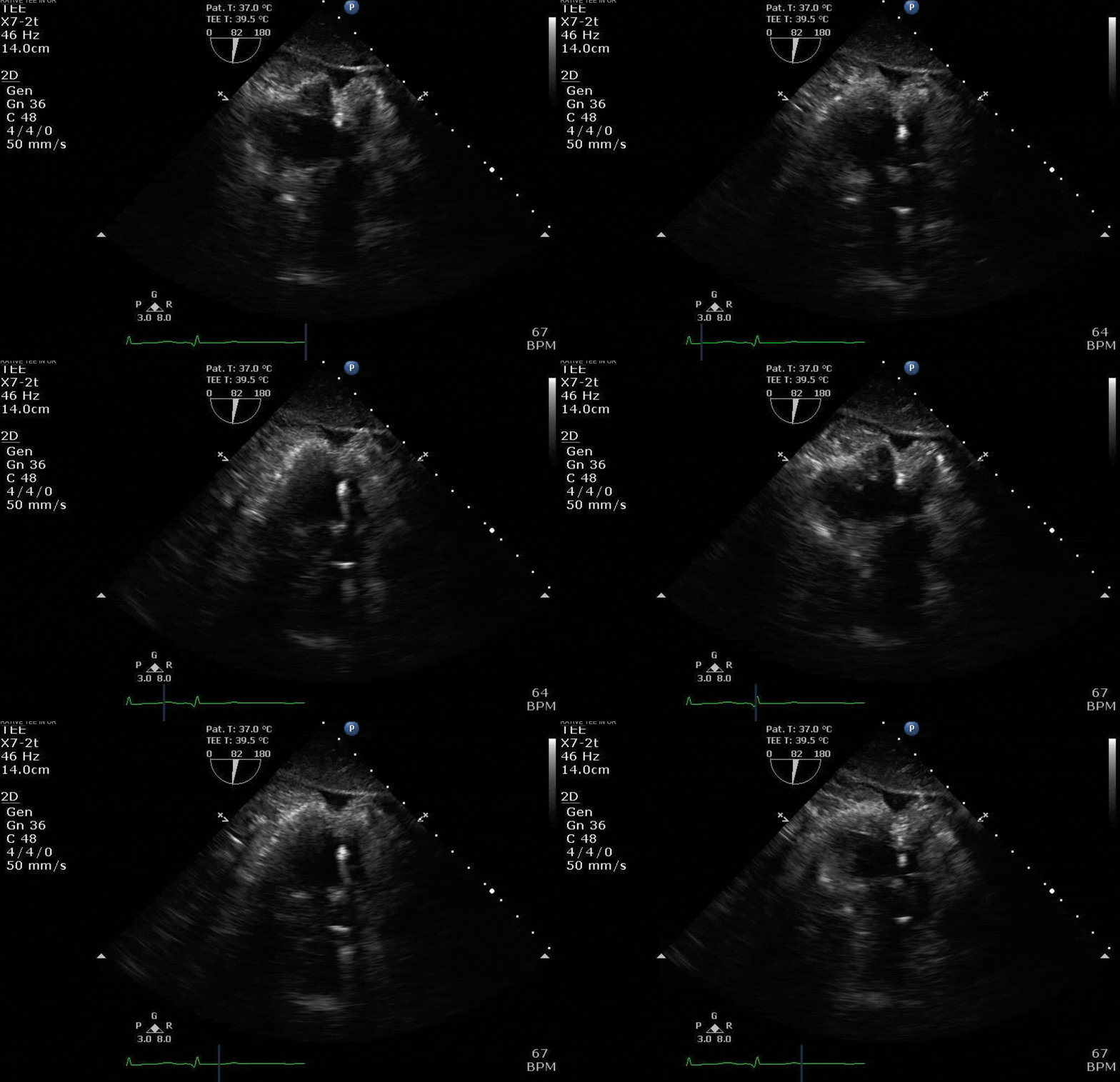
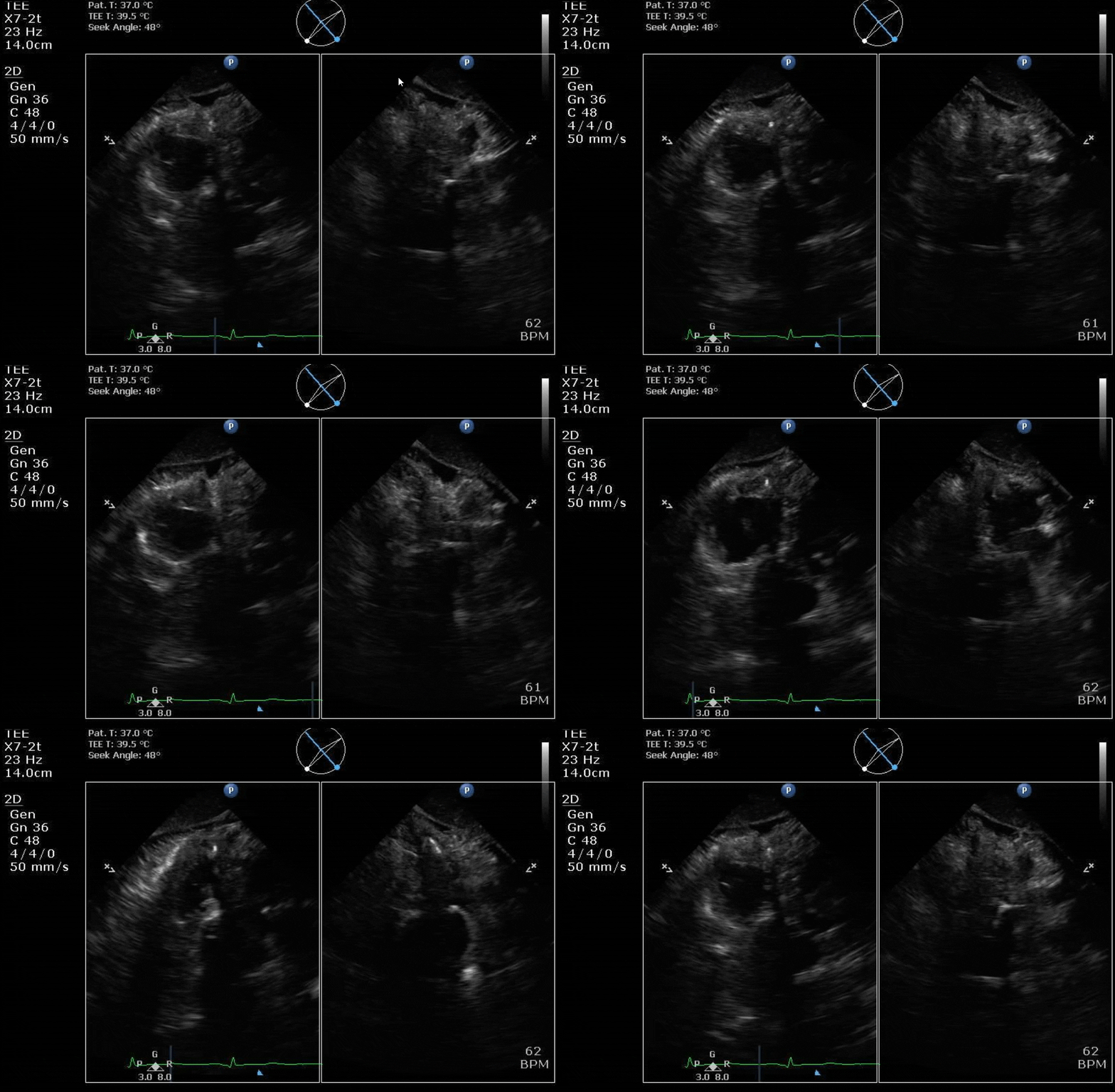
I got nothin. I imagine I'll be smacking my head when you explain but I'm totally lost currently.This should give it away
D
deleted697535
Well not really... Ivc cannula in the RA
I got nothin. I imagine I'll be smacking my head when you explain but I'm totally lost currently.
There is a procedure occurring but it’s not one that occurs typically in a cardiac OR. It’s related to the sequelae of another procedure that’s also typically done non-invasively.Well not really... Ivc cannula in the RA
D
deleted87051
There is a procedure occurring but it’s not one that occurs typically in a cardiac OR. It’s related to the sequelae of another procedure that’s also typically done non-invasively.
Lead extraction gone bad?
Oh I like that. I can imagine myself seeing a lead that's being pulled on actively.Lead extraction gone bad?
Advertisement - Members don't see this ad
D
deleted87051
Oh I like that. I can imagine myself seeing a lead that's being pulled on actively.
Maybe it hasn’t even gone bad. It may not be a true effusion. Just tugging on the RV wall.
D
deleted697535
Ah, laser lead extraction?
Yes that's what I mean.Maybe it hasn’t even gone bad. It may not be a true effusion. Just tugging on the RV wall.
Demonstrates the importance of getting good baseline images before anyone starts messing with the lead. For example, assuming this is a patient having a lead extraction, this could just be ascites with no pericardial effusion (notice how the bright pericardial line remains close to the myocardial surface, while the fluid is around the liver). I could be way off base, but hard to know without having the probe in your hands and looking around
I assumed the fluid was just pleural effusion.Demonstrates the importance of getting good baseline images before anyone starts messing with the lead. For example, assuming this is a patient having a lead extraction, this could just be ascites with no pericardial effusion (notice how the bright pericardial line remains close to the myocardial surface, while the fluid is around the liver). I could be way off base, but hard to know without having the probe in your hands and looking around
Yep. Lead extraction. Didn't go bad.Lead extraction gone bad?
There is always some baseline amount of fluid in the pericardial space. You can see the proceduralist tugging on the lead and inverting the RV wall, and thus fluid will naturally fill in the potential space until the tension is released and the fluid redistributes.
Personally, I can't get enough of random WMA clips. I find myself still picking up subtle things I missed in the heat of the moment even when I'm reviewing the same clips postop.
Pre and post MVr/TVr
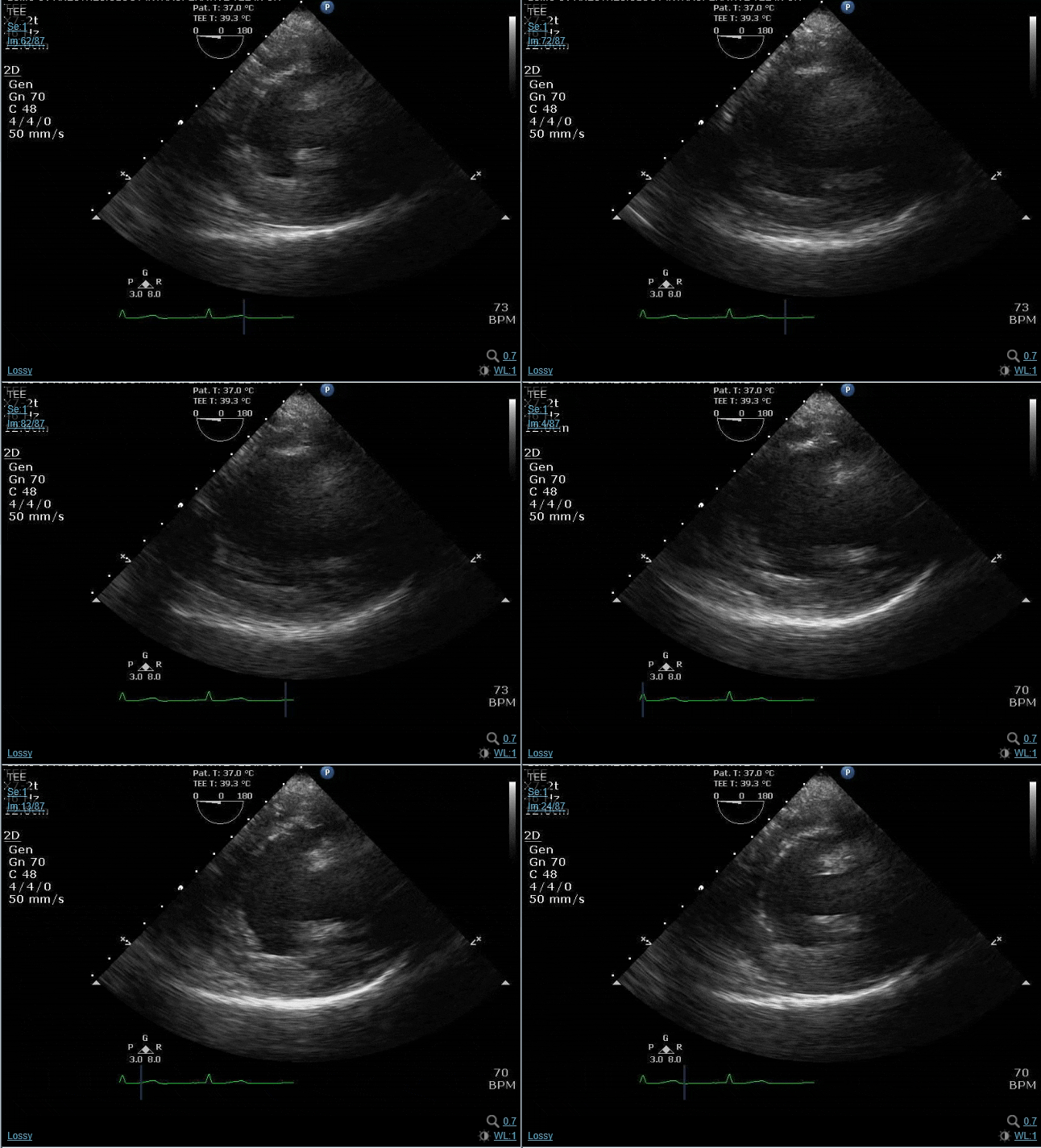
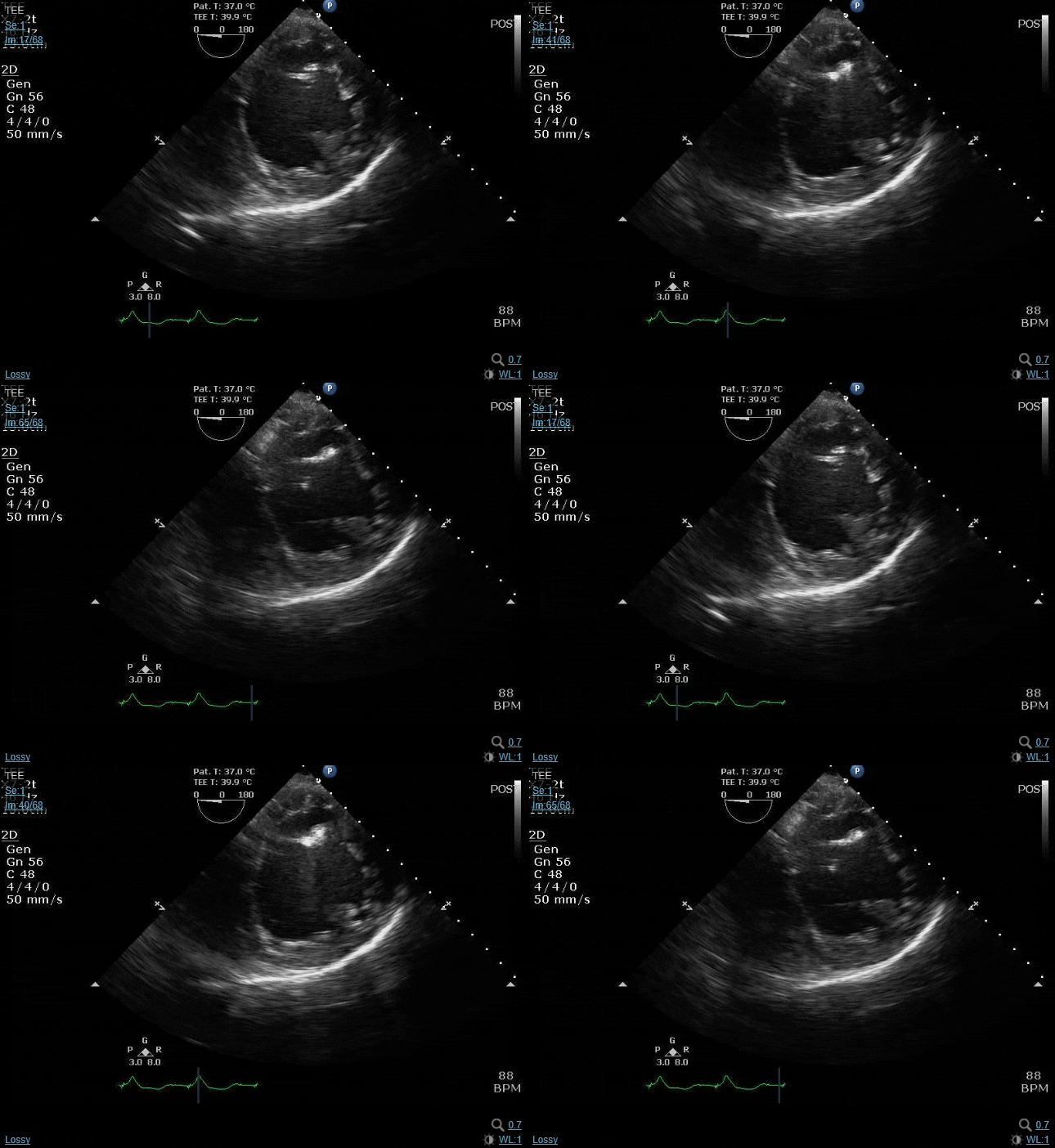
Pre and post MVr/TVr

I saw this done once in fellowship.Yep, this procedure is called a Cabrol (type B in the diagram below). It's used sometimes when the aneurysm is so big or if there's some abnormality in the coronaries that prevents the normal "coronary button" implantation technique used in Bentalls. The yellow arrow is pointing to the Dacron graft that is end-to-end anastomosed to a remnant of the left main. If you look close enough at the ME AV SAX, you can even see the division into the LAD (red arrow) and Cx (blue arrow)
View attachment 328298
View attachment 328296
Well the septal wall and inferior septal wall are not happy post bypass and something seems to be on the papillary musclePersonally, I can't get enough of random WMA clips. I find myself still picking up subtle things I missed in the heat of the moment even when I'm reviewing the same clips postop.
Pre and post MVr/TVr
Yep. Inferior and inferoseptal are def akinetic. This is too easy for you twig, but do any residents or fellows want to give me a differential for what’s going on?Well the septal wall and inferior septal wall are not happy post bypass and something seems to be on the papillary muscle
Some collateral: pt has clean coronaries. Surgeon is excellent and pump and clamp time has been very short for a double valve
"Left dominant" with a stitch through the circumflex is my first thought.Yep. Inferior and inferoseptal are def akinetic. This is too easy for you twig, but do any residents or fellows want to give me a differential for what’s going on?
Some collateral: pt has clean coronaries. Surgeon is excellent and pump and clamp time has been very short for a double valve
Personally, I can't get enough of random WMA clips. I find myself still picking up subtle things I missed in the heat of the moment even when I'm reviewing the same clips postop.
Pre and post MVr/TVr
I am the opposite... 😂
I mean I enjoy WMA clips but I am more into valves and crazy looking intracardiac pathology.
Good case tho... 👍🏽
To clarify, I'm not *into* it in that I find it super interesting compared to other pathology. In reality it's pretty tedious. I'm saying I can't get enough because wall motion can be difficult to interpret on the fly and can be very subjective when doing visual estimation so one needs to do a lot of reps to hone one's eye.I am the opposite... 😂
I mean I enjoy WMA clips but I am more into valves and crazy looking intracardiac pathology.
Good case tho... 👍🏽
I would recommend fellows check themselves often with a quantitative Simpson's/3d volumetric and use RWMA by strain if possible. Don't get into the habit too early of thinking your EF 35% def means 35% or that the anteroseptal wall is just mildly hypokinetic cause you glanced at one clip for 5 seconds, etc
Nope."Left dominant" with a stitch through the circumflex is my first thought.
Another hint: RV function was normal preop but is now also moderately depressed. And what is that starry hyperechoic thing attached to the papillary muscle?
Advertisement - Members don't see this ad
Think about the operation performed and think about coronary distribution"Left dominant" with a stitch through the circumflex is my first thought.
Myxoma?
Don’t want to hijack @vector2 clinical case.... but to ad some info to Myxomas for the boards:
1) 75% occur on the left
2). If you see something like this on the right, make sure you rule out renal cell carcinoma tracking up the IVC and into the right atrium.
1) 75% occur on the left
2). If you see something like this on the right, make sure you rule out renal cell carcinoma tracking up the IVC and into the right atrium.
3). Renal Cell Carcinomas invading the IVC/hepatic veins can and DO embolize mid case. Been there a hand full of times. I always have a TEE for renal cell tumor cases that have made their way to the IVC/Hepatic veins.
Alert your cardiac surgeons that you may need them.


Alert your cardiac surgeons that you may need them.
Last edited:
