What Studies Should One Trust?

This forum made possible through the generous support of SDN members, donors, and sponsors. Thank you.

Neutropix

Full Member
7+ Year Member
Joined
Mar 26, 2015
Messages
521
Reaction score
679
Points
5,496
Location
an event horizon
  1. Medical Student (Accepted)
Advertisement - Members don't see this ad
Hello, my SDN friends! I have a query for you all this lovely Sunday morn.

I have recently been discussing peer-reviewed studies with classmates regarding heart disease and its relationship with high cholesterol because I am working on a project for class. A few of my peers have adamantly informed me that that heart disease has no relationship to cholesterol.

How does one discern quality of studies aside from knowing they are peer-reviewed? I have heard of terms like "impact factor" that supposedly make studies more meaningful. It appears to me that to mitigate atherosclerosis one should consume as little cholesterol as possible, especially since certain individuals produce more, naturally than others.

There seems to be a lot of pseudoscience afoot. I would like to cut through that by arming myself with the best research techniques possible to discover the truth.
 
Look up the Framingham Heart Study. The relationship between cholesterol and heart disease has been well established.
 

Attachments

what is the context of heart disease? ur classmate could be correct depending on what you are defining as "heart disease" lol
 
Red-Flag.jpg
 
Here's how you can tell if something is real: look up the authors who make such claims on Pubmed and see if they actually have published anything proving what they're trying to say.

Dr Cutler has published NOTHING relating to heart disease, much less anything related to "natural healing therapies and nutrients".

So your classmates are either joking with you, or are unbelievably ignorant.

Dr Cutler is a purveyor of pseudoscience. The scientific term for him is "quack".
 
Are they well designed, did they measure what you are interested in, in the population you’re interested in. Every study has limitations. At a minimum it should be peer reviewed and not some dudes commercial blog, then read it to understand design and limitations.

No doubt that dyslipidemia is strongly linked to ascvd. More questionable is link between dietary intake of cholesterol and circulating cholesterol levels. This jokers blog is freely interchanging those concepts like they’re the same thing. If you ever feel like arguing against such stuff you can read their references and will usually find that the references just don’t say what the quack is saying they say. But, it’s probably a waste of your time.

JAMA Users Guide to Medical Literature is a great resource that you should familiarize yourself with (and so should your classmate)
JAMA Series on Step-by-Step Critical Appraisal
 
Last edited:
Advertisement - Members don't see this ad
The link they gave you is a quack. However, the link between cholesterol and heart disease is shakier than some people will like to admit admit. LDL cholesterol is strongly linked to heart disease (atherosclerosis) and that is an indisputable fact, yet there are numerous studies that show that people who eat a ketogenic diet (high fat, high protein, low carb i.e. lots of bacon and eggs) have improved lipid markets compared to those who even eat a Mediterranean diet. There is even data to show that LDL cholesterol is more highly linked to eating high amounts of carbohydrates than to the traditional “high saturated fat, bad foods” that we get told to limit on a constant basis.

So yes there is a strong link between LDL cholesterol and heart disease but the point I’m making is that the way this gets elevated is not what we have traditionally thought.

I highly suggest a pubmed search. The topic is very interesting.
 
The link they gave you is a quack. However, the link between cholesterol and heart disease is shakier than some people will like to admit admit. LDL cholesterol is strongly linked to heart disease (atherosclerosis) and that is an indisputable fact, yet there are numerous studies that show that people who eat a ketogenic diet (high fat, high protein, low carb i.e. lots of bacon and eggs) have improved lipid markets compared to those who even eat a Mediterranean diet. There is even data to show that LDL cholesterol is more highly linked to eating high amounts of carbohydrates than to the traditional “high saturated fat, bad foods” that we get told to limit on a constant basis.

So yes there is a strong link between LDL cholesterol and heart disease but the point I’m making is that the way this gets elevated is not what we have traditionally thought.

I highly suggest a pubmed search. The topic is very interesting.
Interesting. I'll definitely have to read into this and get back to you..
 
Anything in the NEJM must be true... jk. In terms of determining the quality of a study, there's really no way to doing this quickly besides reading it yourself and determining whether it has internal and external validity. Was it a randomized trial or was it case-control? Were the appropriate controls used/comparisons made?

Impact factor is associated with a journal and generally doesn't necessarily tell you quality. Impact factor at the article level is basically the number of citations. But number of citations doesn't tell you if something's good or bad either. Something with a lot of citations could be spectacularly good or spectacularly bad. It could be a review article. It could be super old so the citations have just racked up over the years; conversely, a good study that's new will have fewer citations just because it hasn't had a chance to be cited much yet. All these factors come into play when determining number of citations so it's always better to just read the article yourself and determine its quality.
 
The link they gave you is a quack. However, the link between cholesterol and heart disease is shakier than some people will like to admit admit. LDL cholesterol is strongly linked to heart disease (atherosclerosis) and that is an indisputable fact, yet there are numerous studies that show that people who eat a ketogenic diet (high fat, high protein, low carb i.e. lots of bacon and eggs) have improved lipid markets compared to those who even eat a Mediterranean diet. There is even data to show that LDL cholesterol is more highly linked to eating high amounts of carbohydrates than to the traditional “high saturated fat, bad foods” that we get told to limit on a constant basis.

So yes there is a strong link between LDL cholesterol and heart disease but the point I’m making is that the way this gets elevated is not what we have traditionally thought.

I highly suggest a pubmed search. The topic is very interesting.

Very good point, it can vary by individual. From what I've read dietary cholesterol has no lasting effect on LDL either, correct?
 
Very good point, it can vary by individual. From what I've read dietary cholesterol has no lasting effect on LDL either, correct?

Yep. The link between dietary cholesterol and atherosclerosis gets weaker with every study.
 
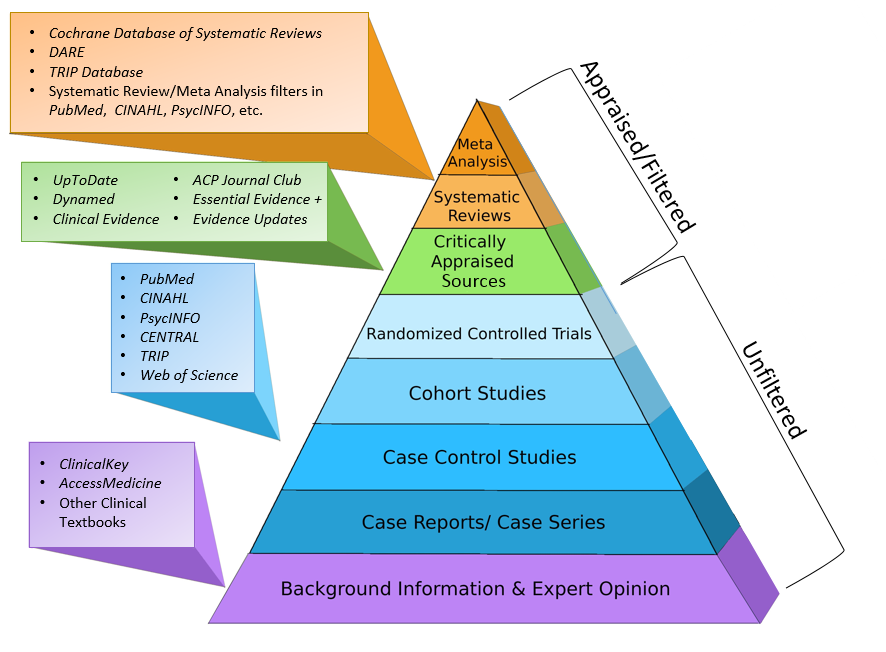
For beginners: Stay away from primary literature until you understand your area of research, especially areas of controversy. Start with systematic reviews (Cochrane, etc.) which have already done the work for you. Then you can look at their evidence and follow the trail to the primary literature. In general, larger, multi-center, randomized, controlled trials are the strongest, but there can always be questionable data analysis, endpoints, etc. Statistical significance is not always representative of cause-effect significance, especially at p-values near the cutoff.

And yes, the journal is a proxy for study quality, though obviously not perfect. NEJM is the gold standard in the US for clinical medicine, and Nature, Cell, etc. for basic science.
 
Yep. The link between dietary cholesterol and atherosclerosis gets weaker with every study.
Oh yeah, that's the first thing they taught me in the cards unit in med school: dietary cholesterol matters MUCH less than cholesterol produced intrinsically. That's why HMG-CoA reductase inhibitors are the first-line therapy for hyperlipidemia. My first response on the thread was to the notion that cholesterol itself isn't linked to atherosclerosis, and that idea's just cray-cray.
 
For beginners: Stay away from primary literature until you understand your area of research, especially areas of controversy. Start with systematic reviews (Cochrane, etc.) which have already done the work for you. Then you can look at their evidence and follow the trail to the primary literature. In general, larger, multi-center, randomized, controlled trials are the strongest, but there can always be questionable data analysis, endpoints, etc. Statistical significance is not always representative of cause-effect significance, especially at p-values near the cutoff.

And yes, the journal is a proxy for study quality, though obviously not perfect. NEJM is the gold standard in the US for clinical medicine, and Nature, Cell, etc. for basic science.

I mean, this is ok information if you are trying to look up the answer to a topic given all the crap that somehow gets published, but it sounds like the OP is in the class related to learning how to learn for literature. (?)
 
content

Read this book. Will make analyzing studies for quality easier.
 
Advertisement - Members don't see this ad
You may also benefit from a textbook of clinical epidemiology with an emphasis on the chapter(s) about critical review of the literature.
The randomized, double blind, placebo controlled trial is the gold standard but you won't get many of those in diet research.

In any study: how was the exposure measured? Was it measured before or after the outcome occurred? Before is always better to avoid recall bias by those who have the condition of interest.
What was the outcome of interest and how was it measured? Is it a clinical y relevant outcome or is it an interum endpoint (e.g. death or heart attack vs decrease in blood lipid levels)? Was it measured accurately and are the results of the measures reproducible? Are you using valid measures of assessment (e.g. if you are interested in dietary intake of sodium, there are many ways of measuring that including dietary questionnaire, 24-hour dietary recall, or even a urine sodium using an alloquot of all urine collected over a period of time.)

What was the source of the reserach study pool? How were subjects selected? What was the inclusion and exclusion criteria? Consider age, race/ethnicity, sex, smoking status, BMI etc. Is the sample generalizable to the population you wish to apply the findings too?

Was a multi-variate analysis used to control for known risk factors aside from the exposure of interest?

There is more but you get the idea.
 
Last edited:


Ronald M. Krauss is Director of Atherosclerosis Research at Children's Hospital Oakland Research Institute, Adjunct Professor of Medicine, UCSF, Adjunct Professor of Nutritional Sciences, University of California at Berkeley, and Guest Senior Scientist in the Genome Sciences Division of Lawrence Berkeley National Laboratory. He received his medical degree at Harvard Medical School. He researches genetic, dietary, and hormonal effects on plasma lipoproteins and coronary disease risk. Certainly not a "quack." Conventional medical understanding of lipids has been off for some time.
 
I mean, this is ok information if you are trying to look up the answer to a topic given all the crap that somehow gets published, but it sounds like the OP is in the class related to learning how to learn for literature. (?)
I see what you mean but it sounded to me like he has been bombarded by fake news and is looking to learn how to refute his friends and determine what the scientific community considers the real answer.
 
If you want to learn how to evaluate medical literature YouTube not your best source. You can learn some people’s opinions on this particular topic or you can learn strategies to evaluate literature that will serve you for a lifetime; I recommend the latter.
 
Of course the ability to evaluate medical literature is of upmost importance. It also stands true that it is impossible to become an expert in everything given the vast nature of medical knowledge, in which case watching an hour-long discussion with a known expert can be helpful.
 
To the OP's original question, your peers are wrong that there is no relationship, but the relationship is very complex and far from the "Good cholesterol, bad cholesterol" and "Fat is bad" trope that has existed in the mainstream for a while.
 
I don't think Evidence Based Medicine should be the religion it's becoming, with regards to practice consequences, but I'll take a peer-reviewed statement over an Oprah segment any day.

Here's your basic hierarchy of scientific evidence.
mRSP4NNmgDTmUmo2KKs52yy-JPR6nsVb2qaYcRqlDOI=w886-h652-no
 
Top Bottom