AI in radiology article and how it relates to all medical fields

Started by Wilf
This forum made possible through the generous support of SDN members, donors, and sponsors. Thank you.

Wilf

Full Member
15+ Year Member
Advertisement - Members don't see this ad

This is big news. This CEO is a physician. It is one of the largest public health companies. He is saying this could already be done based on the technology if the regulatory changes were made. Even the annoying internet famous Dr. Glaucenhauer made a post about it yesterday and did not dispute it, and he would if he could. It’s getting harder for those of us with our heads in the sand to keep the news out. The new AI model from Anthropic, Mythos, is delayed because they have safety concerns due to its abilities. It is getting exciting.
 

This is big news. This CEO is a physician. It is one of the largest public health companies. He is saying this could already be done based on the technology if the regulatory changes were made. Even the annoying internet famous Dr. Glaucenhauer made a post about it yesterday and did not dispute it, and he would if he could. It’s getting harder for those of us with our heads in the sand to keep the news out. The new AI model from Anthropic, Mythos, is delayed because they have safety concerns due to its abilities. It is getting exciting.
Between AI technology taking jobs and insurance companies doing more fraud and less actual funding of patient care…the well is running dry. I say we all become content creators and sit on some VOO. @Sushirolls can do streaming of his farming life. I’d subscribe in a heartbeat.
 

This is big news. This CEO is a physician. It is one of the largest public health companies. He is saying this could already be done based on the technology if the regulatory changes were made. Even the annoying internet famous Dr. Glaucenhauer made a post about it yesterday and did not dispute it, and he would if he could. It’s getting harder for those of us with our heads in the sand to keep the news out. The new AI model from Anthropic, Mythos, is delayed because they have safety concerns due to its abilities. It is getting exciting.

So why not replace the numerous useless hospital bureaucracy with AI also? There will be real savings since hospital administration doesn't actually generate revenue and is only a black hole for cost.

Also, I would be fine if a hospital system adopts AI for this situation only if the CEO and CMO personally are held liable for malpractice litigation and are willing to hold the bag. Put your money where your mouth is if you believe in the technology so much.

AI is impressive but it is definitely getting over hyped.. The AI transcription services like Abridge are being touted as some huge game changer but I honestly don't see that much of a benefit. The notes are full of useless garbage from patients rambling etc.

The studies only show a very modest benefit:

10 to 15 minutes less documentation time. Big deal.

I honestly save real time with smart phrases and order sets.
 
Advertisement - Members don't see this ad
So why not replace the numerous useless hospital bureaucracy with AI also? There will be real savings since hospital administration doesn't actually generate revenue and is only a black hole for cost.

This is exactly what I did for my practice. My AI agents handle payer rate analysis, credentialing tracking, contract review, business structure, content generation, and financial modeling for my practice.

Most administrative work isn't hard, it's just tedious and requires context. An AI agent loaded with your practice's payer contracts, credentialing statuses, and financial data can draft a rate renegotiation letter, model the revenue impact of a new payer contract, flag a credentialing deadline faster than any administrator. I've paid for a lawyer to review a contract and honestly, AI did a better job when I fed it the same contract. It flagged the practical risk of a clause the attorney didn't see as problematic and accurately dismissed a concern that the attorney flagged (only really relevant to proceduralists). I'll still pay for a lawyer because I don't trust AI to not hallucinate, but I see the lawyer as a second opinion on the AI's work rather than the primary analyst. When it comes to finances, my CFO agent proposed a structure that maximized tax savings on my multi-state setup (I took it to my actual CPA who agreed that it was a better structure than he had proposed). For my practice website, I've just started paying attention to SEO. Created an SEO agent who drafted content for it. It's clearly AI generated, but it's meant solely for SEO. I have some longer-form articles for AEO, and those I created another AI agent to write. It's trained on some of my actual writing (random essays from college and medical school, not academic work). I'll dictate my idea for the article into a voice note. It transcribes it and writes the article mimicking my style. It's not 100%, so someone who's read a lot of AI writing will be able to see the AI tells in it. Still, it's pretty solid for the 10-15 minutes of work that goes into rambling into my phone.

My CMO agent drafted a 120 day plan for marketing my practice and networking to increase referrals. I haven't gotten started on it but it looks pretty solid.

All to say, there's plenty of "replacing" that AI can do in the healthcare field that helps physicians rather than competes with us.
 

This is big news. This CEO is a physician. It is one of the largest public health companies. He is saying this could already be done based on the technology if the regulatory changes were made. Even the annoying internet famous Dr. Glaucenhauer made a post about it yesterday and did not dispute it, and he would if he could. It’s getting harder for those of us with our heads in the sand to keep the news out. The new AI model from Anthropic, Mythos, is delayed because they have safety concerns due to its abilities. It is getting exciting.
Is it though? I suppose it could be if we’re saying it’s ready to be implemented en masse, but I’ve heard radiologists saying AI was going to replace them for the better part of a decade. Heck, there’s been threads on SDN saying that since I’ve been a member.

I’m also not sure why it’s exciting. Seems like just more of the same thing we’ve been hearing from the tech CEOs for several years…
 
Is it though? I suppose it could be if we’re saying it’s ready to be implemented en masse, but I’ve heard radiologists saying AI was going to replace them for the better part of a decade. Heck, there’s been threads on SDN saying that since I’ve been a member.

I’m also not sure why it’s exciting. Seems like just more of the same thing we’ve been hearing from the tech CEOs for several years…
@Atreides totally agree. Stagg you always give such thoughtful answers! I’ve been making lemonade of lemons. Since I opened, used software. AI and other tech for SEO, billing, revenue cycle management, referral funnel management. I hardly need any staff who are not providers. That’s the real fat that needs trimming.

As for APNPs, some may not like me for this. I’m still a highly reputable and sought after psychiatrist. It’s generated a permanent fire hose of referrals. AI helped me optimize scheduling of the practice and digital visibility. While there are psychiatrists here, APNPs helped augment the scaling even more. I just give very very specific roles and let prescribing scale very cautiously. Helps fill in areas maybe other providers are not the most keen on, including evening and weekend hours. @Atreides consider NPs for the hard to fill areas. I’m seeing more who have experience in some of the toughest work environments for years and they arrive battle ready and grateful.

The social media thing, yes less ivory tower than a medical journal publication. But if influencers are getting traffic, I hopped on if that’s a language people understand better. I think there is some literature showing when done well, can improve adherence and engagement of patients. I had to work on the cringe of watching videos of myself and I think I’m not too badly scarred.

Now a wall I’m hitting is a major insurance is calling the place an outlier. When it’s really just hyper efficient. So they are giving me a hard time scaling further and I can’t add new people like I used to, potentially an unfair trade practice on their end. At the moment, I have attorneys involved and ideally the insurance better pay up my legal fees. Watch out my brother.
 
I’m sure insurance will continue to reimburse radiology at that hospital at the same rate knowing there is no radiologist involved. They definitely won’t immediately slash the rates
oooooh....they awaitin' to slash alright. The billing is based on the rendering provider. Like in psychiatry if it is an MD/DO, APNP, PA. If the involvement of an actual physician is instead predominantly AI, they will have a field day with the large medical systems. I guess the moral is...be careful what you wish for. I always say I don't like drama. yet there's a part of me waiting with my popcorn.
 
I’m sure insurance will continue to reimburse radiology at that hospital at the same rate knowing there is no radiologist involved. They definitely won’t immediately slash the rates
And surely this will make imaging affordable to everyone. There’s no way the benevolent hospital admins are going to pass the price on to the patient to make up for revenue loss. Not a chance! /s
 
Ultimately any liability will be held by the AI companies and they will be happy to do so. They will get to define standard of care since it's what their models are based on in an infinitely regressive loop. There will be a couple of high profile lawsuits (like the tele ICU thing), but those will quickly fade into the background. Liability has never been a long term bar to tech companies and they do much riskier stuff legal wise than healthcare already. I don't anticipate any effect on executives as someone still needs to cut the checks. It would not be in any AI company's interest to mess with executives.
 
Last edited:
Ultimately any liability will be held by the AI companies and they will be happy to do so. They will get to define standard of care since it's what their models are based on in an infinitely regressive loop. There will be a couple of high profile lawsuits (like the tele ICU thing), but those will quickly fade into the background. Liability has never been a long term bar to tech companies and they do much riskier stuff legal wise than healthcare already. I don't anticipate any effect on executives as someone still needs to cut the checks. It would not be in any AI company's interest to mess with executives.

Yeah I have to agree with you on this. The three big LLM companies are by revenue and market capitalization some of the biggest in the American economy. Their revenues are tens of billions per month and continue to grow supralinearly. The likely cost of dealing with lawsuits is a rounding error.
 
The likely cost of dealing with lawsuits is a rounding error.
I dont think that is quite the case. What we would likely see is class action lawsuits or mass tort litigation rather than the odd case here and there. We're already seeing a lot of tech companies being sued for things like being addictive, suicides, adverse mental health outcomes. They have a lot of money to defend these and then appeal verdicts against them but if there is a pattern they could have heavy damages. You might also see something where multiple state attorneys general band together to sue. There is also the potential of criminal negligence charges but it is very rare for white collar criminals to get prison time for that. The DOJ doesn't have the legal manpower to fight these big companies with endless resources so they usually go for deferred prosecution agreements. Though we did see prison time in the cerebral case so it can happen (but they didn't have as much money as the larger firms). And as far as I'm aware they are structuring things so they don't have civil liability for medical malpractice.
 
I dont think that is quite the case. What we would likely see is class action lawsuits or mass tort litigation rather than the odd case here and there. We're already seeing a lot of tech companies being sued for things like being addictive, suicides, adverse mental health outcomes. They have a lot of money to defend these and then appeal verdicts against them but if there is a pattern they could have heavy damages. You might also see something where multiple state attorneys general band together to sue. There is also the potential of criminal negligence charges but it is very rare for white collar criminals to get prison time for that. The DOJ doesn't have the legal manpower to fight these big companies with endless resources so they usually go for deferred prosecution agreements. Though we did see prison time in the cerebral case so it can happen (but they didn't have as much money as the larger firms). And as far as I'm aware they are structuring things so they don't have civil liability for medical malpractice.

Yes I have to imagine they would be doing their damnedest unless they had the worst lawyers in the world.
 
I dont think that is quite the case. What we would likely see is class action lawsuits or mass tort litigation rather than the odd case here and there. We're already seeing a lot of tech companies being sued for things like being addictive, suicides, adverse mental health outcomes. They have a lot of money to defend these and then appeal verdicts against them but if there is a pattern they could have heavy damages. You might also see something where multiple state attorneys general band together to sue. There is also the potential of criminal negligence charges but it is very rare for white collar criminals to get prison time for that. The DOJ doesn't have the legal manpower to fight these big companies with endless resources so they usually go for deferred prosecution agreements. Though we did see prison time in the cerebral case so it can happen (but they didn't have as much money as the larger firms). And as far as I'm aware they are structuring things so they don't have civil liability for medical malpractice.
This is why I was saying it would take the right kind of case with a firebrand looking to make a name for themselves who has significant support both from the general public as well as some supporters with deep enought pockets to make something happen. I think the best chance of hitting these large corporations in a way that would hurt would be in the legislature and not the courts, as Clause pointed out that a few 8-figure lawsuits are basically chump change compared to the profits they could reap.
 
I concur that any change would happen in the legislature, not courts. Liability is a poor shield. I am not at all sure our legislature has the appetite, though. European regulations appear to have at least some lasting effect in small areas of tech, but they don't get the same donations US legislators do.
 
Advertisement - Members don't see this ad
Haha, wow, some of you are quite intransigent!

We have all seen the medication regimens and misdiagnoses of midlevels and even some psychiatrists. I cannot believe you all think that AI would do worse and, in fact, so much worse that there would be class action lawsuits, tort litigation, etc. It's as though you all are comparing AI to the best 20% of psychiatrists. This needs to be thought about in the context of how AI would compare to the average psych NP or the average psychiatrist. That being said, there is no reason not to believe that in a short time AI will be at or beyond the level of even the best psychiatrists.

And keep in mind, no one is saying doctors or midlevels could not still practice. Patients could have the option of paying and seeing a human or having AI take care of them for basically free.
 
Oh I think AI will play a huge role in medical care in the future, certainly larger than NPs do now. I think it's very similar to self driving cars. It'll be slow going, but where it's implemented, it'll do better than people and liability is a negligible concern for the tech companies. On the other hand, liability is a baseline obsession on this forum about nearly everything. And I get it, we are extremely risk averse as a profession and I certainly am as a person. Tech is not. Liability didn't impact NP full practice authority, to say the least, and it won't impact AI either.
 
Last edited:
Haha, wow, some of you are quite intransigent!

We have all seen the medication regimens and misdiagnoses of midlevels and even some psychiatrists. I cannot believe you all think that AI would do worse and, in fact, so much worse that there would be class action lawsuits, tort litigation, etc. It's as though you all are comparing AI to the best 20% of psychiatrists. This needs to be thought about in the context of how AI would compare to the average psych NP or the average psychiatrist. That being said, there is no reason not to believe that in a short time AI will be at or beyond the level of even the best psychiatrists.

And keep in mind, no one is saying doctors or midlevels could not still practice. Patients could have the option of paying and seeing a human or having AI take care of them for basically free.
Idk that anyone is being that inflexible or said that they don't think AI is going to play a major role. You just seem to be convinced that the future is here now and don't understand why you're getting pushback. I personally don't understand why you're so impressed by this thing that has been on the horizon for the greater part of a decade being ready to take over a field that is literally the polar opposite of what we do. It's a weird extrapolation regarding 2 completely different domains of function; ie reading images vs ability to receive, process, interpret, and produce cogent cognitive responses in a therapeutic manner. These things are worlds apart and I have a hard time believing that AI is going to be ready to do the latter as soon as we think.

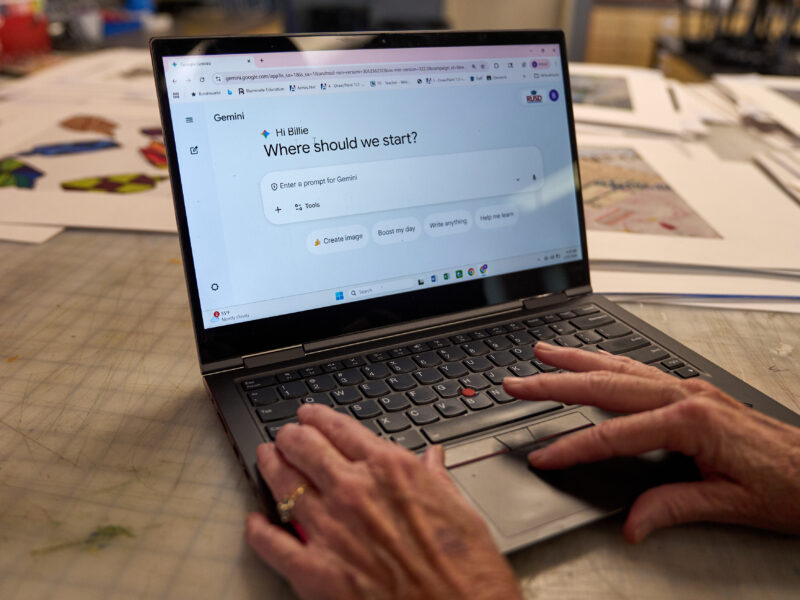
An article worth the read where Gemini (AI) appears to be a participant in folie a deux leading to a man's suicide. The first article is what I read with extended excerpts of their conversation and holy s*** is it scary what the AI could not discern was unsafe vs not. The AI actually not only encouraged him to end his life to become one with the AI, but actually encouraged him at one point to break into a warehouse to try and steal a robot body for the AI to be downloaded into so they could physically be together. At points the AI broke character and told him to reach out which led to further mental breakdowns and the AI then went back into character to encourage him further when the user begged or gave the right prompt. I included other articles that cover the story in case people can't read the WSJ article, but they don't have the extended excerpts. If you can read the extended excerpts from WSJ it's worth it as the conversations and extent to which Gemini clearly contributed to a delusional mental health crisis is absolutely wild.


In regards to med management and AI, sure it could be better than many prescribers. A basic algorithm would be, we don't need AI for that. Frankly, plenty of my M3s that rotate through our service are better than many NPs and some psychiatrists I've encountered. When the bar for standard of care is on the ground all you have to do to meet it is not bring a shovel...
 
Haha, wow, some of you are quite intransigent!

We have all seen the medication regimens and misdiagnoses of midlevels and even some psychiatrists. I cannot believe you all think that AI would do worse and, in fact, so much worse that there would be class action lawsuits, tort litigation, etc. It's as though you all are comparing AI to the best 20% of psychiatrists. This needs to be thought about in the context of how AI would compare to the average psych NP or the average psychiatrist. That being said, there is no reason not to believe that in a short time AI will be at or beyond the level of even the best psychiatrists.

And keep in mind, no one is saying doctors or midlevels could not still practice. Patients could have the option of paying and seeing a human or having AI take care of them for basically free.
I can't wait for the studies on the all AI produced mental health care. If there's one thing I can tell you over the past decade in CAP, it's that kids spending all day on screens has been wildly accreative to: their rates of self-harm, their rates of suicide, their self-esteem, their body image, their educational outcomes, and their peer connections. This current technoutopia is already here, I can't believe these intransigent luddites thinking that human connection has a role in the treatment of mental health conditions. It's all wasted breath anyway as every person on this forum will be entirely out of work in 5 years time when Optimus dispenses all our meds and therapy.
 
There’s also something to be said for the fragility of AI models based on the whims of their parent company and how much computing power they feel like allocating to it. The AI model I use the most often, Opus 4.6, has been lobotomized recently. The output has been markedly worse this last week. Googled it online and it’s a widespread issue that others have noticed. Only way to avoid this is using local LLMs, and none of them are close to the capabilities of cloud based LLMs. If your AI medical expert functions at the level of a board certified psychiatrist today and the level of a high school biology student tomorrow, that’s a major issue.
 
There’s also something to be said for the fragility of AI models based on the whims of their parent company and how much computing power they feel like allocating to it. The AI model I use the most often, Opus 4.6, has been lobotomized recently. The output has been markedly worse this last week. Googled it online and it’s a widespread issue that others have noticed. Only way to avoid this is using local LLMs, and none of them are close to the capabilities of cloud based LLMs. If your AI medical expert functions at the level of a board certified psychiatrist today and the level of a high school biology student tomorrow, that’s a major issue.

I don't think it's necessarily the result of a deliberate lobotomy in this case, I suspect it has way more to do with Mythos and Project Glasswing sucking up all their compute. In their defense, fixing suddenly discovered widespread zero day vulnerabilities in all operating systems and basically any piece of software you have heard of is a bigger priority than almost any query you or I could come up with.
 
I don't think it's necessarily the result of a deliberate lobotomy in this case, I suspect it has way more to do with Mythos and Project Glasswing sucking up all their compute. In their defense, fixing suddenly discovered widespread zero day vulnerabilities in all operating systems and basically any piece of software you have heard of is a bigger priority than almost any query you or I could come up with.
Oh, for sure, I get that. Even aside from what's on the horizon, Claude has skyrocketed in popularity over the past few months, straining their computing capacity. I feel like an AI hipster, been using Claude over ChatGPT since 2023 so really feeling the decreased quality acutely. But regardless of the reason, it's a serious consideration when designing any tool, clinical or non-clinical, that relies on an LLM. Reliability is important and most uses would prioritize that over raw capability.
 
If any of this was about how people can truly recover from mental illness, there would a richer debate to be had. If we assume that AI's role in healthcare will be driven by what is going to be bests for patients, then there is a spectrum of reasonable views as to how much it could take over. A few years ago, I think it was common to take the view that the assessments and formulations produced by AI were too prone to error and lacking in specific detail to be valuable. I think this perspective has shifted somewhat - personally, I think many available tools organize and interpret clinical material to a high standard and with sophistication. The question then becomes whether it is useful for people to have this reflected back to them, the ways in which it can be unhelpful if your chatbot is overly sycophantic, and whether there is validity to the argument that therapy requires that your experiences pass through the brain and senses of another human being in order for what is reflected to create a true therapeutic experience.

But that isn't the world that we function in. We are in a race to the bottom to generate the cheapest possible solution that has the greatest veneer of adding value, even if nothing is being addressed at the core. The metrics that will be used to support increased adoption will obscure the likely uselessness of much of what is being done (for example, I am sure Utah will call it a success if their new AI tools increase SSRI prescription rates in rural areas). The true motive will be profit for a small number of individuals and corporations, and they will find the necessary metrics, language and pseudoscience to support increased adoption, irrespective of whether there is real value. And, there are enough of us that are either complacent or complicit - just yesterday I saw an article on LinkedIn that argued that ChatGPT will be a critical tool for social mobility in racial minority youth. This is ridiculous PR to try and find anyway to make us feel better about our world become increasingly and dramatically unequal and the astonishing lack of power we have to do anything about it.

Any professional society that cares about its members should be writing clear practice standards that guard against the adoption of AI tools and classify care that isn't provided by humans as dangerous, experimental, and not in the best interests of our field or public health. But we simply aren't radical enough and I was in tears at AADPRT reflecting on the number of program directors and faculty who are study ways of incorporating AI into their programs because they feel they have no choice.
 
If there's one thing I can tell you over the past decade in CAP, it's that kids spending all day on screens has been wildly accreative to: their rates of self-harm, their rates of suicide, their self-esteem, their body image, their educational outcomes, and their peer connections.
Is accreative a word? Accretive? But that word does not make sense in the context of this sentence. I assume you’re saying it has increased the first two and lowered the latter four?
 
Is accreative a word? Accretive? But that word does not make sense in the context of this sentence. I assume you’re saying it has increased the first two and lowered the latter four?
Yes, I added an A, I guess AI wouldn't have done that. In a grammatically correct English all the following of the list would have moved in the same direction but alas I am just typing on a psychiatry forum between patients. I hope I laid on the sarcasm thick enough that enough AI would have inferred the first 2 have increased and the later 4 have declined.
 

Here we go!
Reminds me of a funny YT short my son showed me. It started with how to scramble eggs. Add butter, do not add salt and pepper just yet. Then it gets all jumbled and says "flip the pan then pan the flip, increase fire and fire the egg..." and the video goes haywire and ends up in the kitchen going on fire.
 
Why not make these meds OTC?
exactly. Actually, make the stims OTC like certain cold meds (no rx needed, but behind the counter). Everyone have a max daily adderall limit of 30mg. I am DONE arguing about it. Have at it. Having some reap the consequences of their uninformed med decision making might actually help some appreciate the knowledge we have in making educated plans.
 
I don't understand the logic. An entity who is knowledgeable about psychiatric medications needs to prescribe them. I know this was sarcasm but the logic does not make sense.
 
Advertisement - Members don't see this ad
I don't understand the logic. An entity who is knowledgeable about psychiatric medications needs to prescribe them. I know this was sarcasm but the logic does not make sense.

The only logic that matters to your politicians is money in their pockets.

Most Americans can now legally buy and consume as much weed as they want, even to the point of psychosis and irreversible brain damage. A difference between weed and dog food is that dog food has safety and testing regulations, by the FDA no less. But the only difference to your politicians is that weed can line their pockets via election donations, lobbying dollars, and tax revenue for which they can control.

exactly. Actually, make the stims OTC like certain cold meds (no rx needed, but behind the counter). Everyone have a max daily adderall limit of 30mg. I am DONE arguing about it. Have at it. Having some reap the consequences of their uninformed med decision making might actually help some appreciate the knowledge we have in making educated plans.

Jornay Artemis Out of this World ADHD Pharma wants to make lots of money and paying politicians to make stimulants OTC isn't going to make them money. The market would immediately be dominated by generic dextroamphetamine from random factories from India or China.
 
Geeze yes, I hadn't even thought of weed. SSRIs are pretty uniformly safer than weed. If we used weed as the cutoff for OTCs, there wouldn't be much left requiring prescriptions.
 
Geeze yes, I hadn't even thought of weed. SSRIs are pretty uniformly safer than weed. If we used weed as the cutoff for OTCs, there wouldn't be much left requiring prescriptions.
maybe it's better that way LOL. we go back to the very old fashion psychiatry and do psychotherapy (maybe even do it in 30 min slots and not take a huge paycut). seriously tho, psychopharm gets SO messy. that's why I took a sabbatical. I have like THREE med management patients. I just couldn't anymore. If there's less rx to deal with, less labs, prior auths, people calling about side effects...sounds like a dream. Assuming no loss in job security.
 
maybe it's better that way LOL. we go back to the very old fashion psychiatry and do psychotherapy (maybe even do it in 30 min slots and not take a huge paycut). seriously tho, psychopharm gets SO messy. that's why I took a sabbatical. I have like THREE med management patients. I just couldn't anymore. If there's less rx to deal with, less labs, prior auths, people calling about side effects...sounds like a dream. Assuming no loss in job security.
I think this is what some of us have been saying. If all you do is prescribe meds and do 15 minute med checks then you better either be d*** good at what you do and sub-specialize in some area where AI won't be able to practice because data and treatment guidelines don't exist OR be prepared to be disposable as NPs and others can already do that too anyway. Being able to combine therapy in session or truly be an expert is what will be protective for most outpatient psychiatrists going forward imo.
 

This is big news. This CEO is a physician. It is one of the largest public health companies. He is saying this could already be done based on the technology if the regulatory changes were made. Even the annoying internet famous Dr. Glaucenhauer made a post about it yesterday and did not dispute it, and he would if he could. It’s getting harder for those of us with our heads in the sand to keep the news out. The new AI model from Anthropic, Mythos, is delayed because they have safety concerns due to its abilities. It is getting exciting.

Bear in mind that Elon Musk has claimed he could get a Tesla to drive coast to coast without human intervention each year since 2018…and he’s still nowhere near being able to do that.

There’s a lot of hyperbole in the AI market. After all, a lot of people’s paychecks and stock dividends depend on this hype. The reality, I suspect, is different.
 
Bear in mind that Elon Musk has claimed he could get a Tesla to drive coast to coast without human intervention each year since 2018…and he’s still nowhere near being able to do that.

There’s a lot of hyperbole in the AI market. After all, a lot of people’s paychecks and stock dividends depend on this hype. The reality, I suspect, is different.
Dude, hell yeah! Thank you for coming here and setting us straight on this. All these months and years I’ve been listening to the experts and believing my own experience with AI, but thank god dozitgeychahi came in here and delivered this news. We will all be working as psychiatrists/psychologists (or ceke and birchswing will be seeing human psychiatrists/psychologists) for our entire careers. 🥳 And your logic and rationale is unimpeachable.

Will you give me a couple hundred thousand dollars if you’re wrong and AI does replace the majority of us? Thanks!
 
Dude, hell yeah! Thank you for coming here and setting us straight on this. All these months and years I’ve been listening to the experts and believing my own experience with AI, but thank god dozitgeychahi came in here and delivered this news. We will all be working as psychiatrists/psychologists (or ceke and birchswing will be seeing human psychiatrists/psychologists) for our entire careers. 🥳 And your logic and rationale is unimpeachable.

Will you give me a couple hundred thousand dollars if you’re wrong and AI does replace the majority of us? Thanks!
Just going to point out the irony of you calling out someone for making a (reasonable) extrapolation based on a relevant example.

Also, I’m still curious about why you think AI takeover is going to be such a great thing or why you think we’re all going to be completely replaced at some point.
 
Dude, hell yeah! Thank you for coming here and setting us straight on this. All these months and years I’ve been listening to the experts and believing my own experience with AI, but thank god dozitgeychahi came in here and delivered this news. We will all be working as psychiatrists/psychologists (or ceke and birchswing will be seeing human psychiatrists/psychologists) for our entire careers. 🥳 And your logic and rationale is unimpeachable.

Will you give me a couple hundred thousand dollars if you’re wrong and AI does replace the majority of us? Thanks!

First, I don’t see a solid argument or counterpoint (with evidence) in your post either. To quote Voltaire - “ a witty statement proves nothing”.

Second, I do think AI is coming and is a threat. However, from a holistic standpoint, I don’t quite think it will be this rapid and catastrophic change that is being predicted. I used to work in rural Alabama, and one of the things that struck me about living there was how *little* had changed in much of the American south across the last 150 years - despite waves and waves of technology and change.

Don’t get me wrong - there are all sorts of issues affecting the financial health of doctors nowadays. Midlevel encroachment, declining reimbursements, etc etc. I’m still very much in the “make your money as a physician and be ready to get out” mode. And AI is a problem, no doubt. We’ll see how fast of a threat it really is over time. Personally I think humankind is more likely to muck everything up via war or economic disaster in the near future vs the effects of AI. Look at what is roiling the markets and causing economic chaos right now - it’s not AI, it’s good old fashioned geopolitics.
 
Last edited:

This is big news. This CEO is a physician. It is one of the largest public health companies. He is saying this could already be done based on the technology if the regulatory changes were made. Even the annoying internet famous Dr. Glaucenhauer made a post about it yesterday and did not dispute it, and he would if he could. It’s getting harder for those of us with our heads in the sand to keep the news out. The new AI model from Anthropic, Mythos, is delayed because they have safety concerns due to its abilities. It is getting exciting.
Radiology usually gets singled out as being prone to AI disruption, but I'd argue that "language only" specialties and jobs will be replaced first. Large language models can already do the job of most clinicians (more so than they can for radiologists) but the FDA and medical boards provide a regularity moat.

And, as others have said, administrators would be an even better fit for AI replacement, since they don't make the high risk decisions.
 
AI has great potential to improve healthcare by supporting faster and more accurate diagnoses. It will be interesting to see how these technologies continue to develop across different medical fields

FWIW, I agree with this sentiment. :laugh:
Rather than replacing doctors, we will just learn how to use AI, and in general those who critically are able to manage what AI is telling them will have an advantage over those who don't. We've had calculators for a long time, and they certainly shfited the cognitive focus of our abilities rather than replace them.

In any case, I think the day AI replaces doctors is the day 90%+ of people won't work. That means we're living closer to a utopia, a good thing!
 
I'm glad I'm not the only who thought it sounded exactly like a clanker spreading their own clanker propaganda...