RO-APM Podcast Episode (from The Accelerators)

This forum made possible through the generous support of SDN members, donors, and sponsors. Thank you.
Get help with your application

Use all the free resources available to you from SDN: articles, guides, expert advising, forums discussions, and school research.

Advertisement - Members don't see this ad
I would advise you to look into replacing your 'crappy 4D'. especially since you say you do a lot of lung SBRT.

If you need a pointer, I can send you some of my guys.
What amazing system are you using at the academic satellite?

I guess if you've only got a single digit practice under beam, every 4DCT counts, all the way down to the gastrics and thyroids
 
Last edited:
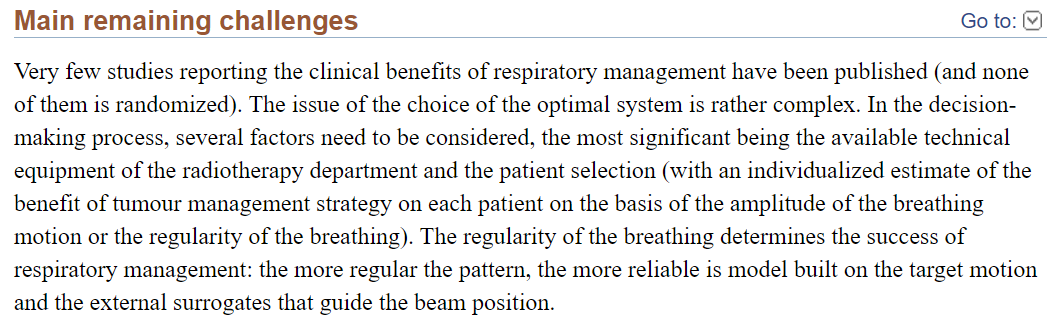
No one really knows if 4D CT truly matters in lung CA. So everyone has an opinion. And in my opinion, the ITV I see with a "slow" CBCT best matches taking multiple slow CT scans and fusing them for an ITV. MRgRT with actually getting to see the anatomy move (or kV gating to a fiducial), versus a skin-surface surrogate for that anatomy, seems a lot smarter to me.

9XliZia.png
 
Advertisement - Members don't see this ad
No one really knows if 4D CT truly matters in lung CA. So everyone has an opinion. And in my opinion, the ITV I see with a "slow" CBCT best matches taking multiple slow CT scans and fusing them for an ITV. MRgRT with actually getting to see the anatomy move (or kV gating to a fiducial), versus a skin-surface surrogate for that anatomy, seems a lot smarter to me.

9XliZia.png
Slow scans are great, also used insp/exp/free breathing scans as well.

But to blanket say that every pt below the clavicles and above the pelvis needs a 4DCT is borderline absurd. Some tumors just don't move in my experience and from what has been published, so no, I'm not getting one on an apical T4 with bulky scv nodes
 
Last edited:
What a strange hill to die on
Sometimes, late at night, my spouse will glance at my laptop and say, exasperated: "are you on SDN again?"

And I reply, "yes, there's literally no other place on the internet where a thread can go from talking about CMS payment models to professional society memberships to respiratory motion management in lung cancer, and the Editor-in-Chief of the Red Journal also shows up along the way. What else would I be doing?"
 
For subcarinal nodes, do 7 mm CTV expansion and then add 5 - 8 mm to arrive at your PTV. Save 4DCT for those bored academics
This is reasonable in terms of not missing, but why use a non-discriminate expansion when you don’t need to? The subcarinal area is fairly morbid. Acutely, you cause esophagitis. Chronically, there is a fair amount of cardiac toxicity -it contributes to LAD dose.

…and, for the record, I ASPIRE to be a bored academic. I still have a many more years of anxiety and exhaustion before I can even glimpse torpor or boredom
 
This is reasonable in terms of not missing, but why use a non-discriminate expansion when you don’t need to? The subcarinal area is fairly morbid. Acutely, you cause esophagitis. Chronically, there is a fair amount of cardiac toxicity -it contributes to LAD dose.

…and, for the record, I ASPIRE to be a bored academic. I still have a many more years of anxiety and exhaustion before I can even glimpse torpor or boredom

It’s not worth the time to actually care a tiny bit what you are doing for a living, apparently.

And as a community doc I find it so insulting and disheartening that paying some attention and doing the bare minimum is considered by some just for ‘bored academics’

This is why Med oncs want to cut radiation out.
 
Advertisement - Members don't see this ad
What a strange hill to die on
I put 4D in there with IMRT and not in there with protons. It's just a modern way to deliver the same drug (photons) better and I would consider standard for a modern community radiation center. In my neck of the woods (not in or adjacent to a major metro but coastal) every Podunk shop has 4D. We probably upgraded the last non-4D having place 8 years ago or so.

The most important part of 4D scanning is what it occasionally surprises you with: 6 cm excursion in a lower lung tumor, crazy hysteresis, a GE junction or pancreas or carina that is just all over the place.

For anyone considering proton therapy, particularly IMPT, to be somehow roughly an equivalent intervention to IMRT, I recommend at least browsing this:


To me this is a shocking paper. Notable for the significant variability in LET across a presumably flat dose region with likely among the most easy environments to calculate dose (a uniform density environment).

Now imagine what that LET is doing in a 4D world?

Edit: Forgot this was Accelerators thread! Main point on the proton paper link is I don't want this in the community. But @Lamount can have it.
 
Last edited:
All joking aside...

Aside from forwarding those ASTRO letters to local congressmen (which everyone should do), it would be helpful to get a leg up on the public relations war with this. While we may not be very sympathetic, our patients are. Patient advocacy groups could be a huge asset in opposing APM/cuts. I have already start reaching out to a few that I work with, and they are on board
 
Came from big pharma azar i think

Don’t worry folks, when trump is back this will all be fixed. Many will say! the first term did not count so he will have at least 8 years to fix!
There are great ironies at work here let's be honest. Rad onc and ASTRO certainly seem to trend anti-Trump, but it was Trump that directly forestalled APM. Only a Biden admin, and an Azar, really would have been willing to propel APM into the end zone.

And CMS wanting us to adhere to "nationally recognized guidelines?" Every single randomized trial supporting hypofractionation* has come from outside the U.S. the last two decades. Especially in breast. The trials supporting nationally recognized guidelines which are now standard of care RT in the U.S. have mostly (completely?) come from countries which use "socialized" medicine. So socialized medicine truly has transformed American radiation oncology. And we are by no means done with the transformation yet.


* I ignored the ~20y old 30/10 vs 8/1 American bone mets trial
 
Last edited:
All joking aside...

Aside from forwarding those ASTRO letters to local congressmen (which everyone should do), it would be helpful to get a leg up on the public relations war with this. While we may not be very sympathetic, our patients are. Patient advocacy groups could be a huge asset in opposing APM/cuts. I have already start reaching out to a few that I work with, and they are on board
Good point, I'll look in this direction locally.
 
Advertisement - Members don't see this ad
The beginnings of APM are evident in the "Public Law" from 2015 (see highlighted section in attached pdf).

The question is who added this paragraph. Conspiracy theorists suggest Accuray
Sure, the APM itself is nothing new, and could have happened in a way that we would mostly support . I think that ASTRO was considering an APM model a while ago as well... what I think is fairly recent is using APM to dramatically cut Rad Onc reimbursement. I have been told that folks behind the scenes at CMS are angling to get our salaries on par with those of rad oncs from Europe, and that is what this is all about.
 
Sure, the APM itself is nothing new, and could have happened in a way that we would mostly support . I think that ASTRO was considering an APM model a while ago as well... what I think is fairly recent is using APM to dramatically cut Rad Onc reimbursement. I have been told that folks behind the scenes at CMS are angling to get our salaries on par with those of rad oncs from Europe, and that is what this is all about.
that would be reasonable or fine to many if our loans were paid off. Average debt for many is somewhere in 500k with european salaries? CMS def smoking some good stuff
 
There are great ironies at work here let's be honest. Rad onc and ASTRO certainly seem to trend anti-Trump, but it was Trump that directly forestalled APM. Only a Biden admin, and an Azar, really would have been willing to propel APM into the end zone.

And CMS wanting us to adhere to "nationally recognized guidelines?" Every single randomized trial supporting hypofractionation* has come from outside the U.S. the last two decades. Especially in breast. The trials supporting nationally recognized guidelines which are now standard of care RT in the U.S. have mostly (completely?) come from countries which use "socialized" medicine. So socialized medicine truly has transformed American radiation oncology. And we are by no means done with the transformation yet.


* I ignored the ~20y old 30/10 vs 8/1 American bone mets trial
My understanding is...

That this was kinda a done deal by the time that Biden came in, and that it would have been somewhat taboo for him to completely overrule the independence of the career bureaucrats at CMS. Congress can do that but I don't think presidents usually do
 
1635873688087.png


This is when the APM momentum really started. In less than one decade Medicare spending in Radiation Oncology increased 300%. The targeting started then. Of course the spending has been falling precipitously since; som eof related to decreased rates and some to decreased utilization. Sadly the RO APM seems to be designed to fix a problem that has already been solved.
 
View attachment 345307

This is when the APM momentum really started. In less than one decade Medicare spending in Radiation Oncology increased 300%. The targeting started then. Of course the spending has been falling precipitously since; som eof related to decreased rates and some to decreased utilization. Sadly the RO APM seems to be designed to fix a problem that has already been solved.
Up 300% in excess expenditure as of 2009 vs 2002. But still near the bottom in terms of total expenditures.

In other words antecedent to 2002, RADIATION THERAPY WAS THE MOST COST EFFECTIVE MEDICINE IN THE HISTORY OF MEDICINE.
 
Up 300% in excess expenditure as of 2009 vs 2002. But still near the bottom in terms of total expenditures.

In other words antecedent to 2002, RADIATION THERAPY WAS THE MOST COST EFFECTIVE MEDICINE IN THE HISTORY OF MEDICINE.
Not sure that I would go that far; depends on how you define cost effective. Of course the proton explosion has significantly weakened the cost effective argument of late.
 
Not sure that I would go that far; depends on how you define cost effective. Of course the proton explosion has significantly weakened the cost effective argument of late.
I'm being hyperbolic, BUT... even with a 300% rise in expenditures by 2009 (we peaked ~2011 and have been stable/decreased since then), rad onc was still very, very cost effective. Protons kind of ruin that argument yeah.
 
Up 300% in excess expenditure as of 2009 vs 2002. But still near the bottom in terms of total expenditures.

In other words antecedent to 2002, RADIATION THERAPY WAS THE MOST COST EFFECTIVE MEDICINE IN THE HISTORY OF MEDICINE.
The government seems to understand statistics about as well as the contingent of my family who uses Facebook regularly.

In my dreams, the authors publish an updated study from 2009-now, and include not only "excess expenditure" change (I assume it has decreased over the last 10 years), but also gross total cost so it's easier to understand what this number means in context. Saying "the cost of this item doubled" means a lot less when the starting cost was $10 vs $10,000.

Sometimes I don't know why I even try anymore. It seems pretty easy to be a grifter and use flashy graphics and distorted stats to get people to do what you want. We're so gullible as a species.
 
Slow scans are great, also used insp/exp/free breathing scans as well.

But to blanket say that every pt below the clavicles and above the pelvis needs a 4DCT is borderline absurd. Some tumors just don't move in my experience and from what has been published, so no, I'm not getting one on an apical T4 with bulky scv nodes
you may not "need" a 4D on every pt, but at least assessing motion on things that move seems pretty reasonable

View attachment 345307
This is when the APM momentum really started. In less than one decade Medicare spending in Radiation Oncology increased 300%. The targeting started then. Of course the spending has been falling precipitously since; som eof related to decreased rates and some to decreased utilization. Sadly the RO APM seems to be designed to fix a problem that has already been solved.

If you take this graph @TheWallnerus made and realize it draws its data from 2004-2013, then you realize there were a small number of rad onc places during that time period that completely changed the landscape of radiation oncology.

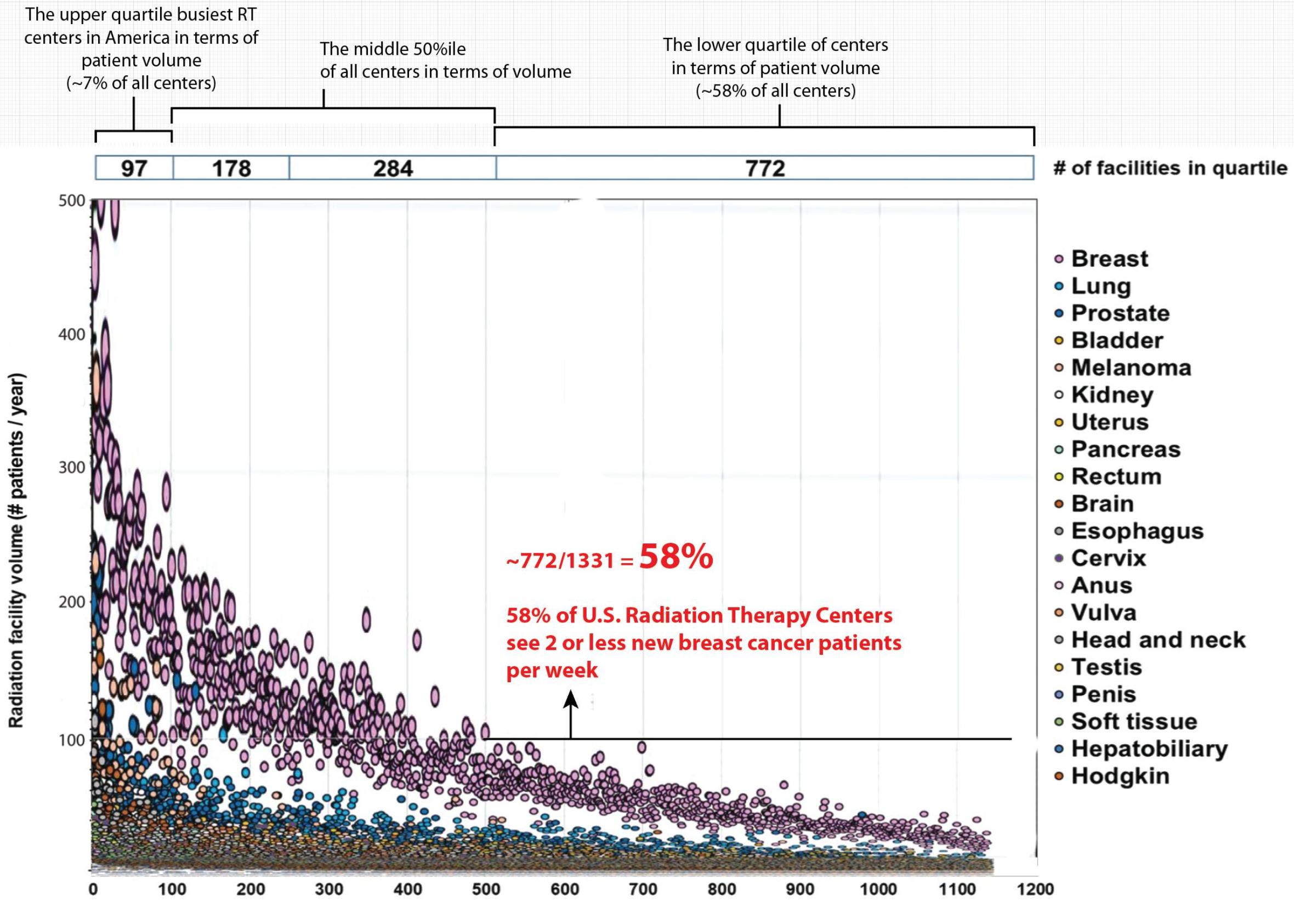
IUyyqBV.jpg
 
So I'm sitting here, reading about payment reform and cutting costs (this thread and the pod are great, I've learned A LOT in the last couple of days), while at the same time listening in to tumor board (remotely, I brought my own lunch) that is funded by pharma lunches. Ah yes, Rad Onc is truly the low hanging fruit from which to find more money. SMDH
 
Sure, the APM itself is nothing new, and could have happened in a way that we would mostly support . I think that ASTRO was considering an APM model a while ago as well... what I think is fairly recent is using APM to dramatically cut Rad Onc reimbursement. I have been told that folks behind the scenes at CMS are angling to get our salaries on par with those of rad oncs from Europe, and that is what this is all about.

that would be reasonable or fine to many if our loans were paid off. Average debt for many is somewhere in 500k with european salaries? CMS def smoking some good stuff
BTW. CMS can never get anyone's salary lowered. IF... "anyone" had an adequate case load, which is dependent on supply/demand, and a proper number of ROs in the US. If there were fewer there'd be more Medicare patients per RO, and salaries would stay higher.
 
BTW. CMS can never get anyone's salary lowered. IF... "anyone" had an adequate case load, which is dependent on supply/demand, and a proper number of ROs in the US. If there were fewer there'd be more Medicare patients per RO, and salaries would stay higher.

That's exactly what I was thinking. If CMS continues to cut reimbursement per patient, we will simply continue to not hire radoncs moving forward and increase our case load to make up for the cuts. A freshly minted radonc can't exactly hang a shingle and compete.
 
BTW. CMS can never get anyone's salary lowered. IF... "anyone" had an adequate case load, which is dependent on supply/demand, and a proper number of ROs in the US. If there were fewer there'd be more Medicare patients per RO, and salaries would stay higher.
...also depends on how hard you are willing to work. If reimbursement were cut in half, I wouldn't want to see twice as many patients to maintain my salary (but that's just me)
 
Advertisement - Members don't see this ad
...also depends on how hard you are willing to work. If reimbursement were cut in half, I wouldn't want to see twice as many patients to maintain my salary (but that's just me)


Agree. People throw this around but that’s not what most people are doing. Sure you can see a few more but it still takes work to see more patients and there are only so many places one person can be in one part of the day.

The meat factories will meat factory, but writ large not really sustainable, especially as individual treatments get more and more complex
 
I would advise you to look into replacing your 'crappy 4D'. especially since you say you do a lot of lung SBRT.

If you need a pointer, I can send you some of my guys.
In a
...also depends on how hard you are willing to work. If reimbursement were cut in half, I wouldn't want to see twice as many patients to maintain my salary (but that's just me)


Agree. People throw this around but that’s not what most people are doing. Sure you can see a few more but it still takes work to see more patients and there are only so many places one person can be in one part of the day.

The meat factories will meat factory, but writ large not really sustainable, especially as individual treatments get more and more complex
Some groups work 4 days a week and many radoncs are out before 4:00. Most of us would work 40 hours a week to keep same salary.
 
...also depends on how hard you are willing to work. If reimbursement were cut in half, I wouldn't want to see twice as many patients to maintain my salary (but that's just me)


Agree. People throw this around but that’s not what most people are doing. Sure you can see a few more but it still takes work to see more patients and there are only so many places one person can be in one part of the day.

The meat factories will meat factory, but writ large not really sustainable, especially as individual treatments get more and more complex
Perhaps.

Given the current available technology, mid-levels, and supervision rules, I could see a scenario where a small number of Radiation Oncologists could control a massive geographic area and patient load relatively safely and effectively. Someone out there might already be doing it already, I'm not sure.

The biggest impediment to something like that (beyond capital) is inertia and the risk-averse nature of medicine. The level of bureaucracy in existing departments (academic or community) is prohibitively immense. But, if the government keeps up their yearly attacks on us, and commercial insurance continues to tie their reimbursements to CMS, and the cuts start hitting the bone - existing practices and institutions will do what they need to do to survive.

...and probably the last thing they need to do is hire new grads. The 2019 general supervision change and the COVID-accelerated telehealth adoption has far-reaching consequences for us. Throw in some bundled payments with additional cuts sprinkled on top...well, Anesthesia quickly figured out a single attending could supervise multiple simultaneous ORs staffed by CRNAs.

Coming soon, the Certified Registered Nurse Radiotherapist (CRN-Rad) program from Elementary Solutions, PLLC! As an introductory offer, when your department hires a new CRN-Rad, you'll get a complimentary subscription to the AI-driven AutoContour system, in partnership with Radformation. Inquire today!
 
I think PE is going to FEAST on APM and supervision changes


Remote physics and dosimetry also hasn’t been used to it’s fullest capacity. They need to be stored in a warehouse somewhere working.


If I was evil CEO I would milk rad onc for all it’s got
 
I think PE is going to FEAST on APM and supervision changes


Remote physics and dosimetry also hasn’t been used to it’s fullest capacity. They need to be stored in a warehouse somewhere working.


If I was evil CEO I would milk rad onc for all it’s got
Definitely a RyanAir/Spirit business model possibility out there