
- Joined
- Nov 14, 2015
- Messages
- 15
- Reaction score
- 4
- Points
- 4,621



You could be a clinician, and do clinical research and basic science on the side. Just remember- clinical trials may be part and parcel with your clinical responsibilities. To do basic science, you need federal/private grants- that takes time away from your clinical responsibilities. You could work in academia, government, or pharma. You could teach. Opportunities abound.
So this is kinda my goal. I have worked in a dairy science practice that was mainly funded by lab work: milk testing, cultures, bacterial susceptibility, tissue testing... but they also did all the consulting (for nutrition, disease management, etc) and we're contracted on as the emergency and general care veterinarians. They performed trials of vaccines, supplements, and management techniques.Although necessary for a serious career in research, I have no idea why an individual who wants to be a clinician would pursue the PhD. Functionally, this makes very little sense.
I would argue that you could do all of this without the PhD. A clinical degree (and, more importantly, subsequent experience) would give you plenty of background to do the work you've mentioned. I didn't see anything in your post about hard-core, empirical science. Unless you're committed to a career where hypothesis development, experimental design, data analysis, and scientific writing are a large part of your job, I would recommend against the PhD. A serious career in research cannot be a 'side business.' For those of you interested in research, I recommend that you check out the current federal funding rates for whatever field you're interested in. If you don't get a grant, you're not doing any science. If you don't do any science, you're not publishing- you will not get (or keep) a job. Currently, funding is running below 10% for all major fields in biology. Those are staggering odds. There are a lot of good people proposing quality work who aren't getting funded. They're also devoting close to 100% effort attempting to keep their research operation afloat (paying technicians, funding grad student projects, etc.). Before you jump headlong into a PhD, spend some serious time (like WAY more than a summer research project) understanding what full-time scientists do, and the pressures on their schedule. It's not a decision to be made lightly.So this is kinda my goal. I have worked in a dairy science practice that was mainly funded by lab work: milk testing, cultures, bacterial susceptibility, tissue testing... but they also did all the consulting (for nutrition, disease management, etc) and we're contracted on as the emergency and general care veterinarians. They performed trials of vaccines, supplements, and management techniques.
While I would be very, very happy as a mixed animal practice clinician, I also really like the hard science and benefit to the industry of research into improvements of the dairy cattle (not as much milk production because we have broken the cow in other places to reach the level of production in some breeds.)
I also have an Embryology background so I would like to run a basic dairy testing lab, an embryo collection and transfer lab, and contract on for consulting and clinical care and if I could make it work, have a mixed animal practice. This would need to be a place that had multiple vets that all worked together, and maybe I'd end up like my old mentor and rarely see on-farm time... but I feel like this approach would allow me to make the most direct difference to the cow and the cattle man. I can work on the genetic components of strong frames, hopefully with little sacrifice in the production department. I can be in the forefront of genetic turnover with genetics that aren't just new, but come from lines with a reason for passing on traits... or I can argue with dairy men till my face turns blue that they want a cow with good feet over the one with the giant udder that will sag before she turns 5. (It will probably go that way.)
I realize there is a lot of stuff in there that is unlikely to go my way... but it's my plan for now.
(Why does my autocorrect think it knows what I'm talking about more than I do? Working on this... sigh)

I would argue that you could do all of this without the PhD. A clinical degree (and, more importantly, subsequent experience) would give you plenty of background to do the work you've mentioned. I didn't see anything in your post about hard-core, empirical science. Unless you're committed to a career where hypothesis development, experimental design, data analysis, and scientific writing are a large part of your job, I would recommend against the PhD. A serious career in research cannot be a 'side business.' For those of you interested in research, I recommend that you check out the current federal funding rates for whatever field you're interested in. If you don't get a grant, you're not doing any science. If you don't do any science, you're not publishing- you will not get (or keep) a job. Currently, funding is running below 10% for all major fields in biology. Those are staggering odds. There are a lot of good people proposing quality work who aren't getting funded. They're also devoting close to 100% effort attempting to keep their research operation afloat (paying technicians, funding grad student projects, etc.). Before you jump headlong into a PhD, spend some serious time (like WAY more than a summer research project) understanding what full-time scientists do, and the pressures on their schedule. It's not a decision to be made lightly.


So much this.
Also be prepared to do a postdoc afterwards. Getting into the research world without one is almost an impossibility in today's climate.
I wish I could be more supportive of the DVM/PhD idea...but I really can't. They shove the whole "oh, there is such a need for vets in research blah blah" crap to us year after year, and that isn't really the reality. There are many theoretical niches DVM/PhDs could fill, but the fact of the matter is you will be passed over for a PhD with a solid postdoc or two (plus publications) under their belt every time if you want to go heavy research. It will be an uphill battle. Hell, even plain PhDs themselves...I hate to be a downer, but I cringe every time a student asks me to write them a letter for graduate school because I know how AWFUL funding and lifestyle is right now for STEM researchers.
I say this with some degree of hypocrisy, as I am doing a PhD now....but that is more for the goal of being a professor, not a primary researcher. I would never, ever be a PI in today's funding environment. No way. I've been exposed to enough of that world and it's a relatively miserable one unless you like the constant pressure of writing and submitting grants, selling yourself, scrounging for money, worrying about getting publications out to keep your job, etc.
So much this.
I would never, ever be a PI in today's funding environment. No way. I've been exposed to enough of that world and it's a relatively miserable one unless you like the constant pressure of writing and submitting grants, selling yourself, scrounging for money, worrying about getting publications out to keep your job, etc.
Depends. Most specialty colleges require their candidates to publish at least one (i.e. Lab Animal) if not multiple (Zoo Med) first-authored publications. Many of these residency programs have combined degree programs where you can pursue an advanced degree (MS or PhD) along with clinical training. WTF- is this your situation? Want to weigh in on this one?Related question. How common is it for DVMs who have specialized to pursue a graduate degree later in their career, whether masters or PhD? I'm sure it varies between specialties, but I was curious as to what some of the overall trends might be.
Ooooh you wanna be a professor? Are you gonna teach vet students? Are you gonna teach them pathology? 🙂
Depends. Most specialty colleges require their candidates to publish at least one (i.e. Lab Animal) if not multiple (Zoo Med) first-authored publications. Many of these residency programs have combined degree programs where you can pursue an advanced degree (MS or PhD) along with clinical training. WTF- is this your situation? Want to weigh in on this one?
And make them cry, bathe in their tears, etc. All the normal prof stuff.


I really wanted to teach and work at a school hospital as a specialist... does every specialty need the PhD to get this job, or just some?

I really wanted to teach and work at a school hospital as a specialist... does every specialty need the PhD to get this job, or just some?
I really appreciate the answers. Sometimes it's hard to dig up this information until I'm "in the trenches." I've had some independent research experience, but as an older student, I'm pretty sure I want to graduate before I'm 80 (I'm not that old, but still.). I also don't want to sound like an unrealistic idiot at any interviews I might have, if they ask me what my goals are!

I am interested in understanding the lifestyle of a DVM/PhD student. Any sights from current or prospective students are welcome. Please share your experiences!! (I applied this fall (2015)). What kind of jobs are available for DVM/Phd graduates?

Also, not all PhDs are equal, and this is even more true for MS degrees. Many of the available avenues for these degrees for DVMs really don't prepare you all that well to become a competitive PI as a researcher. At least of the DVM/PhD faculty and students/fellow I've known, very few are working on high impact work or in a lab that produces high impact work that will make them attractive for a funding source. There are so many very well trained PhDs out there dying to get funding, that there are few instances where a major funding source will want to prioritize the poorly trained DVM/PhD instead. So you really need to know what your goals are before you choose this path and be smart about how you go about it.
It's not like with the DVM where job security is pretty much the same as long as you get a DVM from an accredited school.

This is a big issue. Quality and time.
In order to complete a PhD in ~3 years - which is basically unheard of nowadays for someone with no prior experience or class credit, the average range is around 5-6 years in STEM fields - you are most likely doing low impact work and will likely not have a publication record or grant writing experience strong enough to qualify to be hired as a PI (or sometimes even postdoc level at competitive institutions) once you finish. Even doing one in 4 years, especially broken up into pieces, is kinda pushing it for someone who straight out of undergrad (or at least close to that, as most DVM/PhD trackers are). It's a risk. Also why a postdoc after a DVM/PhD is becoming more and more essential if you want to go into a primarily research track.
DVM/PhD programs to me appear to be a way to push out people with both degrees are quickly as possible. Which is fine for DVM because it is very structured - it's gonna take 4 years no matter what - not so much for a PhD because that attitude affects the quantity and impact of your research and therefore your eventual hireability. I personally encourage people who are serious about going into high impact research with both degrees to do a "full" (aka not broken up and not mixed with vet school at all) PhD after vet school, and do it at a medical school if you can.
Edit: before people get offended.....low impact and low quality are not the same thing. You can be doing perfectly good quality of research in a DVM/PhD program, but if it is low impact (and your resulting publications are low impact, aka mostly in veterinary journals and the like) you are not a highly qualified candidate for future funding at PI level (or hell, even at a postdoc level) and will therefore struggle. And most of the research I, like Minnerbelle, have seen DVM/PhD candidates doing is low impact work that will allow them to finish in the time allotted. I consider this as a major weakness of the combined degree considering one of its main goals is producing researchers.
Are dual residency/PhD programs similar to DVM/PhD programs, in that the research you do will most likely be low impact and pushed too quickly? I know you did your residency first, and now are pursuing your PhD separately. Did you consider any dual programs when you were first looking into residency?
Are dual residency/PhD programs similar to DVM/PhD programs, in that the research you do will most likely be low impact and pushed too quickly?
So... Like the thing is, even as 'just a tech' for only 2 years at a research powerhouse I had two second author publications in journals with impact factors of above 4 and 6, and also had my name on three other papers in journals with impact factors of ~6. That would be difficult to achieve even if doing basic science as a DVM/PhD.
Dang! Did you get into CSU's vet school with no trouble at all? Were they like "Please Minnerbell...please come to our school!" And you were like, "Mmmmmmmmmm okay." lol
It seems like you already had quite a pedigree by the time you applied. Also it seems like you're extremely good at learning. Did you have a 4.0 GPA? O_O
That wasn't supposed to mean that I was great. More that I was only able to achieve those things because I worked for powerful people who were doing high impact work. I just lucked out. I could have worked equally hard in a little Podunk lab and things would have been very different. My PI literally had a publication per month in high impact journals (though not all of them were basic science)). There aren't that many opportunities for DVMs to get in on research like that as a part of their training, esp in institutions that are not associated with medical schools. Path and lab animal are kind of exceptions to the rule, as there are more opportunities for those people to be working with serious researchers.
I honestly didn't expect to get in. At the time of application, I don't think any of those were published seeing as I'd only been working about a year when I applied. My two major publications weren't even published until after I started vet school. One was just finally published last year. I put in a lot of work into them in the two years I was there, but it really did take 4-5 years for each project of very smart people working on them. I just happened to be lucky and was there for the juicy parts. Like really really lucky. My gpa (3.6) wasn't like stellar either. I didn't get a single solid A until senior year of undergrad.
Edit: before people get offended.....low impact and low quality are not the same thing. You can be doing perfectly good quality of research in a DVM/PhD program, but if it is low impact (and your resulting publications are low impact, aka mostly in veterinary journals and the like) you are not a highly qualified candidate for future funding at PI level (or hell, even at a postdoc level) and will therefore struggle. And a lot of the research I, like Minnerbelle, have seen DVM/PhD candidates doing is low impact work that will allow them to finish in the time allotted. I consider this as a major weakness of the combined degree considering one of its main goals is producing researchers.
Are dual residency/PhD programs similar to DVM/PhD programs, in that the research you do will most likely be low impact and pushed too quickly? I know you did your residency first, and now are pursuing your PhD separately. Did you consider any dual programs when you were first looking into residency?

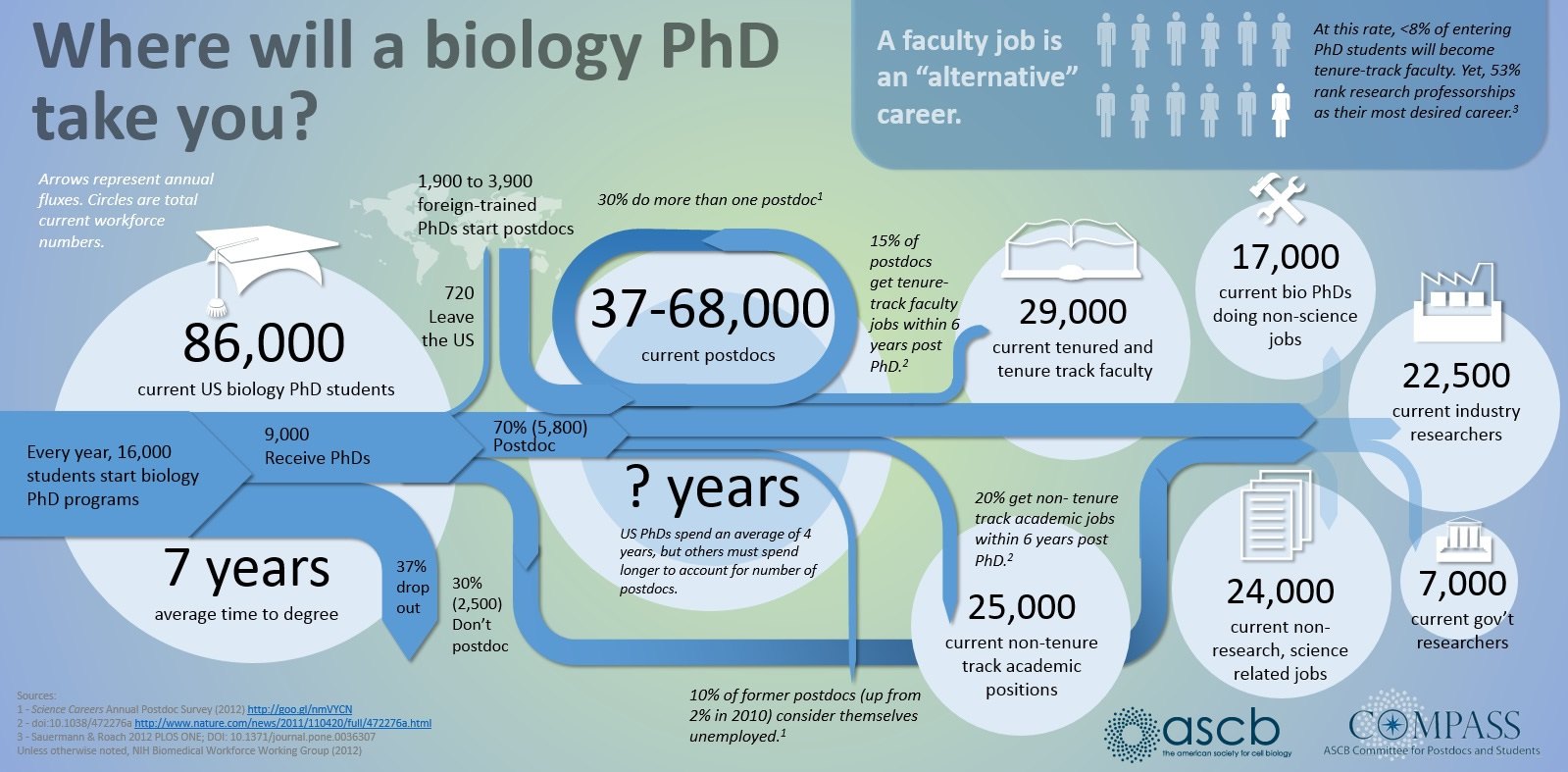
Something that I feel needs to be emphasized in biomedical research is that something like 70% of PhDs do postdocs (and this will include DVM/PhDs since research institutions don't give much more than half a crap about your DVM because it is a clinical degree, not a research degree - it is a feather in your cap, sure, but it doesn't make you a better grant writer, publisher, or researchers which is what they care about for research faculty. (Funny story just to give people an idea also about what high-end research institutions think of your DVM - I applied to two prestigious PhD program at institutions unaffiliated with veterinary schools as "backups" in case I didn't get a residency. And was rejected from both. Despite having pubs and experience under my belt. I was pretty appalled because I was always under the impression that research institutions wanted DVMs to get involved and would jump at the chance to train one. Maybe bad luck, but that stuck with me)
As someone interested in doing a lab animal residency, thank you guys so much for your honesty and willingness to share your opinions. Assuming you didn't go the PhD route, and just wanted to collaborate and be involved in whatever research projects other people headed, do you think there would be a difference in doing a masters with a residency vs a residency that didn't include a degree?
WTF can you elaborate on what you mean by "certain circles or industries" where DVM/PhDs are wanted (aside from I guess you already mentioned academia).
I'd like to thank everyone again for their incredible insight in this thread. It's invaluable for some of us looking into these paths (like myself), and I appreciate it!
Similar to jestry's question, is there any benefit to the master's degree/residency programs?
(Excuse any typos... my fingers and phone refuse to cooperate.)

very interesting read 🙂 is it true that DVM/PhD puts you in a better position to tackle animal models for human disease as they advertise (vs MD, MD/PhD, PhD)? Or do employers not care about that

Did you end up applying for/taking that job? Or did you find out otherwise why they were looking for a DVM?Why they were specifically looking for a DVM I have no idea. Because there are thousands upon thousands of PhDs who are more than qualified to do that and would do a much better job.
So I guess it's not unheard of... But it's very very rare. Something was kind of fishy about that.
If you're talking about naturally occurring clinical disease in animals (hereditary or not) as models for the same disease in people, then yes to an extent. There aren't too many people with colonies of 'lab animals' to study these, though they exist. Most of the time, it's more in the form of clinical research in a teaching hospital environment. Either way, they tend to be carried out by faculty positions in veterinary schools.
How common is animal research for the sake of improving clinical treatments for animals (and not to help people.) Is it less than 1%? Is it all funded by vet schools and animal clubs?
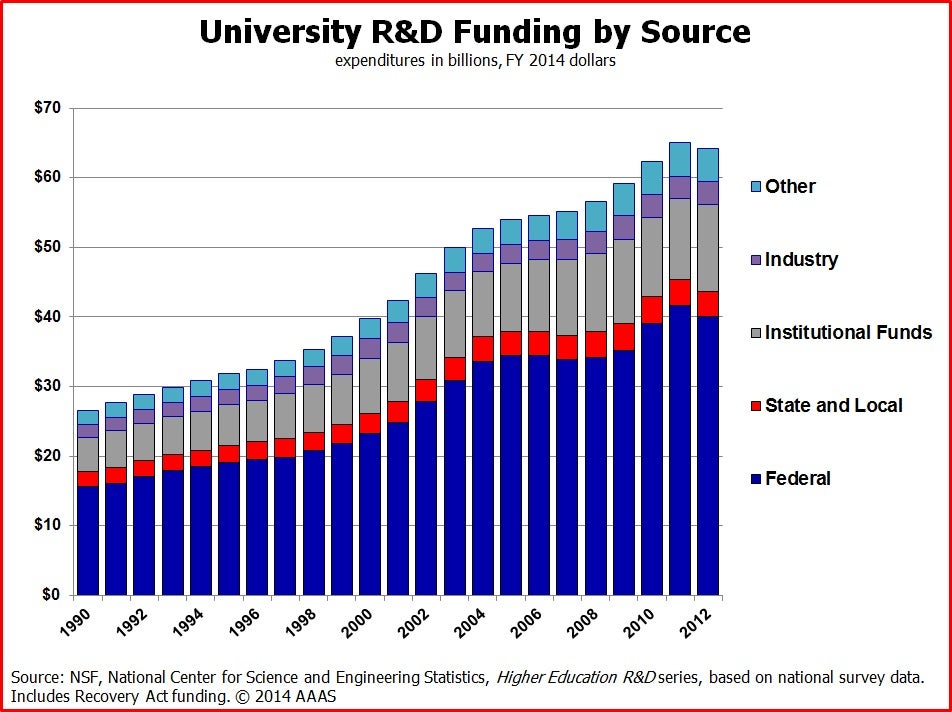
It's common in vet schools, but terribly under-funded. You have a few exceptions like Morris Animal Foundation grants, but overall if you want federal $$ (usually NIH) there is usually a requirement that there to be a significant human and/of public health component if your research is animal-based. And federal funds are the primary funding sources for research at universities.
Thanks for the info graphic!
Would you happen to know what kind of impact the research funded by places like Morris Animal Foundation is having on clinical veterinary medicine?
I think also for lab animal, the exact program you decide to do your residency in and how that program meshes with your career goals is going to matter much more. You need some sort of first author pub to get boarded so all programs will have you doing some research regardless.
Some programs are much more clinically oriented vs. research oriented. There are some that are even 2 years rather than 3. Some are even funded by the NIH as a post-doc and you actually get a better salary for it. I looked into doing lab animal during my 4th year and externed at a couple of places, and I was really surprised at the differences in program format/experience. I decided against it when multiple graduating residents told me to run because jobs were scarce, and being geographically restricted I felt I had better chances as a dog/cat vet.
@jjohnston would be a great person to talk to. She is finishing up her lab animal residency now I think. I also know a couple of former sdn'ers and non affiliated people in lab animal residencies currently so I can get you in touch with them if you'd like.
My understanding is that applicants for DVM/PhD programs have to apply to each separately. Is it the same for residency/PhD? (For pathology, specifically) Can you be accepted to residency and rejected from graduate school, or do the programs accept you into both components from the same application?


I think my program has graduates 2 or 3 people at this point and there are about 12 of us in the trenches. One graduate works for Merck in a research position. One works for Banfield. A fourth year just accepted a position as a Clinical Pathology Resident. One of my friends who is done with her PhD but in 3rd year of vet school has decided to go into private practice and not pursue further specialization. The other girl who is her year plans to pursue some sort of teaching position.I am interested in understanding the lifestyle of a DVM/PhD student. Any sights from current or prospective students are welcome. Please share your experiences!! (I applied this fall (2015)). What kind of jobs are available for DVM/Phd graduates?
I would say this is the best route to go. In hindsight.Related question. How common is it for DVMs who have specialized to pursue a graduate degree later in their career, whether masters or PhD? I'm sure it varies between specialties, but I was curious as to what some of the overall trends might be.
Yea... lol. I'm like class of 2021 hopefully. My PI totally hates clinician researchers in theory so is holding me to the same standards as any other graduate student. which I like. I know I'm getting a quality PhD. However, without saying too much I can say that combined degree candidates often get away with less than stellar research experiences. It is definitely up to the student and their committee.I am a current DVM/PhD student at OKstate. The way it works here is that you complete the first two years of DVM program, take 1-2 years off while getting PhD work going, finish last two DVM years, then complete PhD. I am doing the dual program because I have thoughts of going into pharma industry then possibly going into academia. My research is definitely basic science based though, not clinical like most duallies. So, I will likely be taking longer than the 3-4 years extra. I agree with what the others have stated. Do Not Recommend unless you like doing research. It is too stressful and the rewards questionable for the effort.


