
You are using an out of date browser. It may not display this or other websites correctly.
You should upgrade or use an alternative browser.
You should upgrade or use an alternative browser.
****Official PASS 2026 Dental Anesthesiology Residency Interviews/Information~
Started by Hollywood31

Get help with your application
Use all the free resources available to you from SDN: articles, guides, expert advising, forums discussions, and school research.

Currently a third year resident. Feel free to ask any questions about the programs
chasingsmiles1999
Full Member
Do programs for anesthesia offer non cats? Or are those only for oral surgery?
Advertisement - Members don't see this ad
No those don’t exist for anesthesia programsDo programs for anesthesia offer non cats? Or are those only for oral surgery?
University of the Pacific offers something but I’m not entirely sure how much of it is in the OR. I’m under the impression it’s entirely in the dental school.
Also, contact each program. They may have the ability to do something for the right candidate. And by right candidate I mean this: in New York, for example, where the majority of the programs are based, had a GPR requirement for licensure. Programs like dental anesthesiology are on the path to licensure so you do NOT need a prior GPR. But, for non cats in OMFS or other areas of interest, you DO need a GPR bc the non cats are essentially second year GPR residents in a specialty area of interest. But that would also be contingent on timing (ie if the program has enough pgy2 spots, time, administrative support etc to create this opportunity for one candidate.)
Also, contact each program. They may have the ability to do something for the right candidate. And by right candidate I mean this: in New York, for example, where the majority of the programs are based, had a GPR requirement for licensure. Programs like dental anesthesiology are on the path to licensure so you do NOT need a prior GPR. But, for non cats in OMFS or other areas of interest, you DO need a GPR bc the non cats are essentially second year GPR residents in a specialty area of interest. But that would also be contingent on timing (ie if the program has enough pgy2 spots, time, administrative support etc to create this opportunity for one candidate.)

Hey, good question — but in reality, hospital-based DA programs don’t allow casual shadowing in the OR. These are tightly regulated clinical environments, and anyone who steps into the operating room needs onboarding and documentation. If it were your loved one under anesthesia, you wouldn’t want unvetted observers “just shadowing.”Do programs allow students to shadow on a regular basis? I'm not talking about externships, just shadowing. Any insights would be appreciated
A few programs with office-based cases might permit limited observation, but those are exceptions. And importantly, it would be unfair to candidates who went through the proper externship process if programs started making one-off shadowing accommodations.
If you want real exposure, the professional and expected pathway is to apply for externships. Here’s last year’s thread that covers expectations and etiquette in detail:
****Official PASS 2025 Dental Anesthesiology Residency Interviews/Information~
Ring-Adair-Elwyn
Full Member
The specific post referenced above:If you want real exposure, the professional and expected pathway is to apply for externships. Here’s last year’s thread that covers expectations and etiquette in detail:
****Official PASS 2025 Dental Anesthesiology Residency Interviews/Information~
A Note on Externships from the Other Side of the Process
Hi everyone—
If you’re here, it means that you’re probably interested in dental anesthesiology and are looking for insight into the field, training, and what makes a successful applicant. As someone who sees this process from the other side, I want to share a few important thoughts—especially about externships.
Externships are informal interviews.
At many programs (especially those with virtual interviews), your externship is our chance to meet you and assess whether you’d be a good fit for our program and culture. It’s also your chance to meet the residents, attendings, and decide if the program fits you. It works both ways.
Getting to the externship isn’t automatic.
Yes, hospitals support externships—but only with proper documentation. Think about it: would you want a random observer around while your mom was having surgery? We need to know who’s in the building. Every extern has to submit paperwork before they’re approved to be onsite. Keep in mind that someone has to process this paperwork, and that takes time as well.
Externship spots are limited.
Most programs accommodate 50+ externs per year, but we can’t schedule during holidays, weekends, or certain weeks (like when new residents start). We limit externships to applicants intending to apply in the current application cycle. That is also for the extern's benefit because the programs and teams evolve and the place that you visit as a D1 is not going to be the same program that you apply to as a D4. That’s why it’s important to:
- Reach out early. Have multiple date options in mind.
- Act quickly after contact. If you wait too long to submit paperwork, your preferred dates may be taken.
- Be mindful of communication and time management. Your ability to follow through efficiently tells us a lot about how you’ll function as a resident.
Seriously—no one expects you to show up knowing how to run a case. This isn’t a test of your skills. You need your first externship somewhere, and we get that. We’ll assess your academic readiness through your grades and CBSE scores. Externships are more about professionalism, communication, and cultural fit.
And yes, there’s admin work—get used to it.
If you find the externship process burdensome, residency may not be for you. Dental anesthesiology residents are expected to document everything: clinical work, immunizations, CPR, licenses, case logs, duty hours, presentations—you name it. Organization and follow-through are essential skills for both residency and your future career.
Wishing you all the best in the process—
Take it seriously, and take initiative.
Ring-Adair-Elwyn
Full Member
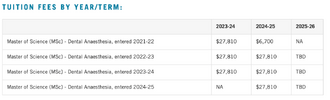

OofFor the University of Toronto, it looks like +/- $27,800/year tuition for Canadian residents and $85,900/year for international.
Jacobi decisions (5): notification 09/16, virtual interview 9/29-30
UNLV decisions (3):
Pitt decisions (4):
NYU decisions (6):
UoT decisions (2):
Stony Brook decisions (4):
Wykoff decisions (2): notification 10/2; in-person 11/7
St. Barnabas decisions (4):
OSU decisions (2):
Masonic decisions (2):
UNLV decisions (3):
Pitt decisions (4):
NYU decisions (6):
UoT decisions (2):
Stony Brook decisions (4):
Wykoff decisions (2): notification 10/2; in-person 11/7
St. Barnabas decisions (4):
OSU decisions (2):
Masonic decisions (2):
Ring-Adair-Elwyn
Full Member
Jacobi positions (5): notification 09/16, informational session: 9/28, virtual interviews 9/29-30
UNLV positions (3): informational session 10/8, notification for interviews 10/10, virtual or in-person interviews 11/4-5
Pitt positions (4): informational session 10/16, virtual interviews 10/17
NYU positions (6): in-person interviews 10/28-29, dinner 10/28
UoT positions (2): in-person interviews 11/3
Stony Brook positions (4): informational session 10/29, virtual interviews 10/30-31
Wykoff positions (2): notification 10/2, in-person 11/7
St. Barnabas positions (4): in-person interviews 11/4-5
OSU positions (2): virtual interviews 10/21
IL Masonic positions (2): informational session 10/20, virtual interviews 11/1
UNLV positions (3): informational session 10/8, notification for interviews 10/10, virtual or in-person interviews 11/4-5
Pitt positions (4): informational session 10/16, virtual interviews 10/17
NYU positions (6): in-person interviews 10/28-29, dinner 10/28
UoT positions (2): in-person interviews 11/3
Stony Brook positions (4): informational session 10/29, virtual interviews 10/30-31
Wykoff positions (2): notification 10/2, in-person 11/7
St. Barnabas positions (4): in-person interviews 11/4-5
OSU positions (2): virtual interviews 10/21
IL Masonic positions (2): informational session 10/20, virtual interviews 11/1
Last edited:
Did all interview invitations come out?Jacobi positions (5): notification 09/16, informational session: 9/28, virtual interviews 9/29-30
UNLV positions (3): informational session 10/8, notification for interviews 10/10, virtual or in-person interviews 11/4-5
Pitt positions (4): informational session 10/16, virtual interviews 10/17
NYU positions (6): in-person interviews 10/28-29, dinner 10/28
UoT positions (2): in-person interviews 11/3
Stony Brook positions (4): informational session 10/29, virtual interviews 10/30-31
Wykoff positions (2): notification 10/2, in-person 11/7
St. Barnabas positions (4): in-person interviews 11/4-5
OSU positions (2): virtual interviews 10/21
IL Masonic positions (2): informational session 10/20, virtual interviews 11/1
Not yet for all the programs. But these are the tentative DatesDid all interview invitations come out?
Advertisement - Members don't see this ad
Should be coming this weekDoes anyone hear from NYU?
Ring-Adair-Elwyn
Full Member
Dental Anesthesiology Residency Interviews and Informational Sessions - ASDA
[...]Read More... from Dental Anesthesiology Residency Interviews and Informational Sessions
 www.asda.org
drillwithbill
New Member
Once someone gets an interview, is their rank 100% based on the interview? like everyone's considered equal at the interview stage?
NoOnce someone gets an interview, is their rank 100% based on the interview? like everyone's considered equal at the interview stage?
Can’t speak for all the programs. But … programs generally have limited time and resources ie interview slots. So not everyone gets invited for an interview. There are stars on paper and people can surprise you in either direction during an interview. But I’m sure, after having externed, that candidates have their favorite programs and those they can live with if they matched and the feeling is mutual from programs as well. Just rank based on your preference and remember that the best program is ultimately the one you matched into (and programs try to forget their rank list after the match too.)Once someone gets an interview, is their rank 100% based on the interview? like everyone's considered equal at the interview stage?
Usually how many people do programs interview per spot?
Ring-Adair-Elwyn
Full Member
Roughly five interviews per position.
drillwithbill
New Member
has anyone heard back from Barnabas?

I think most programs have sent out interview offers by nowYes, has anyone received an interview offer yet?
Just received an email in the morninghas anyone heard back from Barnabas?
drillwithbill
New Member
Does anyone have any thoughts on which program in NY they recommend: Barnabas, Wyckoff, NYU, Jacobi, Stony Brook? How do NYU and Jacobi compare in terms work-life balance/which program is more difficult? I've heard Stony Brook is the most didactic heavy - do any past residents here have any thoughts on if we should value a program with more cases vs more didactics?
If you had interviews to all five NY programs in this cycle you’re going to be the best person to decide which program fits you bests. Some people crave the all hands on deck and want the volume and breadth of cases of the hospital based programs. For the rest of your life you are going to be putting people to sleep, waking them up and occasionally bringing them back from the dead. Only you know if you think your learning style will be better matched by the more didactic program like stony vs the other hospital based city programs to do out patient general anesthesia.Does anyone have any thoughts on which program in NY they recommend: Barnabas, Wyckoff, NYU, Jacobi, Stony Brook? How do NYU and Jacobi compare in terms work-life balance/which program is more difficult? I've heard Stony Brook is the most didactic heavy - do any past residents here have any thoughts on if we should value a program with more cases vs more didactics?
All the programs will train you, just pick your rank list with where you think you’ll be with your best people.
I’m biased but more cases=more experience=greater opportunity to see and handle emergencies. Would you rather enter practice having handled 10 laryngospasms or 100? (Hyperbolic but the point remains)Does anyone have any thoughts on which program in NY they recommend: Barnabas, Wyckoff, NYU, Jacobi, Stony Brook? How do NYU and Jacobi compare in terms work-life balance/which program is more difficult? I've heard Stony Brook is the most didactic heavy - do any past residents here have any thoughts on if we should value a program with more cases vs more didactics?
Advertisement - Members don't see this ad
Ring-Adair-Elwyn
Full Member
To some degree, that is true, but it is not absolute. CODA has determined what is necessary for a dental anesthesia resident, and that’s 800 total cases (with subtypes identified and outlined). Is 1,500 better? Under some circumstances, it may be. Is 2,000 better, maybe. Is 2,500 or 3,000 cases better? Doubtful, as there are diminishing returns, and at some point, clinical education takes away from didactics. There are only so many hours in a day.I’m biased but more cases=more experience=greater opportunity to see and handle emergencies. Would you rather enter practice having handled 10 laryngospasms or 100? (Hyperbolic but the point remains)
People like to equate anesthesia with aviation. There’s a saying in aviation: Does this pilot have 1,000 hours or the same hour 1,000 times?
We have to consider the totality of education, too. How are the didactics? What is the frequency and duration, and who is providing them? It is easy to teach a monkey to perform repetitive tasks without knowing why or truly understanding what they are doing. Knowing the “why” is important, and that doesn’t come from case numbers in the absence of didactic education.
They go hand in hand. Let’s be honest, a vast majority of a residents didactic education is going to come from self study. The structured didactics can only do so much, and doing cases does provide clinical education that is just as valuable. Every program will provide adequate clinical and didactic experience, evidenced by CODA accreditation, completing required case numbers and board passing rates, but some will provide more reps to give greater exposure to various comorbidities, emergency management etc. I’d personally rather have handled emergencies/complexities in a case than solely read about them.To some degree, that is true, but it is not absolute. CODA has determined what is necessary for a dental anesthesia resident, and that’s 800 total cases (with subtypes identified and outlined). Is 1,500 better? Under some circumstances, it may be. Is 2,000 better, maybe. Is 2,500 or 3,000 cases better? Doubtful, as there are diminishing returns, and at some point, clinical education takes away from didactics. There are only so many hours in a day.
People like to equate anesthesia with aviation. There’s a saying in aviation: Does this pilot have 1,000 hours or the same hour 1,000 times?
We have to consider the totality of education, too. How are the didactics? What is the frequency and duration, and who is providing them? It is easy to teach a monkey to perform repetitive tasks without knowing why or truly understanding what they are doing. Knowing the “why” is important, and that doesn’t come from case numbers in the absence of didactic education.
Ring-Adair-Elwyn
Full Member
MATCH says they will be sent by noon Eastern. Practically speaking, for the last +/-15 years they have actually sent the results just before 9 AM Eastern. 6 AM Pacific!
Ring-Adair-Elwyn
Full Member
MATCH results have been released. Congratulations to all that matched. I hope you each matched at your #1 choice.
Ring-Adair-Elwyn
Full Member
No. 34 positions matched of 34 available (includes two positions in Toronto). I don't believe there has been a single post-MATCH position in dental anesthesiology in over a decade.
You can check the post match spots (if you didn’t match, DA typically doesn’t have open spots) and the statistics for the match here:
 natmatch.com
Dental Match | Statistics of the Match
natmatch.com
Looks like all spots were filled

UOP-DDS-ANES
UOP Division: Anesthesiology & Perioperative Care
Calling all Dental Students, the University of the Pacific Anesthesiology Internship Program Application Window is OPEN for 2026-2027. This is the nation's first Non-Categorical program for Dental Anesthesiology, developed in collaboration with several program directors and faculty from CODA-accredited residency programs. Head to our ADEA PASS Program Finder Page HERE for more information on eligibility and how to apply. We have had such great success in our inaugural year that we are looking to accept up to two (2) interns this coming year.
There will be an informational session hosted via ZOOM on 11/24/2025 at 5:30pm PST. An internship program newsletter brief is attached with more information about the internship program along with the link to the informational session meeting. Join us to hear more about this most exciting Specialty of Dentistry that is changing the future of dental education, scope of practice, practice profitability, patient safety and access to care across the country.
Learn more about the Internship program and how it supports the categorical Dental Anesthesiology Residency programs and how a year fully focused on anesthesiology, perioperative medicine, and emergency medicine might be right for you.
We are also very proud to announce that our current anesthesiology intern has matched to the Stony Brook Dental Anesthesiology Residency Program! Congratulations Dr. Hoang!
From your friendly neighborhood oral & maxillofacial anesthesiologist,
Dr. Manton
Director, Anesthesiology Internship Program
Chief, Division of Anesthesiology & Perioperative Care
There will be an informational session hosted via ZOOM on 11/24/2025 at 5:30pm PST. An internship program newsletter brief is attached with more information about the internship program along with the link to the informational session meeting. Join us to hear more about this most exciting Specialty of Dentistry that is changing the future of dental education, scope of practice, practice profitability, patient safety and access to care across the country.
Learn more about the Internship program and how it supports the categorical Dental Anesthesiology Residency programs and how a year fully focused on anesthesiology, perioperative medicine, and emergency medicine might be right for you.
We are also very proud to announce that our current anesthesiology intern has matched to the Stony Brook Dental Anesthesiology Residency Program! Congratulations Dr. Hoang!
From your friendly neighborhood oral & maxillofacial anesthesiologist,
Dr. Manton
Director, Anesthesiology Internship Program
Chief, Division of Anesthesiology & Perioperative Care
Attachments

Last edited:
For clarification: CODA-accredited residency programs operate under standards that require all curriculum development and administrative authority to remain within their own sponsoring institution.Calling all Dental Students, the University of the Pacific Anesthesiology Internship Program Application Window is OPEN for 2026-2027. This is the nation's first Non-Categorical program for Dental Anesthesiology, developed in collaboration with the CODA-accredited residency program directors and faculty from across the US. Head to our ADEA PASS Program Finder Page HERE for more information on eligibility and how to apply. We have had such great success in our inaugural year that we are looking to accept up to two (2) interns this coming year.
There will be an informational session hosted via ZOOM on 11/24/2025 at 5:30pm PST. An internship program newsletter brief is attached with more information about the internship program along with the link to the informational session meeting. Join us to hear more about this most exciting Specialty of Dentistry that is changing the future of dental education, scope of practice, practice profitability, patient safety and access to care across the country.
Learn more about the Internship program and how it supports the categorical Dental Anesthesiology Residency programs and how a year fully focused on anesthesiology, perioperative medicine, and emergency medicine might be right for you.
We are also very proud to announce that our current anesthesiology intern has matched to the Stony Brook Dental Anesthesiology Residency Program! Congratulations Dr. Hoang!
From your friendly neighborhood oral & maxillofacial anesthesiologist,
Dr. Manton
Director, Anesthesiology Internship Program
Chief, Division of Anesthesiology & Perioperative Care
As CODA states: “The authority and final responsibility for curriculum development … must rest within the sponsoring institution.”
Because of this structure, accredited programs do not formally participate in developing or endorsing programs outside of their institution. Any references to “collaboration” should be understood in that context to avoid confusion about accreditation or oversight.
In practice, no residency director would claim oversight or endorsement of another institution’s program, nor would they want another director doing so for theirs. Everyone stays in their own lane for a reason—institutions cannot endorse outside programs, and doing so creates unnecessary liability and accreditation risk.
Does anyone know the programs which won't interview if you haven't externed there? How many externships is acceptable, three?
Ring-Adair-Elwyn
Full Member
Most programs will not offer an interview to anyone that did not extern at that program. Even then, most programs will have 40-50 externs and will offer 12-20 total interviews. A competitive applicant will extern at most programs. There are only nine in the US.Does anyone know the programs which won't interview if you haven't externed there? How many externships is acceptable, three?
Wyckoff and Barnabas require GPRs still, correct? I've heard people still apply without one but I'm not sure. Is it worth applying to Toronto for non-Canadian citizens?Most programs will not offer an interview to anyone that did not extern at that program. Even then, most programs will have 40-50 externs and will offer 12-20 total interviews. A competitive applicant will extern at most programs. There are only nine in the US.
Advertisement - Members don't see this ad
Is going to the annual conference beneficial if you’re applying that cycle, or is it mostly for practitioners?
Yes. It’s a good way to meet current residents and program directors as well as practicing DAs. We had ~30 students at the conference this past April and if my memory serves I believe a majority of them interviewed/matched placesIs going to the annual conference beneficial if you’re applying that cycle, or is it mostly for practitioners?
toothordare22
New Member
Currently a dental student looking to learn more about dental anesthesiology. Are there any current/future residents who I could reach out to with some questions?
if you know you want to do this, dont do a gap yearHello everyone, I had a general timing question and was hoping someone would be able to help me out. I am graduating dental school this May, and starting an AEGD in July. Would it be worth applying next cycle, even though I would just be starting the AEGD when the application opens? The alternative would be applying the following cycle at the end of the AEGD, but this would leave me with a gap year, right?
Unfortunately, I do still need to take the CBSE, so that would have to be done in either July 2026 or Feb 2027.
Similar threads
- Replies
- 49
- Views
- 10K

- Replies
- 77
- Views
- 17K
- Replies
- 152
- Views
- 51K

- Replies
- 842
- Views
- 266K

