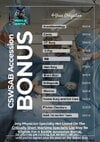
Check Out These U.S. Army 2026 Bonuses!

This forum made possible through the generous support of SDN members, donors, and sponsors. Thank you.
Joined
Nov 12, 2025
Messages
33
Reaction score
5
Points
11
Location
Fort Meade, MD
  1. Non-Student
Check or the NEW 2026 Accession Bonuses for Active Duty Army across ALL the Corps. Some of these especially the Medical Corps have raised exponentially since last year. The Army is trying its best (approved by congress), to compete with the civilian sector. Let me know if you have any questions!
gg.png
ggg.png
gggg.png

ggggg.png
gggggg.png
 
I'm not sure if this is the right way to go about things. The military (and the taxpayer) are throwing millions at this problem when the answer is in the backyard. I assumed the Army wouldn’t have needed major accession bonuses like these given the superior residency structure, but I guess enough people are leaving.

When the average Ortho surgeon in America is making +$500K a year, a $600K bonus (for a 4-year commitment!) is going to attract a type of Ortho surgeon that is financially desperate and needs that money asap. I'm not sure if that's someone who the military would want, but what do I know?

Even the vasc bonus is not going to cut it since vascular surgeons I know are clearing $550K. That bonus has to be well over a million to attract an experienced, young, and fit vascular surgeon (assuming they are not financially desperate) these days.

Are there a couple attendings who feel relatively patriotic? Sure. But I really doubt enough docs (especially in the higher compensation brackets) are going to put their career on hold for the chance to get deployed, especially if they have families. And war seems to be on the horizon, and as you know, most physicians are risk averse.

The military is trying to put its short-term needs over *alleged* long-term goals (retention of experienced military physicians). I get that the military has to fight for its budget every year, but these bonuses are unnecessary if the military makes certain changes.

If branches ACTUALLY wanted better retention of subspecialist and procedural physicians, each branch would reduce the size of their HPSP program (already saving tons of money), advertise better, and get better candidates they could place in much more competitive residencies (gen surg, ortho, ent, uro), which would then give them a guaranteed workforce of extremely specialized physicians for a FRACTION of the civilian cost for at least half a decade. They would also expand FTOS as they could train way more of these subspecialists without spending a single extra dollar on training facilities. Again, all of these options are cheaper than offering accession bonuses.

That way, the military can expand FAP advertising and better recruit FM and IM physicians in residency (especially loan-burdened DOs), for whom the military salary is competitive, given the recent bonus and IP increases.

But guess what the military WILL do for this perceived "shortage"? Increase the number of HPSP spots. And waste more money by losing perfectly qualified physicians either via GMO and out (Navy) or immediately after they complete their ADSO (Air Force). But I honestly didn't think Army would be in this situation either.

The Navy has started to figure that out with their GME Pilot program, but only time will tell if command can actually pull it off or if they bungle it (I know which outcome I'm expecting). This program could potentially have subspecialists staying for the better part of 10+ years in the Navy, but it seems Ortho, ENT, uro, and OBGYN are not participating (yet).
 
Last edited:
Yeah. I'm not seeing this swaying much. And I'm one of those critical war time specialties on here that is in USAR. This isn't what would get me to sign up. Too much conflict with civilian work. Too many commanders having no clue how they are impacting people's livelihood. The bonus would have to be much higher for me to remotely be enticed if I was a civilian. Sadly, they'll have to fall back on the medical draft when it comes to it which will be a giant clusterf$%#.
 
Yeah. I'm not seeing this swaying much. And I'm one of those critical war time specialties on here that is in USAR. This isn't what would get me to sign up. Too much conflict with civilian work. Too many commanders having no clue how they are impacting people's livelihood. The bonus would have to be much higher for me to remotely be enticed if I was a civilian. Sadly, they'll have to fall back on the medical draft when it comes to it which will be a giant clusterf$%#.
exactly my thoughts. Bonuses have to be WAY higher for people to even consider. Pre-internet, this might have just worked, lol
 
I'm not sure if this is the right way to go about things. The military (and the taxpayer) are throwing millions at this problem when the answer is in the backyard. I assumed the Army wouldn’t have needed major accession bonuses like these given the superior residency structure, but I guess enough people are leaving.

When the average Ortho surgeon in America is making +$500K a year, a $600K bonus (for a 4-year commitment!) is going to attract a type of Ortho surgeon that is financially desperate and needs that money asap. I'm not sure if that's someone who the military would want, but what do I know?

Even the vasc bonus is not going to cut it since vascular surgeons I know are clearing $550K. That bonus has to be well over a million to attract an experienced, young, and fit vascular surgeon (assuming they are not financially desperate) these days.

Are there a couple attendings who feel relatively patriotic? Sure. But I really doubt enough docs (especially in the higher compensation brackets) are going to put their career on hold for the chance to get deployed, especially if they have families. And war seems to be on the horizon, and as you know, most physicians are risk averse.

The military is trying to put its short-term needs over *alleged* long-term goals (retention of experienced military physicians). I get that the military has to fight for its budget every year, but these bonuses are unnecessary if the military makes certain changes.

If branches ACTUALLY wanted better retention of subspecialist and procedural physicians, each branch would reduce the size of their HPSP program (already saving tons of money), advertise better, and get better candidates they could place in much more competitive residencies (gen surg, ortho, ent, uro), which would then give them a guaranteed workforce of extremely specialized physicians for a FRACTION of the civilian cost for at least half a decade. They would also expand FTOS as they could train way more of these subspecialists without spending a single extra dollar on training facilities. Again, all of these options are cheaper than offering accession bonuses.

That way, the military can expand FAP advertising and better recruit FM and IM physicians in residency (especially loan-burdened DOs), for whom the military salary is competitive, given the recent bonus and IP increases.

But guess what the military WILL do for this perceived "shortage"? Increase the number of HPSP spots. And waste more money by losing perfectly qualified physicians either via GMO and out (Navy) or immediately after they complete their ADSO (Air Force). But I honestly didn't think Army would be in this situation either.

The Navy has started to figure that out with their GME Pilot program, but only time will tell if command can actually pull it off or if they bungle it (I know which outcome I'm expecting). This program could potentially have subspecialists staying for the better part of 10+ years in the Navy, but it seems Ortho, ENT, uro, and OBGYN are not participating (yet).


Agreed....and $500K/yr is a way low number for ortho. ALL the ortho guys in my multi=specialty surgical practice are clearing $1M+ BUT they bust their a$$es to see 50+ patients/day. Even the "low-paying" ENTs like myself are all clearing $700K+ but like ortho we are all seeing 50+ patients per day. The military/federal GS medical system is monetarily designed to retain those specialists who frankly don't want to work all that hard (which is OK). Throwing relative pennies at these high-paying specialties is not going to retain anyone.
 
@Chonal Atresia Right. And I would say that the military can’t find subspecialists in the first place who don’t like to work hard. To match into competitive specialties these days (ortho, ENT, even gen surg lol), we need a lot of hard work, patience, and proactive thinking to succeed. And then on top of that is a challenging residency, etc.

Even with FM and IM, which potentially attract a more "easygoing" individual, the only thing the military really has is pay competitiveness. People rag on about civilian FM and IM lifestyles, but minus student loans, the lifestyle is not too bad if you can figure out how to leverage AI and midlevels to decrease your burden (I know because I’ve learned from enough family practice physicians who did just that) and generate RVUs. And that’s just something the military can’t compete with – it has to fill billets, it has to deploy people to God-knows-where to support the line. Little support, if any.

The only way the military can solve this “crisis” is to create a solid, guaranteed pipeline from HPSP to [insert in demand competitive specialty], cut the HPSP program size by however much it takes to start creating competition for spots (from premeds and M1s) and aggressively advertise an increased (legitimate) ability to match to very competitive specialties. The first worry I hear from (competitive) classmates who were interested in HPSP is that it is harder to match into competitive specialties for FTIS (which is the majority of mil GME residencies) than outside. Less so for Army, but EM is still extremely challenging to match military compared to outside for all branches.

Thus, GMO and out or disgruntled AD docs are common, which only hurts retention and future recruitment.

See how I didn't even have to mention increasing bonuses and incentive pays.
 
Last edited:
The increased multiyear contract pays will probably help retain some physicians who are evaluating the value of retiring at 20 vs the number of obligated years + extra years required. The pay increase was necessary, well deserved, and a good sign.

But the unfortunate truth is that accession bonuses to attract residency-trained physicians aren't going to work real well. Even if they represented a fair market rate (which they don't) the tradeoff for giving up freedom at that stage of life (choice of where to live, deployments, work environment) demands wages well above market rates.

In the past, accession bonuses seemed to only work for civilian physicians who were running from problems and needed a second chance. You attract high quality mid-career and senior talent with high pay and excellent working conditions. Still offering 0/2 isn't going to help.
 
I'm not sure if this is the right way to go about things. The military (and the taxpayer) are throwing millions at this problem when the answer is in the backyard. I assumed the Army wouldn’t have needed major accession bonuses like these given the superior residency structure, but I guess enough people are leaving.

When the average Ortho surgeon in America is making +$500K a year, a $600K bonus (for a 4-year commitment!) is going to attract a type of Ortho surgeon that is financially desperate and needs that money asap. I'm not sure if that's someone who the military would want, but what do I know?

Even the vasc bonus is not going to cut it since vascular surgeons I know are clearing $550K. That bonus has to be well over a million to attract an experienced, young, and fit vascular surgeon (assuming they are not financially desperate) these days.

Are there a couple attendings who feel relatively patriotic? Sure. But I really doubt enough docs (especially in the higher compensation brackets) are going to put their career on hold for the chance to get deployed, especially if they have families. And war seems to be on the horizon, and as you know, most physicians are risk averse.

The military is trying to put its short-term needs over *alleged* long-term goals (retention of experienced military physicians). I get that the military has to fight for its budget every year, but these bonuses are unnecessary if the military makes certain changes.

If branches ACTUALLY wanted better retention of subspecialist and procedural physicians, each branch would reduce the size of their HPSP program (already saving tons of money), advertise better, and get better candidates they could place in much more competitive residencies (gen surg, ortho, ent, uro), which would then give them a guaranteed workforce of extremely specialized physicians for a FRACTION of the civilian cost for at least half a decade. They would also expand FTOS as they could train way more of these subspecialists without spending a single extra dollar on training facilities. Again, all of these options are cheaper than offering accession bonuses.

That way, the military can expand FAP advertising and better recruit FM and IM physicians in residency (especially loan-burdened DOs), for whom the military salary is competitive, given the recent bonus and IP increases.

But guess what the military WILL do for this perceived "shortage"? Increase the number of HPSP spots. And waste more money by losing perfectly qualified physicians either via GMO and out (Navy) or immediately after they complete their ADSO (Air Force). But I honestly didn't think Army would be in this situation either.

The Navy has started to figure that out with their GME Pilot program, but only time will tell if command can actually pull it off or if they bungle it (I know which outcome I'm expecting). This program could potentially have subspecialists staying for the better part of 10+ years in the Navy, but it seems Ortho, ENT, uro, and OBGYN are not participating (yet).
appreciate your opinion!
 
Yeah. I'm not seeing this swaying much. And I'm one of those critical war time specialties on here that is in USAR. This isn't what would get me to sign up. Too much conflict with civilian work. Too many commanders having no clue how they are impacting people's livelihood. The bonus would have to be much higher for me to remotely be enticed if I was a civilian. Sadly, they'll have to fall back on the medical draft when it comes to it which will be a giant clusterf$%#.
appreciate your feedback!
 
Agreed....and $500K/yr is a way low number for ortho. ALL the ortho guys in my multi=specialty surgical practice are clearing $1M+ BUT they bust their a$$es to see 50+ patients/day. Even the "low-paying" ENTs like myself are all clearing $700K+ but like ortho we are all seeing 50+ patients per day. The military/federal GS medical system is monetarily designed to retain those specialists who frankly don't want to work all that hard (which is OK). Throwing relative pennies at these high-paying specialties is not going to retain anyone.
appreciate your opinion! For some its not all about the money. We have people reach out frequently that they need a change, feel burnt out, or simply want the short term experience to serve. The money from these bonuses is simply to serve as an incentive rather than not give any incentive at all...
 
@Chonal Atresia Right. And I would say that the military can’t find subspecialists in the first place who don’t like to work hard. To match into competitive specialties these days (ortho, ENT, even gen surg lol), we need a lot of hard work, patience, and proactive thinking to succeed. And then on top of that is a challenging residency, etc.

Even with FM and IM, which potentially attract a more "easygoing" individual, the only thing the military really has is pay competitiveness. People rag on about civilian FM and IM lifestyles, but minus student loans, the lifestyle is not too bad if you can figure out how to leverage AI and midlevels to decrease your burden (I know because I’ve learned from enough family practice physicians who did just that) and generate RVUs. And that’s just something the military can’t compete with – it has to fill billets, it has to deploy people to God-knows-where to support the line. Little support, if any.

The only way the military can solve this “crisis” is to create a solid, guaranteed pipeline from HPSP to [insert in demand competitive specialty], cut the HPSP program size by however much it takes to start creating competition for spots (from premeds and M1s) and aggressively advertise an increased (legitimate) ability to match to very competitive specialties. The first worry I hear from (competitive) classmates who were interested in HPSP is that it is harder to match into competitive specialties for FTIS (which is the majority of mil GME residencies) than outside. Less so for Army, but EM is still extremely challenging to match military compared to outside for all branches.

Thus, GMO and out or disgruntled AD docs are common, which only hurts retention and future recruitment.

See how I didn't even have to mention increasing bonuses and incentive pays.
We definitely need your insight at these congressional meetings to help solve the problem! Appreciate your feedback
 
The increased multiyear contract pays will probably help retain some physicians who are evaluating the value of retiring at 20 vs the number of obligated years + extra years required. The pay increase was necessary, well deserved, and a good sign.

But the unfortunate truth is that accession bonuses to attract residency-trained physicians aren't going to work real well. Even if they represented a fair market rate (which they don't) the tradeoff for giving up freedom at that stage of life (choice of where to live, deployments, work environment) demands wages well above market rates.

In the past, accession bonuses seemed to only work for civilian physicians who were running from problems and needed a second chance. You attract high quality mid-career and senior talent with high pay and excellent working conditions. Still offering 0/2 isn't going to help.
appreciate your insight!
 
We definitely need your insight at these congressional meetings to help solve the problem! Appreciate your feedback
I mean, that would be great for people more familiar with the intricate details of the programs, to give their insight.

If push comes to shove and many more subspecialists (especially those with the ability to stabilize trauma) are required, the military will most likely have to resort to a doctor’s draft. If the goal is to maintain an all-volunteer force, this current loss of talent milmed is facing can really only be alleviated via long-term planning. Like I said in previous posts, milmed doesn’t have to throw millions in accession bonuses to civilian-experienced physicians, milmed can plan with the newer students/docs they already have and potentially could have.

And even if milmed really wanted to offer competitive Accession Bonuses, like @pgg and @Chonal Atresia said, they have to be much, much higher. The newer generation of physicians/med students are extremely intelligent (just look at the objectively rising STEP 2 scores) and very risk averse. I see it myself with my classmates. As we both know, military medicine demands a relatively high level of risk (which I'm ok with, I signed up for this knowingly), but for a growing percentage of medical students, milmed represents too much risk.

You might get a couple of docs interested in change and serving their country, and I agree offering some level of bonuses helps with that. But to really bulletproof milmed (pun intended lol), there needs to be massive overhauls. But I'm not sure how much change brass is willing to stomach, especially as loan-burdened DO physicians have been a boon to maintaining HPSP sizes.
 
Last edited:
appreciate your opinion! For some its not all about the money. We have people reach out frequently that they need a change, feel burnt out, or simply want the short term experience to serve. The money from these bonuses is simply to serve as an incentive rather than not give any incentive at all...

Not to be too contrary here 🙂 but I would generally interpret these as code phrases for people who are failing at their current job.

One of the things that annoys us on this forum, is that on an annual basis, we'll get a post from a civilian newly-graduated doctor who didn't match to a residency. The reasons they didn't match vary. Usually it's for academic reasons. Sometimes they're not sure (or they SAY they're not sure). And then they ask us how they can get into a military residency program, as if the military doesn't have any standards, and the inservice GME programs are dumping grounds for poor or troubled candidates.

When I was on active duty, I knew exactly one doctor in my specialty who left private practice to join the military (stated reason: looking for something interesting) and that person was a mess. Clinical and personal and professional (officer) problems.

I know ZERO doctors in my current group who would consider joining now. It's a ridiculous notion.

The thing is, good doctors who are working in the civilian sector are typically financially secure if not well off. A signing bonus isn't a compelling attractant. If they're professionally unfulfilled or unhappy, there are a million ways to address that with a change or move that don't involve a multi-year commitment to the military AND a pay cut. New job. More time off. Charity work at home or abroad.

The kind of "cool" things military medicine offers, in terms of travel to a remote place and taking care of needy locals in a tent ... so much easier to just sign up with Operation Smile and spend a couple weeks each year fixing cleft palates in central/south America or Africa or Asia or anywhere.

Add to that the absolute professional disaster that is military medicine practice now for most specialties (low case load, poor case variety, lack of support staff, absurd non-clinical duties, rigid hierarchy that carries risk of incompetent or malignant leaders that can't be escaped, deployments during which case load typically drops to zero, etc)... you're just not going to attract quality people.

You're offering an opportunity to serve, but there are a million ways to serve humanity and our country, and donate time and talent with more functional organizations, with shorter commitments, the freedom to leave, etc etc etc.


On the enlisted side, the military can and does often succeed by recruiting troubled people looking for stability, a fresh start, or a second chance after minor personal/employment/legal troubles. The discipline and structure of boot camp CAN fix some (young) people who are somewhat broken, and just never had structure or a mentor in their lives.

By the time someone is a fully trained doctor, practicing in the civilian world, if they're broken, they're TOTALLY ****ING BROKEN. These people either have no insight into how broken they are, or they get it, and are looking for a practice environment where they can do less clinical work, or skate by under looser scrutiny.

You've got a tough job as a recruiter and I've got no useful advice for recruiting residency-trained doctors. Just be aware that you're dealing with a whole different troubled can of worms (whatever they tell you) than the "troubled" high school grad thinking of enlisting in the military as a last resort to get away from unemployment or gangs or other issues.

 
You know what would entice far more physicians to join the military. An abridged time to retirement. If you serve for 10 years you can retire early. These cash bonuses aren’t even close to the civillian world. As a critical wartime specialty. I make 550 a year with 26 weeks of vacation…..
 
AVERAGE take home pay for civilian docs (not just the high paying subspecialties that rules this forum) has nominally increased since 2017 and when accounting for inflation has stagnated or slightly decreased. All while targets/metrics have increased. All while our health outcomes have also stagnated or decreased.

I honestly agree with everything @pgg and @PugetPounder have said regarding these bonuses and the common person who accepts them, current state of MHS, etc., but priorities and preferences are different for everyone.

I’m dual mil, want an AD retirement and committed to the bigger cause of where MHS is heading so my reasons for staying are not typical, but I still can understand why some don’t want to stop serving the country just to go serve some C-suite exec with the current state of healthcare in our country.

As for military leaders: I support the leaders above me but I’m not committed to them… I’m committed to the patients and fighting force we exist for. Good leaders come and go and if they stagnate I get to choose to take new orders or adjust my clinical/admin balance without any effect on my pay or contract. I like that flexibility.
 
You know what would entice far more physicians to join the military. An abridged time to retirement. If you serve for 10 years you can retire early. These cash bonuses aren’t even close to the civillian world. As a critical wartime specialty. I make 550 a year with 26 weeks of vacation…..
Not a chance.

Retirement costs are a huge burden to the DOD. The inevitable trend is to reduce retirement costs. The change to the blended system is just the latest step in that direction. It will not reverse, and to be honest, it probably can't reverse.

Pensions, especially ones that start so early in life like the military one, are increasingly unsustainable. Corporate America can't do it with a payout starting at 65. The military doing it with a payout starting at 45 is a massive problem.

A big part of the overt anti-retention measures DOD has taken toward physicians is that they DON'T WANT US TO STAY. Junior military docs are a bargain, but the instant the DOD is on the hook for a lifetime of paychecks and benefits, the cost balloons.

The HPSP pipeline is all the military is ever going to have. Get people while they're young, poor, and debt averse. It works. It has always worked. It will always work.

Direct accession and even FAP will never, ever, ever be a significant source of military physicians. Carve it in stone.
 
Historically specialties like FP, int med, peds, psych could expect comparable income in the military compared to civilian practices, especially if they stayed for the pension. And often with much better work/life balance - better hours, fewer patients, less office work.

That's less true now. Those specialties have seen civilian pay rise substantially. The military practices have largely become less lifestyle friendly. The pension for post-2018 joins is a lot worse. The military admin burden sure hasn't decreased. Military primary care clinic life was getting much worse when I left (fewer support staff, bigger panels) but I don't know what it's like now.

The military can still be a reasonably good financial deal for the HPSP-payback-out path. Post-ADSO? Direct accession? Skeptical.

I'm not so sure the rough civilian:military equivalence on the primary care side is still really a thing though. They've always been underpaid but the civilian world has gotten a lot better for them post COVID.
 
AVERAGE take home pay for civilian docs (not just the high paying subspecialties that rules this forum) has nominally increased since 2017 and when accounting for inflation has stagnated or slightly decreased. All while targets/metrics have increased. All while our health outcomes have also stagnated or decreased.

I honestly agree with everything @pgg and @PugetPounder have said regarding these bonuses and the common person who accepts them, current state of MHS, etc., but priorities and preferences are different for everyone.

I’m dual mil, want an AD retirement and committed to the bigger cause of where MHS is heading so my reasons for staying are not typical, but I still can understand why some don’t want to stop serving the country just to go serve some C-suite exec with the current state of healthcare in our country.

As for military leaders: I support the leaders above me but I’m not committed to them… I’m committed to the patients and fighting force we exist for. Good leaders come and go and if they stagnate I get to choose to take new orders or adjust my clinical/admin balance without any effect on my pay or contract. I like that flexibility.
Have you ever worked as an attending physician in the civilian world? The military has certain roadblocks that don’t exist in the civilian world. I work for a large healthcare organization. They have been very accommodating to the needs of growing care in my field. I take care of veterans daily and work side by side with veterans. Probably 60% of my staff has served on active duty. In my humble opinion this is the best of both worlds for me.
 
Have you ever worked as an attending physician in the civilian world? The military has certain roadblocks that don’t exist in the civilian world. I work for a large healthcare organization. They have been very accommodating to the needs of growing care in my field. I take care of veterans daily and work side by side with veterans. Probably 60% of my staff has served on active duty. In my humble opinion this is the best of both worlds for me.
Not full time, just moonlighting which I don’t do anymore now that I’m sub specialized and have a high volume active duty practice.

Your practice sounds like an awesome find. I could maybe find something similar if I were looking, but I’m not because of the reasons I mentioned. For my family, the roadblocks in the military are not enough to make us want to change course. The two biggest roadblocks (money and skill atrophy) don’t affect us right now which is a big reason we are still happy working towards dual active duty retirement.
 
Check or the NEW 2026 Accession Bonuses for Active Duty Army across ALL the Corps. Some of these especially the Medical Corps have raised exponentially since last year. The Army is trying its best (approved by congress), to compete with the civilian sector. Let me know if you have any questions!
View attachment 413651View attachment 413652View attachment 413656
View attachment 413660View attachment 413661
Do HPSP students get these bonuses when they finish residency?
 
Do HPSP students get these bonuses when they finish residency?
No, they don't get accession bonuses because they have already joined.

They get different specialty bonuses once residency is completed. Once their initial service obligation is done, if they choose to stay, they can sign retention contracts that are, in general, very (very) roughly equivalent to the accession bonuses.
 
Also the increase in specialty pay has to be approved by each pf the branches. When I was AD the specialty pay increased but we never saw the increase. Just because they raised the bonuses doesn’t mean they actually raised the pay.
 
Also the increase in specialty pay has to be approved by each pf the branches. When I was AD the specialty pay increased but we never saw the increase. Just because they raised the bonuses doesn’t mean they actually raised the pay.
Sure there's a wide gap between Congress authorizing an increase, and the services choosing to actually do it.

But it looks like the figures in the OP have actually been implemented by the service. (Not that it'll actually do any good in terms of recruiting, for all the reasons we've hashed out in this thread.)
 
Top Bottom