

You are using an out of date browser. It may not display this or other websites correctly.
You should upgrade or use an alternative browser.
You should upgrade or use an alternative browser.
Official NBDE Part 1 Study Q & A Thread
- Thread starter tinman831
- Start date

- Joined
- Sep 1, 2011
- Messages
- 25
- Reaction score
- 0
- Points
- 0
- Non-Student
Can anyone plzzz explain this stupid thing about occlusion movement. I spent hours trying to get it but I just cant get it. So plz I need help.
My problem is how do I know if the picture is left or right side or why is left or right. What is the rule of thumb to get it right everytime?

Answer: Movement: Protrusive
Side: Right
Cusp: Facial cusp of mandibular 1st premolar (#28)

Movement: Non-functional
Side: Right
Cusp: ML cusp of maxillary 1st molar (#3) *

Movement: Left lateral
Side: Left working (laterotrusive)
Cusp: DL cusp of maxillary 1st molar (#14) *
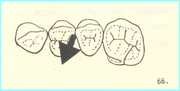
Movement: Right lateral
Side: Left non-working (mediotrusive)
Cusp: F cusp of mandibular 2nd premolar (#20) *
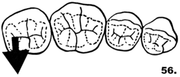
Movement: Left lateral
Side: Left working (laterotrusive)
Cusp: DL cusp of maxillary 2nd molar (#15) *
My problem is how do I know if the picture is left or right side or why is left or right. What is the rule of thumb to get it right everytime?
Answer: Movement: Protrusive
Side: Right
Cusp: Facial cusp of mandibular 1st premolar (#28)
Movement: Non-functional
Side: Right
Cusp: ML cusp of maxillary 1st molar (#3) *
Movement: Left lateral
Side: Left working (laterotrusive)
Cusp: DL cusp of maxillary 1st molar (#14) *
Movement: Right lateral
Side: Left non-working (mediotrusive)
Cusp: F cusp of mandibular 2nd premolar (#20) *
Movement: Left lateral
Side: Left working (laterotrusive)
Cusp: DL cusp of maxillary 2nd molar (#15) *
- Joined
- Oct 2, 2011
- Messages
- 103
- Reaction score
- 2
- Points
- 4,551
- Dental Student
This question was in december 96 microbiology-pathology exam...the question was given as one not scored so i dont have the answer...
Which of the following cells are thought to be the MOST important in the control of matastases ?
A. B cells
B. Macrophages
C. Killer cells (K cells)
D. Cytotoxic T lymphocytes
E. Natural killer cells
killer cells, cytotoxic t lymphocytes & NK cells all have the capacity to lyse cancer cells. Which one would be the most important?
Which of the following cells are thought to be the MOST important in the control of matastases ?
A. B cells
B. Macrophages
C. Killer cells (K cells)
D. Cytotoxic T lymphocytes
E. Natural killer cells
killer cells, cytotoxic t lymphocytes & NK cells all have the capacity to lyse cancer cells. Which one would be the most important?
- Joined
- Oct 2, 2011
- Messages
- 103
- Reaction score
- 2
- Points
- 4,551
- Dental Student
Can anyone plzzz explain this stupid thing about occlusion movement. I spent hours trying to get it but I just cant get it. So plz I need help.
My problem is how do I know if the picture is left or right side or why is left or right. What is the rule of thumb to get it right everytime?
Answer: Movement: Protrusive
Side: Right
Cusp: Facial cusp of mandibular 1st premolar (#28)
*
its pretty simple...decide the side of the arch by having a good look at the morphology of the teeth. Like in the picture above if u imagine placing them in the mouth of a patient the cusp of carabelli would be placed on the palatal side & the premolars to the mesial only if its the right side of the maxillary arch.
next determine the movement...(REMEMBER its always d mandibular teeth that are moving unless mentioned otherwise). so the mandible is moving straight ahead i.e. protrusive movement.
next the cusp that is moving...get it easily from the normal occlusion.use the picket fence diagram here...its a big help.so its mandibular right first premolar facial cusp.
hope this helps. 🙂
When both Nitrous Oxide and oxygen tanks are used to one-half their capacities, what are their gas pressures in PSI (The starting gas pressures are O2-2000 and N20-750)?
A. O2-1000 N20-325
B. O2-2000 N20-750
C. O2-1000 N20-750
D. O2-2000 N20-325
The answer book says it's B but I'm afraid I don't understand how. I know N20 is store as a liquid the pressure remains fairly constant until it is almost empty but O2 is stored as a compressed gas which should ( or so I thought) drop as the gas is used leaving choice C as the answer.
Can anyone explain?
A. O2-1000 N20-325
B. O2-2000 N20-750
C. O2-1000 N20-750
D. O2-2000 N20-325
The answer book says it's B but I'm afraid I don't understand how. I know N20 is store as a liquid the pressure remains fairly constant until it is almost empty but O2 is stored as a compressed gas which should ( or so I thought) drop as the gas is used leaving choice C as the answer.
Can anyone explain?
- Joined
- Sep 1, 2011
- Messages
- 25
- Reaction score
- 0
- Points
- 0
- Non-Student
its pretty simple...decide the side of the arch by having a good look at the morphology of the teeth. Like in the picture above if u imagine placing them in the mouth of a patient the cusp of carabelli would be placed on the palatal side & the premolars to the mesial only if its the right side of the maxillary arch.
next determine the movement...(REMEMBER its always d mandibular teeth that are moving unless mentioned otherwise). so the mandible is moving straight ahead i.e. protrusive movement.
next the cusp that is moving...get it easily from the normal occlusion.use the picket fence diagram here...its a big help.so its mandibular right first premolar facial cusp.
hope this helps. 🙂
Hay thanks man yeah it helped alot. I get it now. It is soooo much easier now thank you soooo much.
- Joined
- Feb 8, 2007
- Messages
- 47
- Reaction score
- 0
- Points
- 0
- Dental Student
I think its NK cells cuz they kill tumor cells without affecting normal cells.This question was in december 96 microbiology-pathology exam...the question was given as one not scored so i dont have the answer...
Which of the following cells are thought to be the MOST important in the control of matastases ?
A. B cells
B. Macrophages
C. Killer cells (K cells)
D. Cytotoxic T lymphocytes
E. Natural killer cells
killer cells, cytotoxic t lymphocytes & NK cells all have the capacity to lyse cancer cells. Which one would be the most important?
- Joined
- Sep 1, 2011
- Messages
- 25
- Reaction score
- 0
- Points
- 0
- Non-Student
I was studying for NBDE part I from the dental decks 2009-2010 but some of the questions are hilarious and really crazy filling in the blanks. Is the NBDE this year for part I really going to have those kind of questions where you have to filling the blanks, matching, like in one question they ask six different other question to get it right?? Im confused... Has anyone taken it this year???
- Joined
- Oct 2, 2011
- Messages
- 103
- Reaction score
- 2
- Points
- 4,551
- Dental Student
Dec 1977 Dental Anatomy & Occlusion had this question -
In lateral excursion in a patient with ideal occlusion, mesial cusp ridge of mandibular first premolar contacts the :
distolingual surface of max. canine
distolingual slope of buccal cusp of max. first premolar
mesiolingual slope of buccal cusp of max. first premolar (given ans)
none of the above
however i think it shud be distoling surface of max canine...
can somebody plz explain.
In lateral excursion in a patient with ideal occlusion, mesial cusp ridge of mandibular first premolar contacts the :
distolingual surface of max. canine
distolingual slope of buccal cusp of max. first premolar
mesiolingual slope of buccal cusp of max. first premolar (given ans)
none of the above
however i think it shud be distoling surface of max canine...
can somebody plz explain.
- Joined
- Feb 8, 2007
- Messages
- 47
- Reaction score
- 0
- Points
- 0
- Dental Student
should be distolingual.Dec 1977 Dental Anatomy & Occlusion had this question -
In lateral excursion in a patient with ideal occlusion, mesial cusp ridge of mandibular first premolar contacts the :
distolingual surface of max. canine
distolingual slope of buccal cusp of max. first premolar
mesiolingual slope of buccal cusp of max. first premolar (given ans)
none of the above
however i think it shud be distoling surface of max canine...
can somebody plz explain.
Advertisement - Members don't see this ad

All the major organ systems are at risk from the severe blood pressure elevations present in malignant hypertension, but which of the following organs seem to be most at risk.
1. ears lung heart
2. liver kidney pancreas
3. kidneys eye brain
4. eyes heart stomach
I know for sure kidney is the most affected organ in hypertension, more so in malignant hypertension but which one to choose from 2 & 3 ?
Please explain.
The options of answer choice 2 sound more like things that would be affected in someone with diabetes, with is a long-term series of complications. HTN is a common clinical manifestation of diabetes, which means its probably not Malignant HTN because more patients would die, Benign HTN is slowly progressing and over a long period of time.
Malignant HTN is an ACUTE process, something that is traumatic and happens fast. Most diseases I've learned about involving the eye lead to irreversible damage.... BLINDNESS!
The eye is sensitive to hypoxic situations, as well as the brain. Neurons, are especially sensitive to low-oxygen conditions and die within a few minutes, if I remember correctly.
So, I'm going with answer choice 3: Malignant = Fast = Which are most susceptible to acute injury?
Hope it helps.
3.
In an 'ideal intercuspal position, the cusp
tip
of a permanent maxill~rycanine should
contact
1. both mandibular canine and first
premolar.
the mandibular first premolar only.
the mandibular lateral incisor only.
the mandibular canine only.
no other tooth.
contact
1. both mandibular canine and first
premolar.
the mandibular first premolar only.
the mandibular lateral incisor only.
the mandibular canine only.
no other tooth.
2.
3.
4.
5. and in ASDA papers the answer is no other tooth( can anyone plz explain)3.
4.
- Joined
- Dec 4, 2010
- Messages
- 32
- Reaction score
- 4
- Points
- 4,551
- Dentist
in decks :
-most frequently test employed for microscopic detection of antigen in tissue secretions and cell suspension?
answer is immunofluorescence
why would not be precipitation as it is used for soluble antigen ???
-most frequently test employed for microscopic detection of antigen in tissue secretions and cell suspension?
answer is immunofluorescence
why would not be precipitation as it is used for soluble antigen ???
hi..i have a doubt...we know that auriculotemporal nerve carries post ganglionic parasympathetic fibres to parotid and sensory suppy to scalp.....now in frey's syndrome it is said that
Frey's syndrome : produces flushing and sweating instead of salivation in response to taste of food after injury of the auriculotemporal nerve, which carries parasympathetic secretomotor fibers to the parotid gland and sympathetic fibers to the sweat glands of scalp
from where does this sympathetic supply come from😕😕😕
Frey's syndrome : produces flushing and sweating instead of salivation in response to taste of food after injury of the auriculotemporal nerve, which carries parasympathetic secretomotor fibers to the parotid gland and sympathetic fibers to the sweat glands of scalp
from where does this sympathetic supply come from😕😕😕
Last edited:
- Joined
- Jan 4, 2012
- Messages
- 95
- Reaction score
- 0
- Points
- 0
- Dentist
Hi I have been using the Kaplan Q Bank and Lecture Notes as well as the dental decks. What scores should I be getting before taking the exam? Also is there any other material recommended I should use?
Thanks!
DU
Thanks!
DU
- Joined
- Dec 4, 2010
- Messages
- 32
- Reaction score
- 4
- Points
- 4,551
- Dentist
in decks 2012:
serotonin is a performed vasoactive mediator with actions similar to those of :
1.Heparin
2.Thrombin
3.Acetylcholine
4.Histamine
the answer is 4
but as you know serotonin is powerful vasoconstrictor and histamine is a vasodilator
if I'm wrong ,please clear it...
serotonin is a performed vasoactive mediator with actions similar to those of :
1.Heparin
2.Thrombin
3.Acetylcholine
4.Histamine
the answer is 4
but as you know serotonin is powerful vasoconstrictor and histamine is a vasodilator
if I'm wrong ,please clear it...
Advertisement - Members don't see this ad
- Joined
- Jun 3, 2011
- Messages
- 20
- Reaction score
- 0
- Points
- 1
- Dental Student

This Q was originally posted by rayman on 4-18-2010 in the thread -
Lets discuss Q's of NBDE 1 (which is still open but locked for new posts)
-------------------------------------------------------------------------------------
By rayman
hi
which of these is a nucleotide?
A-RIBOSE
B-URACIL
C-ADENOSINE
D-THYMIDYLATE
THANK IN ADVANCE
-------------------------------------------------------------------------------------
@ rayman - Ans- D-THYMIDYLATE
- Joined
- Jun 3, 2011
- Messages
- 20
- Reaction score
- 0
- Points
- 1
- Dental Student
Please post all study questions/answers for the NBDE Part 1 in this thread. Good luck!
hellooooooo,
My friends... I am planning to give
NBDE part 1 in the this year. Would you please tell me from where i can get the text books for this exam.
- Joined
- Jun 3, 2011
- Messages
- 20
- Reaction score
- 0
- Points
- 1
- Dental Student
A while back while reading anatomy (which was my first subject and I hardly remember), in some books I found that it was mainly mucous and others stated that it was mainly serous, so I referred my dear friend wikipedia which says that it is mainly serous. Anyways, If while studying you find that it is definitely more mucous than serous please let me know, my exam is around the corner. Here is the link for the wiki article http://en.wikipedia.org/wiki/Submandibular_gland. Good luck and hope this helps 🙂
Bacterial attachment of mediators are :
Capsule,Glycocalyx,surface protien,fimbriae they are become fused......
- Joined
- Jun 16, 2011
- Messages
- 5
- Reaction score
- 0
- Points
- 0
- Dental Student
i have dental deck 2009-2010 are they enough or i need to buy the new 2012-2013 (i don't want to miss any thing )please help me guys .😕😕
thanx
thanx
- Joined
- Jun 3, 2011
- Messages
- 20
- Reaction score
- 0
- Points
- 1
- Dental Student
The ability to concentrate urine varies among animal species. The max urine conc that can be produced by an animal is MOST closely relate to which of the foll:
a. renal blood flow
b. total number of nephrons
c. gfr
d. length of loop of henle
e. diameter of distal tubule
Mediators of host Tissue Destruction:
Collagen,Hylurodinase,Lecithinase,streptokynase,staphalokinase,exfoliatin,exotoxin
- Joined
- Jun 3, 2011
- Messages
- 20
- Reaction score
- 0
- Points
- 1
- Dental Student
😕
crown types.............
1. Anatimic crown
2. Clinical crown
Chewing surfaces :
Incisal edge
Occlusal surface
Occlusal table
Enamel surface elevations:
Lobe:
MAmelon
Cingulam
Cusp
Tubercle
Ridge
Marginal ridge
Labial ridge
Buccal ridge
Cervical ridge
Oblique ridge
Traingular ridge
Transeverse ridge
crown types.............
1. Anatimic crown
2. Clinical crown
Chewing surfaces :
Incisal edge
Occlusal surface
Occlusal table
Enamel surface elevations:
Lobe:
MAmelon
Cingulam
Cusp
Tubercle
Ridge
Marginal ridge
Labial ridge
Buccal ridge
Cervical ridge
Oblique ridge
Traingular ridge
Transeverse ridge
Advertisement - Members don't see this ad
- Joined
- Jun 3, 2011
- Messages
- 20
- Reaction score
- 0
- Points
- 1
- Dental Student
Would you tell me from where you get the Kaplan Q bank......................🙁Hi I have been using the Kaplan Q Bank and Lecture Notes as well as the dental decks. What scores should I be getting before taking the exam? Also is there any other material recommended I should use?
Thanks!
DU
- Joined
- Jun 3, 2011
- Messages
- 20
- Reaction score
- 0
- Points
- 1
- Dental Student
i have dental deck 2009-2010 are they enough or i need to buy the new 2012-2013 (i don't want to miss any thing )please help me guys .😕😕
thanx
I'am also looking for it....😕😕
- Joined
- Jun 3, 2011
- Messages
- 20
- Reaction score
- 0
- Points
- 1
- Dental Student
Please post all study questions/answers for the NBDE Part 1 in this thread. Good luck!
streptococci hemolysis:
Alpha- Almost( incomplete)
Beta- Best ( complete )
Gumma- Garbage ( none )
- Joined
- Jun 3, 2011
- Messages
- 20
- Reaction score
- 0
- Points
- 1
- Dental Student
This question was in december 96 microbiology-pathology exam...the question was given as one not scored so i dont have the answer...
Which of the following cells are thought to be the MOST important in the control of matastases ?
A. B cells
B. Macrophages
C. Killer cells (K cells)
D. Cytotoxic T lymphocytes
E. Natural killer cells
killer cells, cytotoxic t lymphocytes & NK cells all have the capacity to lyse cancer cells. Which one would be the most important?
The common sites of origin:
Lung
Breast
Skin
colon
kidney
Pancrease
Prostate
cervix
- Joined
- Jun 3, 2011
- Messages
- 20
- Reaction score
- 0
- Points
- 1
- Dental Student
the answer should be loop of henley cause the highest osmolar conc of the urine occurs in the loop of henley and if its length is increased it would def help it..this is applied in desert animals whose loop of henley length is increased as to facilitate increased water reabsorption..
Can any one tell me from where i can get the NBDE part 1 update version.......😕
- Joined
- Mar 10, 2011
- Messages
- 21
- Reaction score
- 0
- Points
- 0
- Pre-Medical
Hi,always i am getting confused with lateral excursive movement of mandible and which cusp of mandibular and maxillary????? so plz help me to understand this thing....
Can anyone plzzz explain this stupid thing about occlusion movement. I spent hours trying to get it but I just cant get it. So plz I need help.
My problem is how do I know if the picture is left or right side or why is left or right. What is the rule of thumb to get it right everytime?
Answer: Movement: Protrusive
Side: Right
Cusp: Facial cusp of mandibular 1st premolar (#28)
Movement: Non-functional
Side: Right
Cusp: ML cusp of maxillary 1st molar (#3) *
Movement: Left lateral
Side: Left working (laterotrusive)
Cusp: DL cusp of maxillary 1st molar (#14) *
Movement: Right lateral
Side: Left non-working (mediotrusive)
Cusp: F cusp of mandibular 2nd premolar (#20) *
Movement: Left lateral
Side: Left working (laterotrusive)
Cusp: DL cusp of maxillary 2nd molar (#15) *
- Joined
- Aug 19, 2011
- Messages
- 9
- Reaction score
- 0
- Points
- 1
- Dental Student
i have few questions im kinda doubtful on the answers.hope u guys can help.they are-
1.If the air temperature is 105°F and the relative
humidity is 10 percent, then which of the
following represents the primary cause for
loss of body heat?
a.Evaporation
b.Conduction
c.Convection
d.Radiation
e.Hyperventilation
2.Which of the following changes promotes the
formation of extracellular edema?
A. Increase in tissue fluid hydrostatic
pressure
B. Increase in plasma protein
concentration
C. Decrease in capillary hydrostatic
pressure
D. Capillary.filtration exceeds capillary
absorption
E. Capillary absorption exceeds capillary
I thought it was both A nd D but the answer has to b only one and it has bn given as D.
3.Each of the followingis involved in gene
cloning EXCEPT one. Which one is this
EXCEPTION?
A.DNA ligase
B.RNA polymerase
C.DNApolymerase I
D.Restriction nucleases
E.Reverse transcriptase
Also,catecholamines are dgraded by MAO and catechol-o-methyl transferase but is there a major enzme?
Thnk u so much for ur help.
1.If the air temperature is 105°F and the relative
humidity is 10 percent, then which of the
following represents the primary cause for
loss of body heat?
a.Evaporation
b.Conduction
c.Convection
d.Radiation
e.Hyperventilation
2.Which of the following changes promotes the
formation of extracellular edema?
A. Increase in tissue fluid hydrostatic
pressure
B. Increase in plasma protein
concentration
C. Decrease in capillary hydrostatic
pressure
D. Capillary.filtration exceeds capillary
absorption
E. Capillary absorption exceeds capillary
I thought it was both A nd D but the answer has to b only one and it has bn given as D.
3.Each of the followingis involved in gene
cloning EXCEPT one. Which one is this
EXCEPTION?
A.DNA ligase
B.RNA polymerase
C.DNApolymerase I
D.Restriction nucleases
E.Reverse transcriptase
Also,catecholamines are dgraded by MAO and catechol-o-methyl transferase but is there a major enzme?
Thnk u so much for ur help.
the lingual aspect of mandibular first molar presents with
a. lingual groove extending onto lingual surface and ending in cervical third of crown.
b. a large mesiolingual cusp and much smaller distolingual cusp.
c. the lingual surface of each cusp having slightly convex shape in occlusal third.
d. three lingual cusp.
e. two lingual grooves.
ans: is c why not b . can any1 explain
a. lingual groove extending onto lingual surface and ending in cervical third of crown.
b. a large mesiolingual cusp and much smaller distolingual cusp.
c. the lingual surface of each cusp having slightly convex shape in occlusal third.
d. three lingual cusp.
e. two lingual grooves.
ans: is c why not b . can any1 explain
Advertisement - Members don't see this ad
- Joined
- Apr 30, 2009
- Messages
- 16
- Reaction score
- 0
- Points
- 0
- Dental Student
i have few questions im kinda doubtful on the answers.hope u guys can help.they are-
A.DNA ligase
B.RNA polymerase
C.DNApolymerase I
D.Restriction nucleases
E.Reverse transcriptase
Also,catecholamines are dgraded by MAO and catechol-o-methyl transferase but is there a major enzme?
Thnk u so much for ur help.
I guess it is DNA ploymerase I , because cloning done in bacteria and bact. Have one DNA polymerase in human they have I, II , III .
i have few questions im kinda doubtful on the answers.hope u guys can help.they are-
1.If the air temperature is 105°F and the relative
humidity is 10 percent, then which of the
following represents the primary cause for
loss of body heat?
a.Evaporation👍
b.Conduction
c.Convection
d.Radiation
e.Hyperventilation
2.Which of the following changes promotes the
formation of extracellular edema?
A. Increase in tissue fluid hydrostatic
pressure
B. Increase in plasma protein
concentration
C. Decrease in capillary hydrostatic
pressure
D. Capillary.filtration exceeds capillary
absorption👍
E. Capillary absorption exceeds capillary
I thought it was both A nd D but the answer has to b only one and it has bn given as D.
👎 they are asking about what promotes not the cause. if filtration is more then fluid outside the capillaries wil increase if its not absorbed.
Each of the followingis involved in gene
cloning EXCEPT one. Which one is this
EXCEPTION?
A.DNA ligase
B.RNA polymerase
C.DNApolymerase I
D.Restriction nucleases
E.Reverse transcriptase
i dont know about this.
Also,catecholamines are dgraded by MAO and catechol-o-methyl transferase but is there a major enzme?
these are the only two enzymes . u need to learn them.
The common sites of origin:
Lung
Breast
Skin
colon
kidney
Pancrease
Prostate
cervix
the most imp for control of metastasis is natural killer cells

- Joined
- Jan 19, 2009
- Messages
- 7
- Reaction score
- 0
- Points
- 0
- Dentist
hi could somebody clear my doubt.
pupils constrict or dilate in a syncope? ( lots say dilate) but how??
syncope is a vaso vagal shock..pupils dilate in sympathetic response..
really buggin me..please clear my doubt.
pupils constrict or dilate in a syncope? ( lots say dilate) but how??
syncope is a vaso vagal shock..pupils dilate in sympathetic response..
really buggin me..please clear my doubt.
- Joined
- Mar 26, 2012
- Messages
- 31
- Reaction score
- 0
- Points
- 1
- Dentist
Assuming that P50=26 torrs, under conditions
where p02 =30 torrs, the average number of
O2 molecules bound per hemoglobin
molecule is closest to
A. 0.5
B. less than 1.
C. almost 2.
D.greater than 2.
E.greater than 3.
the correct ans is D. I don't get it somebody please explain
where p02 =30 torrs, the average number of
O2 molecules bound per hemoglobin
molecule is closest to
A. 0.5
B. less than 1.
C. almost 2.
D.greater than 2.
E.greater than 3.
the correct ans is D. I don't get it somebody please explain
- Joined
- Jan 12, 2012
- Messages
- 63
- Reaction score
- 0
- Points
- 0
- Pre-Dental
Assuming that P50=26 torrs, under conditions
where p02 =30 torrs, the average number of
O2 molecules bound per hemoglobin
molecule is closest to
A. 0.5
B. less than 1.
C. almost 2.
D.greater than 2.
E.greater than 3.
the correct ans is D. I don't get it somebody please explain
p50=26torr basically states that the partial pressure of oxygen in the blood at 50% is 26 torr (or mmHg). Because we know that hemoglobin can carry 4 oxygen molecules at 100% oxygen saturation (near the lungs), then we can assume at our given 30 torr (just a tad more than 50% oxygen saturation) one hemoglobin molecule can carry just a little over 2 oxygen molecules. Hope that helps, good luck
This might help:
http://www.ventworld.com/resources/oxydisso/dissoc.html
Last edited:
- Joined
- Apr 7, 2012
- Messages
- 3
- Reaction score
- 0
- Points
- 0
- Dental Student
here's a NBDE study break
my class made this parody based on the YouTube videos "Songs in Real Life"
enjoy =)
Songs in Real Dentistry:
http://www.youtube.com/watch?v ..R_vTnv-iUM
my class made this parody based on the YouTube videos "Songs in Real Life"
enjoy =)
Songs in Real Dentistry:
http://www.youtube.com/watch?v ..R_vTnv-iUM
- Joined
- May 19, 2008
- Messages
- 10
- Reaction score
- 0
- Points
- 0
- Dentist
need help...
Which of the following represents the major pathway for metabolism of excessive intraneuronal free norepinephrine?
A. Hydrolysis by cholinesterase
B. Deamination by monoamine oxidase
C. Hydroxylation by monoamine oxidase
D. Hydroxylation by dopamine beta hydroxylase
E. Methylation by catechol-O-methyl transferase
anyone can explain,,, super thanks...
Which of the following represents the major pathway for metabolism of excessive intraneuronal free norepinephrine?
A. Hydrolysis by cholinesterase
B. Deamination by monoamine oxidase
C. Hydroxylation by monoamine oxidase
D. Hydroxylation by dopamine beta hydroxylase
E. Methylation by catechol-O-methyl transferase
anyone can explain,,, super thanks...
Advertisement - Members don't see this ad
Similar threads
- Replies
- 0
- Views
- 539

